RVing with Joe in British Columbia
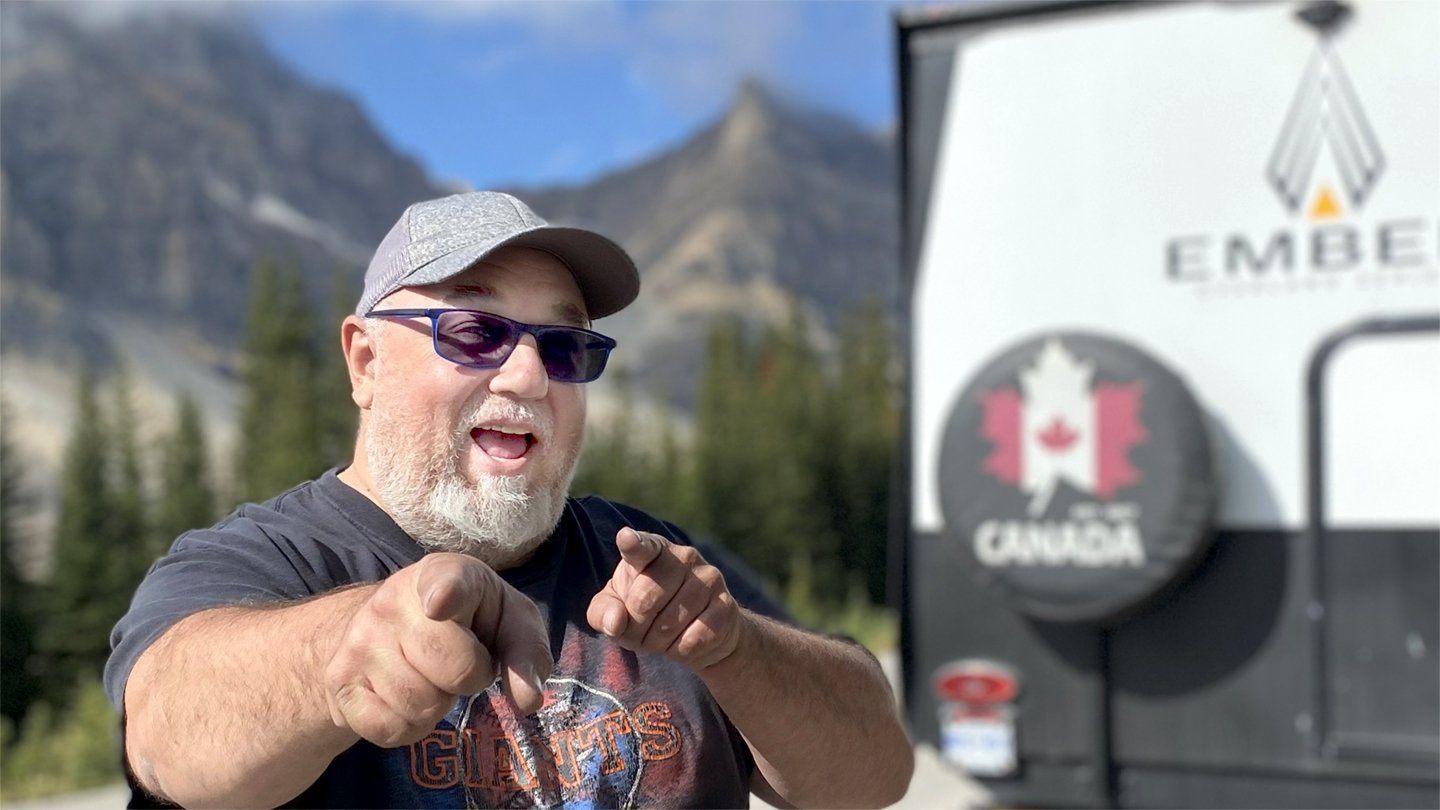
RVing with Joe
RVing with Joe is a familiar name for anyone who enjoys RV travel, road life stories, and practical insight from someone who actually lives it. Through his popular YouTube channel, RVing with Joe invites viewers along for real world RV adventures, covering everything from campground experiences and RV setups to travel routes and day to day life on the road. His content speaks to both seasoned RVers and those just starting to dream about life behind the wheel.
What makes RVing with Joe resonate is his honest, approachable storytelling. Each video feels like a relaxed conversation, blending helpful tips with personal experiences from miles spent traveling highways, backroads, and scenic byways. Joe shares what works, what doesn’t, and what he has learned along the way, giving viewers realistic expectations about RV travel without the sales pitch or hype.
In this episode, Joe joins us to talk all about RVing in British Columbia, Canada, sharing some of his favorite places to camp, explore, and slow down along the way. From scenic routes to memorable stops, he offers insight that’s valuable for anyone planning a trip north or dreaming about it from home.
For listeners who enjoy armchair travel, RVing with Joe offers an easy escape. His stories transport you to campgrounds, open roads, and quiet mornings with coffee outside the rig, while delivering practical information you can apply to your own adventures. Over time, RVing with Joe has become a trusted voice in the RV community, making his content a great listen for anyone curious about RV life or planning their next trip.
SHOW NOTES
Episode Description:
You may think RV life is all sunsets and smooth roads, but in this episode, RVing with Joe joins us to talk about what life on the road is really like. Joe shares how he got started RVing, why the lifestyle hooked him early, and how RV travel shaped his career and freedom over the years.
Joe takes us deep into RVing in British Columbia, Canada, sharing favorite travel routes, regions, and lessons learned from thousands of kilometers on the road. We talk about RV travel through Vancouver, Squamish, Whistler, Kelowna, Banff, Jasper, and beyond, including what makes Canada such an expansive playground for RVers.
The conversation covers boondocking versus campground stays, how Joe finds remote camping spots, and what kind of rig works best for rough backroads and long-distance travel. Joe also shares practical insight into mountain towing, steep grades, and why equipment choices like diesel engines and exhaust brakes matter when traveling through Canada’s mountain passes.
We also explore the personal side of RV life, from traveling solo to traveling with a partner, disconnecting from daily stress, and finding joy in the freedom to wander.
Finally, Joe shares details about his YouTube channels, how he documents his travels, and where listeners can follow along.
Topics Covered
How Joe got started in RVing
Full-time RV life and career flexibility
RV travel in British Columbia and Canada
Favorite highways and scenic routes
Boondocking tips and tools
Mountain towing and safety considerations
Finding solitude and freedom on the road
Creating RV travel content on YouTube
Resources & Links Mentioned
RVing with Joe on YouTube
https://www.youtube.com/@RVingWithJoeRVs Gone Wild (YouTube Channel)
https://www.youtube.com/@RVsGoneWildCamper Alerts (Podcast Sponsor)
https://camperalerts.comiOverlander App
https://www.ioverlander.comBC Recreation Sites & Trails
https://www.sitesandtrailsbc.caSea to Sky Highway (Highway 99)
https://www.hellobc.com/road-trips/sea-to-sky-highway/Banff National Park
https://parks.canada.ca/pn-np/ab/banffJasper National Park
https://parks.canada.ca/pn-np/ab/jasperAthabasca Glacier
https://www.banffjaspercollection.com/attractions/athabasca-glacier/Crowsnest Highway (Highway 3)
https://www.hellobc.com/road-trips/crowsnest-highway/Highway 395 (California)
https://www.californiabyways.com/byway/us-395/Starlink Internet
https://www.starlink.com
Stay Connected
Sign up for the RV Out West Newsletter
First issue drops February 18
👉 Sign up via the link in this episode description or visit
https://rvoutwest.comFollow the Journey on Social Media:
Podcast Episode Transcript:
RVing with Joe in British Columbia
Brooks, the Host You may think that RV life is all sunsets and smooth roads. While our RVing with Joe is about to tell you what it's really like out there. Stick around. This one's worth it. Welcome to RV out west. I'm Brooks, based in the Pacific Northwest. My family of four hits the road to explore the best of RV life out west. From hidden gems and epic destinations to helpful tips and real road stories. So grab your coffee and join the journey. Hey friends, thank you for listening to the podcast, and I want to remind you that this is your official invite to take things one step further. I am launching the RV Out West newsletter and the very first issue is dropping on February eighteenth in like a little over a week. It's packed with trip ideas, road stories, gear notes, and behind the scenes extras you won't hear anywhere on the show. It's quick, fun and built for people who love life on the road. And I want you to hear more of the good stuff all in one place. Head to the link right there in your podcast app under the description for this episode, and sign up now so you're on the list. You're not going to want to miss this very first issue, and I'm excited to share this with you. Now on to the show. Our RVing with Joe is one of those creators who feels like a familiar face the moment you hit play. Through his YouTube channel, Joe shares life on the road with an easygoing, honest approach, taking his viewers along as he explores campgrounds, RV setups, travel routes, and the everyday realities of RV travel. His videos blend practical information with personal storytelling, making it feel less like a tutorial and more like a conversation around a campfire. Over time, Rv'ing with Joe has become a trusted voice for our viewers who want real experiences, thoughtful insights, and stories from someone who truly lives the lifestyle. And for those who just may want to have a little escape with some armchair travel. Joe, welcome and thank you so much for joining us here on RV Out West.
RVing with Joe Oh no problem. I appreciate you making some time for me. Love talking about RVing. Uh, it's I do it a lot. And, uh, yeah, I like talking about my experiences. I try to share and, um, kind of grow the community wherever I can kind of turn people on to all the advantages that the lifestyle brings. I get I get less focused on the technical side of RVing, and I'm a lot more focused on the lifestyle. Like what? Like it ends to a means, like, you know, where it takes you and what it offers you. So I focus a lot more on that.
Brooks, The Host Yeah, I love that. Well, then let's start with your hook. What got you into Rv'ing? How did you get hooked on the RV life?
RVing with Joe That's a good question. Um, I had exposures as a kid, so I had, like, some step grandparents. I remember the first time I walked into a class A, I didn't actually get to go out being with them, but just walking into a class A, having had family that were truck drivers. When I was even younger than that, I kind of moved around between a few parents, but, um, or two parents when I, uh, when I first had exposed to that that RV though, I just, I it was all, was all coming together. I mean, I loved road trips. I loved being on the road. I had already driven across the country with my dad once, and I had that, that taste. So then I saw, wait here, this. So then when I, uh, I moved back with my mom, they got a teardrop trailer, and we went out camping a couple times and the teardrop. And even though I was in the in the tent, you know, they got the the teardrop bed, uh, it was still this, this kind of idea of camping and and over the years, I knew some we had some hippie friends and the families who, who built sort of their own vans. And I would just see it over, over the years that it just always seemed like an enticing option that I would eventually move towards. I didn't know what it was going to be until we finally went to our first RV show, uh, together, me and my wife and I wasn't sure if I was a motorhome guy or a trailer guy. We walked into a motorhome and it was very tight. Then we walked into a trailer and it was so much more open that, uh, that plus the idea of, um, maintaining an engine that all year round, uh, versus just running it a few times a year, I felt like eventually it's going to be having like two cars, right? Right. And so, so eventually we basically bought a pickup truck and, and an old trailer, uh, a two thousand, uh, back then it was two thousand and four when I got my first trailer, and that was a nineteen ninety nine Thor Tahoe trailer. Uh, stick and tin. Simple kind of classic starter edition. Uh, little did I know, it was probably the the most sturdy RV I would have ever owned. Because as we go on in the years, they get a little, little, um, more, uh, minimum product necessary to get that thing out the door. And so, uh, yeah, we actually really loved that we ran into the ground, uh, for, gosh, almost ten years or so. And so that was that's how we got our start was really just that. And oh, here's the the funniest part at the start is I hadn't ever we bought the trailer with the intention of folding up our apartment and moving into it for, for an unspecified period of time. So we not only started when our very first RV trip, um, you know, with no experience really, but we did it as full timers with no idea what we were getting into. That's always fun. And so it was a learning curve the first few months. A lot of mistakes. We, uh, you know, heard a lot. I mean, I broke a few things figuring it out. Uh, had a few water incidents, but, yeah, we, um, we not only started our being, but we did it cold as full timers with with no real experience. And that was, uh, ever since then, I've just been hooked. Hooked, hooked on traveling.
Brooks, The Host Well, then with that, before we kind of get into where your current home base is, where was kind of home base before twenty thirteen, and tell me about some of those RV adventures. Sure. That you took then?
RVing with Joe Well, the RV has facilitated us moving around a bit, uh, for for my career as well. My wife and I are both in what we call a visual effects and animation industry. So, uh, the, the movies that bring you, you know, Star Wars and Marvel movies and all that. The folks behind the computers, we've worked in those studios all of our lives, and that's sometimes a bit migratory. Uh, you work move from, uh, say, the Bay area where we started and that's that's where I got my start. I was a Bay area kid. San Francisco Bay area in California.
Brooks, The Host We have to stop. So I lived on Divisadero and Geary right by the Kaiser Permanente hospital.
RVing with Joe Oh, there you go. I'm a marine kid, so I was a sheltered marine kid most of my. Yeah. Yeah.
Brooks, The Host Okay.
RVing with Joe There you go. I mean.
Brooks, The Host I'm not from the Bay area, but I, I, I spent a chapter in the Bay area.
RVing with Joe Same here. I mean, I was I'm originally. I'm not taking all the way back to the Jersey youth, uh, days, but. Yeah. Okay. I, uh, but, yeah, I'm a Californian. I need to talk to.
Brooks, The Host No.
RVing with Joe No, I was I was pretty young back then. Uh, there there was nothing. All existed when I was.
Brooks, The Host Yeah.
RVing with Joe Okay. In the seventies. Anyway, um, so, so, uh, I, I got my, uh, I, you know, I was Northern California kid, uh, working for a large visual effects company. And then as I moved to some other ones, eventually, opportunity moved us to LA, and the nice thing about having the RV is I could always look for work. In fact, I did a short stint in Seattle. That's where I got exposed to the Pacific Northwest, where all of a sudden I was able to interview and take a job up there. Um, and then the RV itself made meant that I could apply for jobs anywhere in the country. And I would, uh, with the idea of like, well, hey, let's just go there. And it was just me and my wife. We don't have kids. And so we had a pretty flexible existence, and the RV was a huge facilitator of that. Our I used to joke that our ability to travel was one of our job skills and our ability to, to relocate. And, um, if you can open up the whole country to your job opportunities, you can get more opportunities. So that's what we would do. So we moved down to LA for a while. Then I took a job. Uh, we both took jobs at a studio out in Florida. So that took us all out to Florida, which, of course, I baked into a nice, you know, three week transition trip. Uh, you know, out there, uh, partially funded by the transition, uh, payment. So that was nice. And and then we went out to Florida and then, you know, um, we came back to California and this is now, you know, taking all the way from two thousand and four up to around twenty twelve. So, so that was kind of the transition. We, we did, uh, again with a short stint in Seattle. And then basically the industry changed a bit. A lot of industry moved up here or had been moving up here to the Vancouver, BC area across the border in Canada. So we said, well, let's take a job up there. You know, I haven't been up there. We love Seattle. How different could it be? We we love Canadians. So let's just try it with sight unseen. I took a job in Vancouver. Uh, we didn't take the RV there, uh, because it was getting old, and I knew it rained a lot. So we drove up, took a job, uh, up here. And within two years, I bought an RV up here in Canada, a Canadian purchase. Uh, I'd have to deal with importing and got rid of the old one down in California. Now, I've been in Vancouver, British Columbia ever since then. A lot of travel back and forth to Los Angeles in the last decade, a little less so since the, you know, pandemic. And now I spend most of my travel time, although not all of it, trying to take in this huge RV Paradise that is Canada. It's an unending supply of campsites, uh, routes, mountains, and it's an RV and you can stop. Once you get out of the cities, you can stop almost anywhere and just stop there. It's a really liberating experience to be in RV up here.
Brooks, the Host Well, then let's dive right into it. And I would love to hear about some of your favorite places and adventures and things you like to do in your RV up there in kind of the Greater Vancouver, you know, DMA or British Columbia. You know, if you I don't know if you're going out to Kelowna or.
RVing with Joe Oh, absolutely. Yeah. Kelowna is. Yeah, yeah. We go through Kelowna a lot, in fact. Um, yeah, I go through it on probably about, you know, one third of the trips. The funny thing about being out here in Vancouver and it's probably the only downside is you have to start from the corner and work your way out. Uh, and that means you kind of always are covering some of the same ground in the first day of your trip, right? You kind of have to get out to certain points where you can hit, hit a hub and spoke and then head out to the rest of DC. There are less highways here, right? We're not in Los Angeles anymore. You can't. It's not a big grid of freeways. It's it's one single highway to this set of highways that can be five hundred miles or three hundred miles away. Um, so, so, um, yeah, go through a lot. I think the nice the way it breaks down to is we generally can go north and we'll go up through, through kind of the Whistler area, Squamish and Squamish as a start. Yeah. It's always stunning that we can almost daily day trip to there even that's close enough. But then we'll just head up north there on what they call the sea to Sky highway. That's one way to get up north, or we'll head out on, uh, what South Park kind of joked is the only road, uh, the highway, one that heads you, that takes you east, uh, from Vancouver out towards again towards Kelowna, um, through a town called Hope, where they filmed Rambo. Uh, and. Yeah, yeah, it's a big thing. The bridge is gone, though. Bridge is gone there, but they still have the sign over the bridge that you can go and visit the log thing. That said, whatever the saying was at the top of the bridge, and. And there's a statue and. Yeah, it's Rambo Town for sure. Um, and it really just starts to be really gorgeous. I spent a small part of my youth in Idaho, North Idaho, and I, uh, was in Seattle. So I went out to Idaho when I was staying there for those few months, and I always thought it was the most beautiful place on earth. And and, you know, this is no hit on any, any place over another. But I didn't realize it was sort of really the foothills of Canada when it comes to the beauty, size and grandeur of what you're going into. So if you keep going east, eventually you're going to run into Banff and Calgary over right at the Alberta border. And I was very jaded, having been to Grand Canyon, having been to all the most beautiful places in, in the, in the States. Right. I mean, some of the, the, the greatest views you can have. So I was like, oh, cool, let's check out Banff. I'm sure this is going to be cool. But you know, yeah, we've seen it all. And, uh, we were floored. We were floored for kilometer after kilometer at just how amazing the experience was.
Brooks, the Host So I went to Banff during the Jasper wildfire.
RVing with Joe That devastated.
Brooks, the Host Jasper.
RVing with Joe two years.
Brooks, the Host Ago or whatever it was. Right? So we didn't really get to do Jasper. We made it up to the Athabasca Glacier, but that's basically where the, uh, highway was closed then. So that was kind of.
RVing with Joe Right in the heart of it. Oh, I'm so sorry to hear that. We've been before and after. And here's a little tip about the Athabasca Glacier. That parking lot, uh, allows overnight RV parking, which is not well advertised, but we discovered when we got there, there's a little sign you can park for fourteen bucks a night right there at the glacier. So that was one of the best sunrise, you know, morning views I've ever had. I did not know. That's great. You heard it here. Yeah, yeah. So my favorite stretch of road up until I went to Banff was highway three hundred ninety five, which goes from Death Valley to Lake Tahoe. Kind of along that eastern spine of the Sierras, up through Bishop and Mammoth. And you can look down at Death Valley at a certain point as you head up from Southern California. Stunning. And that stretch of road for twenty five years has been my number one. If somebody would say favorite stretch of road, I was like highway three hundred ninety five going north or south, but I've done it north. And then I drove the highway from Banff to Jasper, and that is mind blowing. And you only made it as far as the glacier. So I mean, it continues. Yeah. Like it it is. It's amazing how and so much of BC, you know, it's not all so perfect as that. I mean that place just is, is just perfect in every way. But, um, it's just as grand all over the place. I, I have I. I'm ashamed to admit, but I've had a few incidents where I've drifted over the yellow line or, you know, the white line, the shoulder, because I've just my eyes just I came around the corner and I was like, oh my gosh. And oh, you know, and you have to be careful of that. Um, you know, let's just pull over, uh, because it's that distractingly gorgeous, some of the coming around the corner and the views, not to mention all the animals and, you know, mountain goats and all this stuff that you're always seeing everywhere. Uh, yeah, it it blew my mind how intense it could get. But it's interesting. You mentioned three ninety five. I've been on portions of it. I've been like, you know, from the south all the way up to, uh, Yosemite area. And then I think I cut in there or maybe. Yeah, I think it was at the Yosemite cut over. Um, and then I've been some portions further north. Um, but one thing I noticed about BC was it reminded me a lot of being in the southwest. So in our prior, you know, life down south, I would go out to the desert a lot. I really like the desert. Um, my wife and I were mildly anti-social. I certainly liked like getting out to where there's nobody else. It's just us and our dogs. And, you know, I started to discover, you know, the areas between, you know, LA and quartzite and then, you know, out there north of Joshua Tree and, and, you know, by twenty nine palms. And I just started finding these areas where we would go out on Christmas Day because we would we would go on a Christmas holiday dessert, uh, trip RV trips. Something I can't do up here is easily, um, but we would go out there and I remember some days, like, we would be out there by we were out there by twenty nine palms, and it was one car we saw for probably eight hours. And, and I love that, uh, and that, that kind of, um, that kind of isolation. And when I got up here and went into BC, I realized I'm finding the same isolation that I would find out into the desert. The only difference is, of course, is it's highly treed and mountains. You don't get those long desert vistas. That's different, right? But other than that, the experience, uh, or what I was gaining from my RV trip was, was achieved once I got out there and, and, uh, although it extends beyond PNW. Our recent trip that I covered on my channel, which I haven't plugged yet RV with Joe. Uh, we recently did a six video series on our trip all the way up to the Yukon border. Um, we couldn't make any further north than that just because of time and money, but we spent six weeks, sorry, thirty days on the road. Awesome. And, um, there was times where we, uh, we were just simply the only ones around, and there's no, no power lines. No. And even up there, there's no, um, air routes, very little air routes. So when you're out there just sitting in a, in a side road, you know, far road alone with your and all you hear is the tinkle of your dog's, uh, tags. Right. Other than that, there's zero sound. You know, the birds. Yeah. And you never hear. And I didn't realize it took me a day or two, like, oh, I'm not hearing planes, you know, because in the southwest, as quiet as you get, you're always you're still air traffic going on above you. Yeah, but up there, it gets as quiet as I've ever experienced in my life. And so I do like the, uh, the how much up here in Canada You can really get out there and just be really alone and still feel really safe, you know, other than bears. Always carry bear spray. Uh, but people are not your worry, right? Right, right, right. We talked about Banff and Jasper that that's sort of like going to the Grand Canyon or Yosemite. Like you're guaranteed to fill your, your, your punch card with things to do in a small area. You're just going to cost you a little more for camping, and you got to book in advance. Um, and it's the same thing out there. But really, um, the Crowsnest Highway is one that I've, that I kind of grown closer to my heart. And the Crowsnest Highway is a highway I think you wrote down here was highway three, and it runs right along the Canadian US border, starting, uh, just outside of Vancouver at Hope. And it runs all the way out, all the way to the Alberta border. And there's probably going out. I've gone about two thirds out towards Alberta, and you drive by maybe five or eight pull offs where you're only like a half a mile from the border, where you can just go to a border station. So the nice thing about this, that's why I wanted to bring it up to anyone who's in the south side of the border, but wants to taste a little of Canada, but not go deep, deep in because it can be a lot of kilometers, as we'd say up here, to get somewhere. That's one where you can dip in. Check out Vancouver, which is, you know, like going to San Francisco or Paris. You know, there's a beautiful little city to go to, but then you can just start heading out and you can actually plot your trip to dip back into the US and kind of start heading back through Washington or Idaho or or Montana if you really want to keep going. And then it makes for a nice little loop. I usually end up looping north back, you know, through other parts of Canada, but there's no reason you can't just dip south, come back in through the States. And it's a great way to taste Canada and see what it's like without having to go, you know, way in and way far. So. Right. That's a really cool that's a good tip. Thank you. Yeah. No problem. I recommend that one to Canadians as well. Really the only thing I would do warn you against they call it the Crowsnest Highway for a reason. Um, and that goes for almost everywhere you drive here in Canada, a lot of tall mountain passes. Um, you know, if you've been trained in the Pacific Northwest, you probably already have dealt with going up to Snohomish and and going down and up and down the five and dealing with some of the big mountain passes. But they get bigger and steeper. And there are a few areas I've been in sea Sky highway, I've hit fourteen percent downgrades. Um, I mean, you're in first gear, you know, going around a few corners. It's not like you're barreling down, but definitely greater than ten percent grades are common. A friend of mine finally talked me into getting a one ton diesel, and that exhaust brake alone is worth it for towing. I mean, those fourteen percent grades, I just take my foot off the gas and the truck just basically tows and maintained speed itself like it's. Luckily I have an underpowered truck and a in the trailer. Parachute effect means that pretty much seven percent or uh, or or below, I can generally just let it run like, you know, kind of coast and instead maintain and then at eight percent it up. Yeah, I've got to be strategic and and I have to admit my, um, for the first time here and I'm only, you know what, uh, one hundred and ten thousand kilometers. So what is that, like seventy or sixty thousand miles in? And my transmission is starting to talk to me. Well, and that's because I pushed it. You know, I, I do over twenty five percent of the miles of my truck are spent towing my five thousand pound trailer in those types of conditions. And on our last truck, I wouldn't even have taken the truck I brought up here from the States. I wouldn't even have taken it, uh, far into the places we've gone with the new truck. Uh, because I just when we were up in places in Yukon. And this is something to be aware of when you're out here. We were six to eight, ten hours at times from the nearest emergency room. Uh, you know, any tow truck meant you were bringing in a big rig to flatbed to throw your truck and trailer on, and, you know, you're going to spend three or four thousand dollars getting it back to civilization. So, um, you know, and a helicopter ride is, you know, for you to get hurt is like ten to twenty grand, even if you're Canadian. Yeah. Albertans only pay for Albertans. And so, yeah, it's just like, it's it's something to just consider, uh, you know, you gotta throw a little risk out there, and you're always on the main highway. So we don't travel, we don't over land. We're always, you know, within a mile or two of a main highway.
Speaker 4 We're going to take a quick pause here and hear a word from our long time friend and sponsor of the show, Camper Alerts. Com we'll be right back after this quick break. More good stuff coming up. The seasons may have changed, but that doesn't make it any easier to find available campsites. Now you can get notified of sold out campsites when they become available with camper alerts. Choose your campground, pick your RV specific filters and set an alert. It's that simple. Visit Camper Alerts today and start setting your alerts. Welcome back to the show. Let's jump right back into the conversation with Joe from the YouTube channel Rv'ing with Joe. Do you guys do a lot a lot of.
RVing with Joe Boondocking or are you guys park campers.
Speaker 4 Or mostly boondockers?
RVing with Joe Yes, I have an Ember Overland trailer, which is specifically kind of built modeled for that with some extra solar. So yeah, we definitely like to boondock a lot. Um, and this last trip, I think with that, over those thirty days, I think we maybe did four or five nights in an RV spot. And that was because, like, you know, the Liard Hot Springs, that's just kind of where you stay for the hot Springs is in a spot. So, uh, for the most part now, I prefer it at this point to just boondock, my generator, my three lithium batteries. You know, I got three hundred amp hours. Uh, I've got around, um, with my external panels now, and some of my external batteries were pretty much up to around twelve hundred watts of solar panel between the fold outs and the. I got one on my truck that keeps my Starlink going. And then, you know, we're pretty well sold. So, yeah, I don't see a reason most of the time to pull into an RV spot. It's mainly if I want to trade in the a night of cleaning out the tanks, getting new water. You know, that's usually the reason. Uh, well, like.
Speaker 4 Yeah, yeah, that makes sense. So let me ask you this then, because I've not done a lot of boondocking. Uh, like, I think I've only done one or two nights total boondocking. We're mostly, you know, park camp. I mean, I have younger kids. They're not younger anymore, but I have middle school aged kids. So, you know, finding the resorts with the pool and the places where they can, you know, go. That is just kind of where I'm at. But how do you even go about finding those spots to boondock? Like, are you using Google Earth or Google, or is it just quick to pull off the side of the road? Like, what's kind of the skinny? You don't need to give away the honey holes, but no, no. Are you finding your spots?
RVing with Joe Uh, you know, no rocket science to us. Number number one, we have a fairly low threshold. Like we're not picky about, like having the perfect spot. So if some of those nights that we were traveling, um, were at, you know, the rest area, pull off kind of situations, that's that's fine. I mean, once we're in our RV, I really don't care. You know, the TV is on the, you know, the the heat's on it. It's always the same inside the RV. So. So when we're traveling, I'm pretty loose. Um, the other thing is, I overlander. I think that that that was probably our number one, uh, hunting, hunting tool for finding other options. Uh, so for this big trip, I did try to find some stuff in advance. So we had options along the way, but certainly we've improvised. Um, the other thing here in BC is there's BC sites, uh, what they call, uh, BC wreck sites, which is sort of the bottom tier of campsites. And there's in BC alone, there's over five hundred of these. So, um, there's a lot of them out there. And it's one of the reasons we got a trailer that has a single axle is a little smaller. It's a nineteen foot trailer. We've gone as high as twenty eight foot with some of those previous ones. So we trimmed it down with the idea of getting into those, um, those camp spots because it was difficult with our bullet. I didn't talk about it much, but I had twenty, like twenty eight foot or something. Uh, Keystone bullet, uh, with big slide out. And that thing was, I was not, you know, I bent two axles on it in BC, which is one of the reasons I went for an overland trailer is I realized up here, if you're going to go on the dirt roads a lot and there's a lot of them, uh, you're going to, um. Yeah, you're gonna you're gonna need something a little more, uh, tough. A torsion axle, I would say, would be the minimum. Uh, if you're going to do, you know, if you're pulling off the road to go to a campsite for a mile or two, whatever. But there's times where, you know, we've done thirty or forty kilometers in on a Forest Service road and back out, um, many times. And our goal, I talked this much yet, but our goal still sort of our bucket list is to get up to what they call tuk tuk, tuk tuk. Yeah, up here at the Arctic Ocean and that, um, we, we've been planning on for a few years. And every year, especially because of career and other issues. It's very hard for me to get like that type of time, even though I can work from the road. We didn't talk about that much, but I do work. My job is at a desk, you know, at a computer. So, um, for the most part, I can do that with Starlink anywhere. So I am able to go in six week trips because three days a week, I'm working from the road. Uh, that's how we make that work. Um, but I still haven't been able to work out the math. May happen again this summer. I plan every year for it, and, uh, I have I'm not going to these the, the, um, convention that happens every summer that drags me away. There's a work based one down and I have elected declared after thirteen years of this convention this year I am not going. And, uh, and a big reason is because I, I want to go to tech. Now, if I can't go to tuck, we will at least make it up into, uh, the Yukon. Deeper. Uh, just to keep in mind with the Yukon, uh, is it's, you know, it's massive. If you're looking on the map, uh, there's forty three thousand people in that entire province. So that's smaller than the town I live in. That's. That's crazy. So when you go up there, it immediately, uh, everyone disappears and it's just you and nature. So, uh, you know, the towns are cool, too. I mean, there's some wonderful, uh, mining towns and old towns, so. But, yeah, we're that's that's going to happen next year, but we really want to get to tuck. And that all requires a lot more rough driving. And, uh, I recommend if you come up here, if you're going to go, you know, off roading with your rig, maybe think about torsion axle or independent suspension because I've bent too many axles in my life.
Speaker 4 Yeah. Good. Okay. Yeah. Okay. What has been kind of the greatest reward for you and your wife about RV? Well, we.
RVing with Joe We luckily are a couple that can be in a trailer for, you know, without driving each other nuts. Um, I know that's not everybody's cup of tea to be in that small. We also can work in the same company. We, you know, we're we're tight. So because of that it is encouraged and feels that tightness. Right. Like we're always together. Um, to an almost codependent level. And so, uh, I really like that that, that the US part is, is a big part of it. Uh, my favorite RV trips are always with my wife. And, uh, my wife has some mobility issues. So it does mean that, um, we can't always go hiking or as deep in, you know, a lot of times we're doing a lot of parking lot jaunts and then back to the truck, a lot of car camping, day trips away from trailers. Yeah. Um, but still, I just one hundred percent, you know, that that's that's my favorite part, is just getting out there with my wife. Um, I guess the second thing is the how quickly I. My brain disconnects, um, you know, in a, in a, in a meditating kind of freedom of, of concern kind of way. Uh, so as soon as I pull out of my house with that trailer, it's like the disconnect between, like, real life and and RV life. It's it's immediate and, uh, and it lasts for weeks until you have to start looking at your bills. So on those long trips, after a few weeks, life catches up with you. You gotta log into the bank and and things like that. And uh, and so that, that but yeah, those that immediate disconnect is so therapeutic for me and it's what I, what I seek. And the other thing is, um, I'm kind of like a stray dog that likes to wander. And I love how much it allows me to do that. Um, I did a six week road trip when I turned fifty a couple years ago, when I first got this new trailer down to the southwest and back, and my wife was busy, so she worked at home and I was solo for six weeks. As much as I do love traveling with my wife, there was also sort of this freedom of like having almost no reservations. I had a few waypoints along the six weeks where I had to be, um, but yeah, just just wandering day to day, um, and not necessarily knowing where I was going to end up. And, and just having all that freedom is, is, is gold to me. And if I, you know, if I could retire tomorrow and which I can't at all. But if I could, uh, just, you know, win the lottery and yeah, it would absolutely be me in a class A, um, you know, never staying in the same place more than a week, you know, that that that's that whole thing of feeling like a stray dog that's always looking at a new sniff and new ground every, every, every day, of course, that that I love. And it doesn't have to be fancy, you know, if it's wandered into a Walmart, an old truck stop, or, you know, just a dog park in the middle of some small town where we end up talking to some locals. Uh, I love that, you know, as much as we are anti-social, like, uh, we also do. You know, we're not one hundred percent anti-social. And the interaction of meeting people all around the world from around the country and actually, technically all around the world, because if you are RVing, especially out here in the West, you're going to run into a lot of Germans and Dutch and, and, uh, and we did the Alaska Highway. So we got to actually meet all kinds of Argentinians. And, uh, we met a guy who did over thirty one thousand kilometers from the tip of South America, all the way up to where we were. And he'd already gone up to Alaska and back.
Speaker 4 Um, yeah.
RVing with Joe Super cool. Yeah, yeah, we actually featured him on my channel. Uh, I have another, uh, series and now a new channel called RV's Gone Wild, which is a little more Just kind of fun. Uh, like making either making fun of RVs or showing really cool RVs. And five or six people had sent me pictures of this guy, uh, driving, you know, with his vehicle and going. And all of a sudden we're on our big trip, and and I were like, there's his vehicle. And but we couldn't see him. And then we're at our next stop, or there he is again. And and there he is. And so we went and met him. And it turns out he had seen himself on our channel, so. And he looked at my wife, speaks Spanish. So, um, she was able to translate and, uh. Yeah. So so I love all that. I love all that random interaction without the commitment. Right? Then you never see anyone ever again because we keep driving. Uh, but I just. Yeah, that wandering feeling that traveling from the south down, you know, South Carolina, it's about as far out as I've made it. You know, the the southwest, um, you know, Navajo lands. You know, it's a whole nother kind of experience. Yeah. Um, and then, uh. Yeah. And what I really do want to get in is a little bit more of, uh, from South Dakota over to, uh, uh, Idaho kind of zone, which is still, like, empty on my mouth. I keep going north and I've done a lot of south, but I've got this hollow space that I'd really like to get out to. You know, the South Dakota, um, you know, Mount Rushmore to some extent, but also to see Crazy Horse Monument and, and sort of, uh.
Speaker 4 That whole area of South Dakota is really cool out there in Rapid City. And. Yeah, just it's a really seems like the Black Hills are cool.
RVing with Joe Yeah. And it might make my way if I do that. It might be part of going out to Iowa here because my brother lives in Iowa and, uh, and I want to go to Elkhart.
Speaker 4 So, Joe, tell us a bit about some of your YouTube channels and kind of what you're doing, as well as where people can follow along on your adventures and learn more about you and your RV travels.
RVing with Joe Sure thing. Uh, you know, I'm not necessarily a hiker or a fisherman or, uh, you know, I don't have these other purposes or kayaker that people go out there and use for their RV adventures. And what I've really come to do an RV is I document I actually really love making videos about the trip. Uh, so I created a channel back in twenty twenty two called RVing with Joe. That's how you get there at RV with Joe on YouTube. Just search for it. It'll drop you right in there. And that was really all about just sharing my RV experience. You know, sharing everything from how I pack up to, you know, what are we eating to, uh, what's this trip like? And now my trip videos are very much with the intent of if you're someone who can't come along. In fact, I have some handicapped people who say they they live through my trips because they can't necessarily do that. And, uh, I love just sharing it and and again, showing people the joy of the experience of RV and less about, you know, uh, the technical side of RV. I mean, we showed dumping a couple times and things like that, but really it's about the experience. And that's what my channel has, has grown to. It's grown around twenty four thousand over the last couple years. So I'm really happy with that. And then we ran across this really weird thing where I made this one video about a bunch of crazy RVs and crashes and it got like one hundred thousand hits. And I said, okay, everybody likes that. And so in the name of growth of the channel, I decided to make some more and then sort of it got a following and it's called Harvey's Gone Wild. And now it's episode fifty one's coming out this weekend. Uh, well, I'm not sure when this is airing, but, uh, we're up to the fifties now, and, uh, so we just broke it out as its own channel because it is sort of a different audience. Again, it's it's kind of like if you've ever seen bonehead boaters of the week or, or or bonehead truckers, it's a little bit of that. But it's also got really cool RVs. And now I get dozens and dozens of emails every week, and people sending me pictures of their cool RVs or RVs they've seen on the road, or just crazy things. So that that RV has gone wild, has become really popular. We just broke it out as its own channel, and it's already up to like after checking in like two thousand subscribers in like, I don't know, a month, less than a month. So it's, it was great that all of my, uh, folks moved over. I lost a few on the old channel, but that's okay. I'm just really happy that so many people, like, joined the cause and switched over, and we pulled it off the old channel. And, uh, so now I have two different audiences, right? I've got my crazy friends who like to see crazy RVs, and then I've got my my folks who really, um, you know, they tend a little older. I have a lot of older folks on my channel, so that's kind of fun. Um, folks older than me, uh, which is interesting. And, uh, so, so, yeah, I cater to that audience. It's my generation and older that tends to lean towards it. But if you're wondering where to go, uh, I try to document all my trips. The southwest trip is very well documented. The trip we just did up to the Yukon, um, their, their, their own playlists. So I try to make it so people can literally go on the trip, uh, or either prep for their own or as a, as a proxy for, for their own. Uh, it's hard to get up there, right? Not everybody can get up there. So please enjoy the videos and, uh, comment and let me know what you want to see on it, because I really try to make it work for I try to I try to make the audience happy. So it's not just for me.
Speaker 4 Well that's great. Well, Joe, thank you so much for taking the time out of your day to come on RV out West. I really appreciate it. It's been a great conversation. Thank you.
RVing with Joe I really appreciate you inviting me on, and I wish you luck on the channel as or your podcast as it grows. And I'm already enjoying. I've listened to a couple episodes before here and, uh, I, uh, I'm, I'm interested in seeing how it goes as you grow it.
Speaker 4 Before we wrap up, be sure to head over to RV Out West for the full show notes and links to all the resources we talked about in this episode. While you're there, don't forget to sign up for our newsletter! It's where we share new episodes, destination guides, stories from the road, and thoughtful tips all to help inspire your next adventure. You can sign up using the link in this episode's podcast description, the link in our Instagram bio, or directly on our website at RV. Remember, the first issue is coming to your inbox on February eighteenth, so sign up today so you don't miss out on this inaugural Newsletter next Monday's episode is all about winter RV camping and why cold weather doesn't have to mean staying home. We're sharing practical tips and smart tricks to help you plan a successful winter trip and turn it into one you'll actually talk about long after it's over. We'll also dig into towing mountain passes in the winter, what to watch for, how to prepare, and how to stay confident when conditions change if winter camping is on your radar. This is an episode you're not going to want to miss, so be sure to tune in next Monday. Thanks for listening to RV Out West. Be sure to follow the show so you never miss an episode. And if you enjoyed the show, tell a friend and please leave a rating or review. It would mean a lot. Special thanks to Scott Home Music for our intro song We Are one. Follow us on Instagram and Facebook to join in on the conversation. Now get out there, explore and go see what's beyond the horizon.