The State of Idaho State Parks
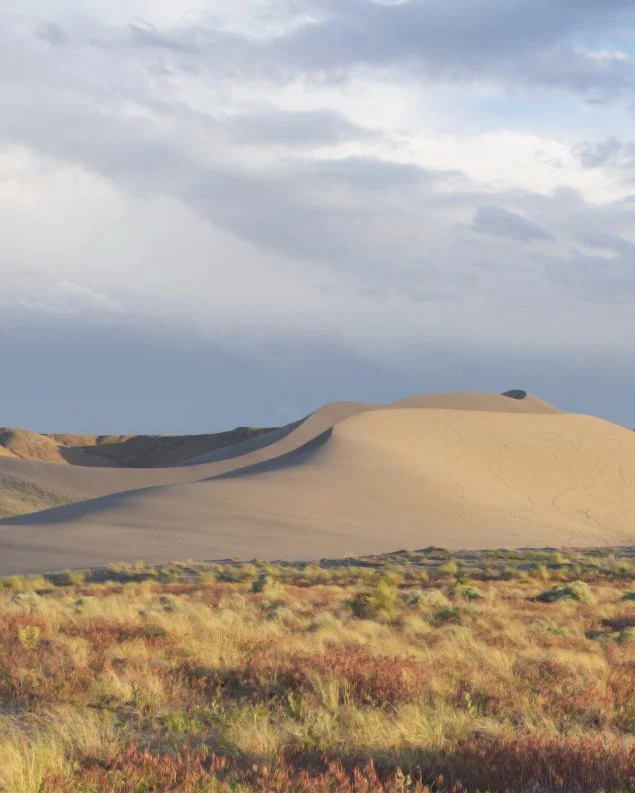
Bruneau Dunes, Idaho State Park
Discover the beauty, history, and future of Idaho State Parks, home to some of the most scenic and underrated destinations in the American West. From RV camping to outdoor recreation and road trip travel, Idaho offers a wide range of experiences for adventurers looking to explore beyond the usual itinerary.
Your host, Brooks, sits down with Will Armbruster, Senior Public Information Officer for the Idaho Department of Parks and Recreation, to share how Idaho’s state park system was built, how it operates today, and what the future holds for campers and RV travelers.
We chat about how Idaho State Parks became a premier destination for tourism while continuing to protect natural landscapes. The conversation also breaks down the campground reservation system, including why campsites may appear fully booked yet remain empty, along with efforts to improve fairness and access for visitors.
Featured parks include Farragut State Park, Ponderosa State Park, and Bruneau Dunes State Park, plus additional destinations that RV travelers should consider adding to their list.
If you are planning an Idaho RV trip or searching for expert camping tips and the best state parks in Idaho, this conversation delivers a behind the scenes look at how these public lands are managed and preserved for future generations.
SHOW NOTES
Exploring Idaho State Parks: History, Camping, and the Future of Outdoor Recreation
Idaho State Parks offer some of the most diverse and awe-inspiring landscapes in the American West. In this episode, Brooks sits down with Will Armbruster of the Idaho Department of Parks and Recreation to explore how these parks came to be, how they operate today, and what the future holds for campers and RV travelers.
From towering pine forests to sweeping desert dunes, Idaho’s state park system serves as both a destination and a gateway to public lands across the state. Will shares insight into the rapid growth in visitation, the realities of campground reservations, and how Idaho is working to expand access while protecting natural resources.
Key Topics Covered
The origin and growth of Idaho State Parks
How campground reservations work, including the 9-month rolling window
Why campsites may appear booked but sit empty
The impact of increased visitation and how parks are adapting
Major investments in new campsites, boat slips, and visitor amenities
The role of state parks as a basecamp for exploring public lands
Parks and Places Mentioned
Heyburn State Park
https://parksandrecreation.idaho.gov/parks/heyburn/Harriman State Park
https://parksandrecreation.idaho.gov/parks/harriman/Henrys Lake State Park
https://parksandrecreation.idaho.gov/parks/henrys-lake/Bruneau Dunes State Park
https://parksandrecreation.idaho.gov/parks/bruneau-dunes/Ponderosa State Park
https://parksandrecreation.idaho.gov/parks/ponderosa/Three Island Crossing State Park
https://parksandrecreation.idaho.gov/parks/three-island-crossing/Hells Gate State Park
https://parksandrecreation.idaho.gov/parks/hells-gate/Bear Lake State Park
https://parksandrecreation.idaho.gov/parks/bear-lake/Priest Lake State Park
https://parksandrecreation.idaho.gov/parks/priest-lake/Massacre Rocks State Park
https://parksandrecreation.idaho.gov/parks/massacre-rocks/Dworshak State Park
https://parksandrecreation.idaho.gov/parks/dworshak/Winchester Lake State Park
https://parksandrecreation.idaho.gov/parks/winchester-lake/Eagle Island State Park
https://parksandrecreation.idaho.gov/parks/eagle-island/Twin Peaks Ranch State Park
https://parksandrecreation.idaho.gov/parks/twin-peaks-ranch/
Reservation and Trip Planning Resources
Book campsites: https://getoutside.idaho.gov
Idaho Parks and Recreation homepage: https://parksandrecreation.idaho.gov/
Reservation call center: 888-922-6742
Notable Insights
Idaho State Parks now see around 7 million visitors annually, a significant increase in recent years. To meet demand, the state is expanding campground capacity, improving infrastructure, and investing millions into visitor experience upgrades.
The system continues to evolve, including the addition of Twin Peaks Ranch State Park, the first new state park in decades, signaling continued growth and opportunity for RV travelers.
Stay Connected With The Show
Sign up for the RV Out West Newsletter
👉 Sign up via the link in this episode description or visit
https://rvoutwest.com/newsletterFollow the Journey on Social Media:
Coming Up Next
Next week, the show dives into route planning, covering everything from quick local getaways to extended multi-day road trips, with tips to help you travel smarter andexplore more.
Podcast Episode Transcript:
The State of Idaho State Parks
Idaho state parks hold some of the West's most breathtaking and surprising landscapes. Today, we're uncovering just what makes them so unforgettable. Welcome to RV out West. I'm Brooks, based in the Pacific Northwest. My family of four hits the road to explore the best of RV life out west. From hidden gems and epic destinations to helpful tips and real road stories. So grab your coffee and join the journey. Morning light spills across the water as mist lifts from a quiet lake, and the only sound is the soft crunch of gravel under your boots. In Idaho State parks, the landscape shifts with every mile from the towering pine trees to wide open desert, where dunes rise against a painted sky. Campfires glow as the sun drops low and the air cools just enough to invite one more story before bed. It is such a place where time slows, where the road leads you deeper into something vast, and where each turn reveals a view that stays with you long after you have left. Today's guest is Will Armbruster from the Idaho Department of Parks and Recreation, where he serves as senior public information officer. He brings a front row perspective on how Idaho State parks are managed, how they are evolving, and what that means for campers and RV travelers. Right now, we're diving into the current state of the parks, the challenges they face, and what the future holds. Will, thank you so much for joining us here on RV out West.
00:01:41 Speaker 2: Yeah, thank you very much for having me, Brooks. I'm excited to be here and talk about Idaho State parks
00:01:46 Speaker 3: Yeah. Me too. I've actually really been wanting to have you guys on the show for a while now. So let's start a little bit about you. Tell me a bit about yourself and kind of what you're camping RVing interests are.
00:01:58 Speaker 2: So I'm actually new to the state of Idaho and very, very grateful to be here. Uh, I moved here from Ohio in July, and so I have a background originally in politics and then stumbled into natural resources. Um, just kind of looking for something more passion driven, a career that, you know, I was, I was really excited to, to come into and worked for the Ohio Department of Natural Resources for three years. And then recently over the summer, I was looking to relocate and moved somewhere out west. Uh, always felt called to the mountains and the wide open landscapes that you can find here in Idaho. And upon moving here in July, did a bunch of networking and ended up landing this job here at Idaho Parks and Recreation. And it's been such a dream and just a wonderful place to work and a wonderful state to now call home.
00:02:41 Speaker 3: Hey. That's great. So you moved here with no job or moved to Idaho with no job?
00:02:44 Speaker 2: Yeah. Moved to Idaho with no job. Um, just packed up a truck and drove across the country.
00:02:49 Speaker 3: I've done that a couple of different times myself. Big cross-country moves with no job. And it's quite remarkable. It can be done.
00:02:56 Speaker 2: It is. It is. You learn a lot about yourself. It's nice to kind of get in that uncomfortable position a little bit and push yourself out of your boundaries. And I think that led to me coming into this role. And you know, like I said, I'm just so excited to be here in Idaho now. And the people here have welcomed me with open arms. And it's an awesome and incredible department to be working for.
00:03:15 Speaker 3: Well, then, what kind of first sparked your interest in the outdoors in public lands?
00:03:20 Speaker 2: So I grew up on Lake Erie and so recreating there kayaking, fishing, boating and so on and so forth was always really just second nature to me. As I gotten older, um, I kind of started discovering, discovering the outdoors on my own and with my spouse, we really enjoyed camping and found that it was a great way to, to connect with each other and also find some peace and solace when we're looking to vacation in different areas. And we'd always kind of been called to the mountains and in these big western, you know, sweeping landscapes. And so as we were looking for places to move, Idaho came on the list. We made a visit. One of the great things about the state of Idaho and Boise in general is there's just so much diversity in landscape that you can find within our system. I think that's one of the things that really drove us to wanting to relocate to Boise. Specifically, within an hour, we can be in the desert, the mountains, in a river canyon, so on and so forth. And so that diversity was one of the main factors that we really wanted to relocate to Idaho and start our life here.
00:04:25 Speaker 3: So do you guys car camp with the tent? Are you backpackers? Do you have an RV? I'm just curious.
00:04:31 Speaker 2: Yeah. Uh, so we mainly car camp. Okay, so just backcountry car camping. Um, obviously it's a little bit different here in Idaho than it was back in Ohio. And there's some some learning to do with that. But I think in addition to that, we do like to backpack. We haven't yet done any backpacking trips. It was pretty busy, as you can imagine, moving here without a job and trying to get everything situated. So this summer. We're really looking forward to getting out and exploring some more of those public lands and state parks throughout the state of Idaho.
00:05:02 Speaker 3: So your background kind of is interesting because you spanned political science, communications and natural resource management. How did those paths converge
00:05:11 Speaker 2: It actually started about five years ago here in Idaho. I was working in Ohio as a press secretary for the Ohio House of Representatives. Okay. In that role, a very interesting role. You realize that you oftentimes don't have a voice of your own or the voice of others with varying political opinions. And so while doing that, you know, throughout my life, I always knew I wanted to be a public servant in some way. Came into politics, was enjoying that work for a time, but then thought to myself, how can I link these passions of natural resources with my drive to be a public servant? I took a trip to Driggs, Viktor Island Park, kind of the eastern part of Idaho, on my own for about two weeks, and recall vividly waking up one morning and driving into Driggs from Tetonia, looking at the Tetons and saying, I'm going to work in natural resources. Somehow I'm going to figure out how to make this work and take my passion for, you know, public service and my skills in communications and apply those to the natural resources world. That kind of led to me just getting in the right rooms, meeting the right folks. And now here we are in Idaho, and I feel like I'm, you know, living out a dream and really working through that passion, which all started back here about five years ago, and Viktor Driggs area. So really incredible. And it's almost a pinch yourself moment every morning when you're driving into work.
00:06:32 Speaker 3: It's remarkable. Yeah. That's awesome. Well, before we kind of talk about where the Idaho parks are going, I'd like to rewind a little bit to learn a little bit about kind of how the system came to exist in the first place. So with that said, can you share with us a bit about the history of how Idaho State Parks came to be.
00:06:55 Speaker 2: Well, thanks for asking, Brooks. I think the the first state park in Idaho was brought to the state in nineteen oh eight, and that was Heyburn State Park. And since then, one thing you'll find about, you know, a lot of people in Western states is they really care and love public lands. This is something that was a bit foreign to me, moving from Ohio, where the only place to recreate our state parks. Now, coming out to Idaho, you have BLM, Forest Service and state park land, so on and so forth, different federal holdings in so many different places to recreate. So as the state park system grew in Idaho, we offer something more unique to our visitors. You know, I think a lot of your listeners will be interested to know that we have those full service hookups. You know, all of those different amenities for families or our viewers when they're coming into our campgrounds. And I think that's what makes us unique and sets us apart a little bit from those other, uh, other opportunities for camping and RVing in the state of Idaho. But we really fill that gap in providing a good resource for people in this state for recreation.
00:07:56 Speaker 3: And how many total state parks are there currently in Idaho?
00:07:59 Speaker 2: That's a great question. There's about thirty.
00:08:01 Speaker 3: Okay.
00:08:02 Speaker 2: So there's two trails that are technically state parks, the trail of the Coeur D'alenes up in northern Idaho and then the Ashton Tetonia Trail in eastern Idaho. So those are trails, but they're managed with state parks. There's some other holdings that we have that are a part of state park units. But the short answer there is about thirty state parks in the state of Idaho.
00:08:22 Speaker 3: And are those all campground based state parks or some of those day use?
00:08:28 Speaker 2: Only a few of them are day use or have day use areas. But majority of our parks you will find and we're doing a lot of work to build campsites at all of those state parks. So for example, Eagle Island State Park, which is here in Boise, we just built a brand new full hookup campground in that park. Uh, just this past year it opened. So we're constantly making improvements and trying our best to have more offerings for our visitors who are coming to Idaho.
00:08:56 Speaker 3: Well, then that kind of segues in. Is there a particular, you know, guiding mission right now that's behind the Idaho State parks today that they're focused on as a collective department?
00:09:09 Speaker 2: Yeah, I think it's just really, you know, providing, uh, great resources for the people of Idaho and the people outside to recreate, um, and then also protecting that land and being stewards of the land. I think those are the two things we really try to focus on is offer recreation and also education on how to be good stewards of this beautiful land we have here in Idaho.
00:09:28 Speaker 3: What would you consider Idaho's crowning achievement in the park system?
00:09:34 Speaker 2: HMM. Very good. Good question. Thanks. I think one of the parks that we're really proud of here is Harriman State Park. Um, I don't know if you've been there before or have any experience in it.
00:09:48 Speaker 3: No, I haven't, so tell me about it, please.
00:09:51 Speaker 2: Uh, Harriman State Park. So the Harriman family, they owned the Union Pacific Railroad. And there's this Harriman State Park in New York and one here in Idaho as well. And so this originally was their railroad retreat, if you will. And this is they would summer here in the Idaho area and fish and enjoy the Henrys fork and all the areas around kind of that Yellowstone caldera just outside of West Yellowstone. What we have still at that park, there's no RV camping, but there's, I believe, twenty six lodging opportunities in that park from yurts all the way to the original houses that the Harriman's built when they first came there in the early nineteen hundreds.
00:10:33 Speaker 3: That's so cool.
00:10:34 Speaker 2: So that's a park that, you know, I would, I would really recommend to people if they're coming to Idaho. And just north of that is Henrys Lake, where we just put in a new campground. So there's some full service hookups there, and that's about thirty to forty minutes from here.
00:10:47 Speaker 3: And how far is Harriman to West Yellowstone? Like, could you use Harriman as a base camp and then go do a day trip into Yellowstone from Harriman?
00:10:56 Speaker 2: Yeah, we noticed a lot of the visitors who come to Harriman are using it. Exactly for that. I did myself on my cross country trip. I actually stayed in Henry's Lake, which is north of Harriman. Right. But stayed there and did a drive into Yellowstone for a couple days and used Henry's Lake as my base camp. I think it's wonderful because that whole Yellowstone area, even outside of the park, is just absolutely fantastic. And the community of Island Park and Henry's Lake in Harriman State Park are just incredible assets in areas that I think if people are visiting Yellowstone, they'd be remiss if they didn't also get over to that part of Idaho and experience Harriman and Henry's Lake.
00:11:34 Speaker 3: Yeah, that sounds really cool. I'll have to check that out. I'm putting that on my list. Which park do you think represents the greatest amount of ecological diversity of the Idaho's landscapes? The best.
00:11:47 Speaker 2: Oh my gosh. Um, you could go in a lot of different directions here.
00:11:50 Speaker 3: I know you got to pick one, my friend. Pick one.
00:11:53 Speaker 2: I would say. I haven't spent so I've started here in October and I haven't yet made it up north. Okay. I've heard a lot of wonderful, wonderful things about the northern part of the state. And I think from from my experience, one of the most unique. This might be a little different flavor to the answer of your question. Um, is Bruno Dunes. It's the largest singular sand dune structure in the United States, and it's located about forty five minutes to an hour outside of Boise, Idaho. You can rent sand boards and do all of that there. It's just kind of sitting outside of the snake River Valley. And that's a place that when when we first visited Idaho and came into Boise, we went to Bruno. And I was just blown away that this totally different, diverse, um, sand dune type environment existed forty minutes from the city. I'd now be calling home. So that's one that I think shocked me a lot. As you drive down eighty four from Boise all the way over to Twin Falls, you're really in desert most of the time with the mountains to your north and a little bit of the Owyhee Mountains to your south, but you're really driving through that desert. If you pull off the highway in Mountain Home and go to Bruneau Dunes, I think you'd be incredibly surprised to see this incredible sand dune and rent a sand board with you and your family, and just have a great time hiking on those dunes, playing disc golf, and even some great fishing at the lake there in that park, too.
00:13:20 Speaker 3: That sounds amazing.
00:13:21 Speaker 2: Oh, and I'd be remiss to mention there's an observatory there as well. Really? Yes, an incredible observatory. And the park is dark sky certified. So, you know, just another reason to make it out to that park. A lot of people will see as they're coming through from maybe the West Coast to drive to Yellowstone, eighty four is the route you take. Yeah. A lot of people come in and stop at Bruno on their way to Yellowstone or the Tetons or Glacier or those other parks as they're headed to the east from the west.
00:13:49 Speaker 3: What's the name of the observatory over there?
00:13:52 Speaker 2: Uh, it's the Bruno Observatory. Okay. If you go on to our web page, you can track it. And they run programming there in the summer and winter.
00:14:00 Speaker 3: So visitors can come and look through the telescope and look into the sky with.
00:14:03 Speaker 2: Yeah, exactly. So visitors can come and participate in that programming. There's a bunch of different telescopes that have been donated by astronomers as well. And so it's really an awesome experience to just view the night sky and be inspired a little bit.
00:14:17 Speaker 3: Yeah, that is so cool. What are. Let's jump right back in and let's talk about what are the top three most visited campgrounds in the state park system?
00:14:27 Speaker 2: Yeah. So for the full year, this would be for the calendar year. The top three most visited are Ponderosa State Park three Island Crossing and Hells Gate State Park. Um, those are in kind of three different areas of the state. So Ponderosa is going to be in McCall, Idaho. Hell's gate is up near Lewiston. Um, kind of on the border of Washington, Oregon. And then three Island crossing is, uh, right near Bruneau Dunes. So that's one that's on highway eighty four. We see a lot of people coming in to stay there for a few nights as they're on their cross-country trips. And then interestingly, during peak season, obviously things change a little bit. So that's Memorial Day to Labor Day. Yeah. When we're looking at those dates, Ponderosa is still the most visited state park. So I really recommend you get out there. That was the first one I visited, uh, when we moved here to Idaho. And it's an absolutely incredible park with wonderful amenities and right near McCall and access to, uh, hundreds of miles of, of federal land as well. But the other two that would be most popular during peak season are Bear Lake, um, which is on the Idaho Utah border in the bottom right hand corner of the state and then Priest Lake, and that's the most furthest North State park up in the panhandle of Idaho.
00:15:49 Speaker 3: Well, then, conversely, what are the top three least visited campgrounds?
00:15:52 Speaker 2: The three least visited state parks would be Winchester Lake, Bruneau Dunes and Massacre rocks for the entire year. So that's for the calendar year. Interestingly enough, camping is open year round at all three of those parks. Something really unique about Idaho is because of the different climates. If you're in the desert area, you can camp year round, which is really incredible. Now, when we look at the peak season massacre, rocks, Dworshak State Park and Bruno Dunes are the least visited during that peak season time. So what we're really trying to do is, you know, help people understand and drive folks from massacre Rocks and Bruno Dunes are kind of close to more urban areas in Idaho, uh, Boise and Twin Falls, American Falls. So on. And so we want people to start discovering these state parks. As I've come into Idaho, there's, there's so many areas to recreate. And I think the question is, why is State Park over somewhere else? And the answer to that question is, you know, we're really a gateway to recreation. We have everything you need within the state park, the full service hookup, the showers, the amenities, the camp stores, the interpretive programming, so on and so forth. And from our state park, you can use that as kind of your base camp to explore the rest of Wild Idaho.
00:17:15 Speaker 3: So true. I mean, state parks, we are really spoiled here in the Pacific Northwest. I mean, in Washington, Oregon and Idaho. Our state parks are absolute jewels and treasures for our community of people that choose to live here and visit and recreate. I mean, our state park systems are incredible. They really are.
00:17:37 Speaker 2: Here. Most definitely. And I need to make my way into Washington and Oregon as well, and explore some of the parks that that are in those areas too. You know, there's.
00:17:46 Speaker 3: But just in general, I mean, yeah, they're just incredible. Well, so with so many people visiting Idaho state parks, I'm aware that one of the biggest challenges is simply just even getting a campsite. Do you know, are there any improvements that are currently being developed or worked on to help mitigate this? And, you know, make it a little bit more equitable so everybody can get campsites when they want them.
00:18:13 Speaker 2: First, to start off camping, reservations in Idaho for the state parks are made and can be made on a nine month rolling window. So, um, today we're recording this on the eleventh of March. That means you could book your stay for December eleventh. As of today. So that's one of the things that we're doing to try and help assist with this issue. And you can book for a maximum of fourteen nights. Additionally, something that's benefited me as I was on my cross-country trip. You can book same day reservations, so that's cool. Yeah. If you're a little, uh, procrastinating and booking that reservation and you know, we're in, uh, we're in Minot, North Dakota and like, hey, where are we gonna sleep tonight? Oh, Henry's like is available. So that was a thing we recently added this year that I think is, is really helpful as people are, you know, a lot of people are going across the state and I've ran into some different campers, um, who may not know where they're saying that night. And so that's kind of a new fun aspect that we've added to the reservation system. But we had a goal of last year to open two hundred and fifty new campsites. We're projected to open three hundred and thirty nine, one hundred and fifty. New and upgraded boat slips was another goal. We're projected to open three hundred and forty six wow this year. And then twenty five new day use areas um was another thing we were really trying to accomplish. Were projected to open twenty six. So as you know, we've seen visitation really spike since Covid. Uh, we're up to about seven million visitors a year in our state parks, which was absolutely incredible. But we have to meet that demand and we have to provide resources for people and make sure there's enough room for everybody to recreate. But also when you go outside, you know, you want to be alone and you want to have that peace and solace a little bit. And so we're playing that balance with expanding facilities and providing more offerings for folks to kind of combat that visitation a little bit. Though we're extremely happy to have those seven million people coming into our state.
00:20:12 Speaker 3: Yeah. Of course. What was it? I'm just curious, what was it pre-COVID? If it's seven million posts, do you know what it was pre?
00:20:19 Speaker 2: Yeah I.
00:20:20 Speaker 3: Do. Just I'm curious what that growth rate was that I mean, I think it's great that people are getting out to recreate whether they're in an RV or they're camping or they're just going, they used to picnic and wet a line and fish for some trout or whatever it might be. I just think it's great, but.
00:20:37 Speaker 2: It's yeah, it's gone up about three million people. Wow. Twenty twenty one, we saw a big spike and we've kind of seen that we've maintained, uh, those numbers, which has been absolutely wonderful. So not only did you know more people maybe discovered the outdoors, but they're finding it a place that they want to continue to spend time. And, um, for us in Idaho state parks, that's just been wonderful. But like I said, we want to work to meet that demand, right, and improve facilities. And so we saw over sixty five million awarded in Arpa funding to our state park system. We spent a ton of that money to not on toilet paper, not on staff salaries, but on improving, uh, our facilities and improving the visitor experience in the state.
00:21:24 Speaker 3: And that all came from your Idaho state legislature.
00:21:26 Speaker 2: Then some of that funding came from the federal government. Okay. And the way of federal, uh, so the American Rescue Plan Act. Yeah. Um, and then some of that other funding Funding came from the state legislature as well. And so, you know, with all of that money that we received, ninety five million in total, we spent almost or allocated almost all of that money already to improve the visitor experience in Idaho. Again, not on, you know, not on toilet paper staff salaries, but to help the people who are visiting in our parks have a good time.
00:21:58 Speaker 3: That is remarkable. That's a great segue because you just kind of mentioned already, one of my questions was like, what improvements are currently being developed? Well, we kind of already talked about that, but can you tease, are there any potentially new parks or big major expansions on the horizon that you can tease or talk about that you're not sworn to secrecy? Yeah.
00:22:22 Speaker 2: So there's a few really exciting things, um, that are going on and I'll mention just a few of them. Coconut Cove, there's been some information on this on our website. So if anybody wants to go to the Idaho Parks and Recreation webpage. This is at Ponderosa State Park. We renovated an old church camp to create essentially a new first class cabin staying experience at Ponderosa State Park. There's an event center as well, so we converted an old chapel into a very new and beautiful, um, event space for people to host weddings. Another thing that, you know, we've made a ton of improvements on is at Harriman State Park. We saw a lot of the roofs on those old structures that were built by the harrimans when they first bought that and built that railroad ranch, those roofs were failing. And as you probably know, for roof fails and the rest of the building is at risk. So we spent a ton of money, um, in that portion of the state, about fifteen million dollars to put on new roofs, put in a new water system, expand camping at Henry's Lake, uh, pave a lot of the Ashland Trail. So there's just been incredible, incredible work happening throughout the state. And I think one of the most exciting things, and perhaps a little sneak peek at something that we're really excited to share is we just purchased the first new state park in about thirty years here in Idaho.
00:23:52 Speaker 3: You heard it first, right here on RV out west, right? I'm just kidding. That's awesome. So tell me more. What is what? What can you share that you're allowed to share about this new state park? That's exciting.
00:24:02 Speaker 2: So the park is actually it has a web page on our website. So again, if you go to Idaho Parks and Recreation, our web page, you can click on Twin Peaks Ranch State Park is the name of this park. And it was a ranch functioning for many years. And it ended up, uh, coming up for sale. And it was the right situation for us to look into expanding our resources and purchase a new property. So Twin Peaks is about six hundred and seventy seven acres. It borders BLM land on three sides. It's located between Salmon and Challis, Idaho.
00:24:37 Speaker 3: Okay.
00:24:37 Speaker 2: Really exciting because we don't have many resources. Idaho Parks and Recreation does in that part of the state. The closest state park we have is Challis Hot Springs, or land of the Yankee Fork. And so we are super, super excited to be able to offer something else in that part of the state for visitors. What's unique about this park is there's twenty four full service private accommodations. Those are almost consider them like little private cabins that you can rent out and stay with your family.
00:25:07 Speaker 3: Yeah.
00:25:09 Speaker 2: There's a five thousand square foot horse farm, primitive disc golf course that we're working on updating. Two maintenance shops, a woodworking shop, and there's going to be a full kitchen. There's a guest lodge on site, so we'll have a commercial kitchen and also some looking into getting some concessionaires in there for horseback riding as well.
00:25:29 Speaker 3: What's the anticipated opening.
00:25:31 Speaker 2: Yeah. So the opening date is going to be this June. Oh, wow. Okay. June or July. So we purchased the property and took ownership in October. Um, and there's a lot of work happening up there right now.
00:25:43 Speaker 3: Can people start to make reservations or not yet?
00:25:45 Speaker 2: Yes. You can make reservations for groups only at this point. Okay. So it's, it's really a great opportunity to, you know, sell this venue as a potential wedding venue. Yeah. Um, or another place for retreats. But one of the exciting things I think for your listeners is as we're looking into the future of this park, we're looking into putting in some, uh, camping and RV sites as well. So there's a long term plan in place.
00:26:10 Speaker 3: Yeah, of course.
00:26:11 Speaker 2: But that doesn't mean that, you know, the gate is open and we're going to want people to come in this summer and explore that new state park at Twin Peaks Ranch.
00:26:19 Speaker 3: That is very, very exciting. Let's do the futuristic talk now. Let's fast forward twenty five years. What do you hope Idaho State parks will look like for that next generation of campers?
00:26:35 Speaker 2: Yeah, I think, you know, being an outsider and moving into Idaho, there's so much to discover in this state. And it's called the gem state for a reason, right? I think there's so many wonderful things in the state of Idaho that people maybe don't think about or don't think to plan a vacation here. And I want to change that tone. That's my goal of, of working in this job and being a part of this agency is just helping people discover Idaho. I did the same thing when I was working in Ohio, and you'd be surprised how many people had never been to a state park in Ohio as well, where there's seventy six of them and they're in, you know, so many different areas of the state. As I've seen moving here, I've been to more state parks than a lot of people I've spoken to in my six months of living in Idaho. And I just want to increase awareness and, and help people understand how great these resources are. We really are, like I mentioned before, and we touched on, we're a gateway to all of these other lands that you can access and recreate on. And I want that to kind of be what we carry on into the future is people see us as that base camp and from this state park, I can go out and experience all of these BLM or Forest Service or different different public lands that may be around our state parks.
00:27:54 Speaker 3: That is so cool. Now will tell me more. Where can people go online to learn more about all of the listings of state parks? How can they find Idaho State Parks on socials? Like. Where can they find all of. To get more information about Idaho State Parks.
00:28:10 Speaker 2: So if you're looking to make a reservation and stay in our state parks, get outside dot Idaho.gov. That would be the best site to go to for our call center is eight eight eight nine two two six seven four two and you can make reservations directly with them Otherwise, just going to our website, I think is a great way to find out information. And that's Parks and Recreation Idaho.gov. And all of our socials are just Idaho State Parks and Recreation on Instagram and Facebook and so on and so forth.
00:28:45 Speaker 3: Well, thank you so much for taking time out of your busy day to talk to us here on RV out West. I really appreciate it.
00:28:52 Speaker 2: Thank you. Brooks. And I like to keep this relationship up and hope to appear again when we have some more fun things to share within Idaho State Parks and Recreation.
00:29:02 Brooks, Host: All right, my friends, this conversation doesn't have to end here. If anything we talked about sparked your curiosity. Head over to RV dot com and check out the show notes. We've got links to everything we mentioned so you can dive deeper, explore more, and maybe even start planning your next adventure. And while you're there, make sure to sign up for our free monthly Newsletter. That's where we share things like behind the scenes updates, brand new destination travel guides and a few extras. We don't always talk about the show. It's the best way to stay connected with us and be part of the community. We are all building. I appreciate you being here. Thanks so much. Next week on the show, we're diving into the art of route planning. From quick local getaways to extended multi-day road trips. Tune in for expert tips, insider strategies, and everything you need to make your next adventure smooth and unforgettable. Thanks for listening to RV out West. Be sure to follow the show so you never miss an episode. And if you enjoyed the show, tell a friend and please leave a rating or review. It would mean a lot. Special thanks to Scott Home music for our intro song We Are One. Follow us on Instagram and Facebook to join in on the conversation. Now get out there, explore and go see what's beyond the horizon.