Banff, Canada
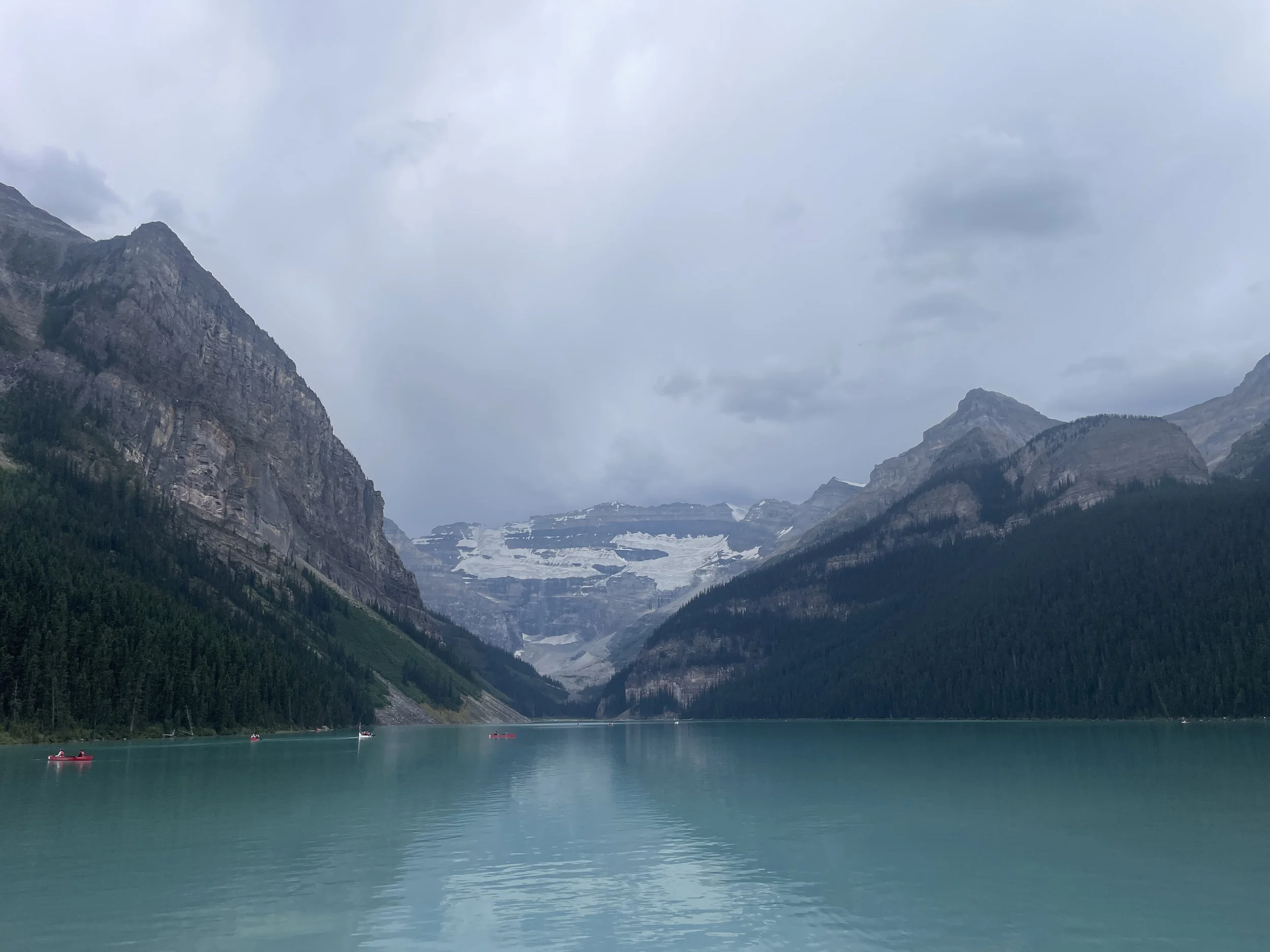
For nearly thirty years, Banff lived in my imagination long before it ever lived outside my windshield.
Back in the 1990s, my grandparents, Bobbie and Papa, returned from a trip to the Canadian Rockies with stories that stuck with me. They weren’t casual travelers. Over their lives they had lived all over the world; from Peru, Colombia, Egypt, and England. They had witnessed deserts, ancient cities, and faraway landscapes most people only read about. Yet whenever they spoke about Banff, it was like watching a light flicker back on inside them; eyes brighter, voices softer, as if they weren’t just remembering it, but returning to a place that had quietly etched itself into their souls.
When people who have seen that much of the world come back talking about one destination like that, you pay attention.
From that moment on, Banff National Park earned a permanent spot on my bucket list. It would take nearly three decades before I finally made the trip myself with my family.
The Long-Awaited Journey North
In the summer of 2024, we loaded up our Jayco 267BHSW travel trailer and pointed ourselves in the direction of the Great White North. What followed was a nine-day RV journey that combined travel days, campground stays, and time exploring one of the most iconic regions in North America.
We crossed into Canada at the Sumas truck crossing, then made our way along Highway 1 through British Columbia before connecting to Highway 5. From there, the route carried us through mountain towns, valleys, and eventually into the heart of the Canadian Rockies.
The drive itself took about eleven hours of driving time one way, but that number doesn’t really tell the full story. This isn’t just a point-A-to-point-B trip. It’s a gradual transition from coastal Pacific Northwest forests into alpine terrain that gets more dramatic with every mile.
Somewhere along the way, the trip stops feeling like a drive and starts feeling more like an experience.
Revelstoke: The Stop You Shouldn’t Skip
One of the most memorable stops on the route was Revelstoke, British Columbia.
It’s one of those mountain towns that feels like it was built for travelers passing through, but deserves more than just a quick stop. The scenery alone is worth the detour, but the real value comes from slowing down and taking in the pace of the place. Seeing Revelstoke for the first time, it almost doesn’t look real, massive, jagged peaks rising straight out of the earth, their tops still dusted with snow even as deep green forests blanket everything below. The Columbia River cuts through it all like glass, reflecting the sky and mountains in a way that makes it hard to tell where the landscape ends and the reflection begins.
We’ve actually dedicated an entire podcast episode to Revelstoke because of how much there is to do there:
https://www.rvoutwest.com/episodes/destination-revelstoke-a-guide-to-bcs-best-mountain-town
If Banff is the destination, Revelstoke is one of the experiences that helps define the journey.
Crossing the Border with an RV
Crossing into Canada with an RV is relatively straightforward, but it’s not something to rush through without preparation.
At the Sumas crossing, we rolled up with passports ready, windows down, and interior lights on. After a few routine questions, we were waved through and continued on our way.
For anyone planning this trip, it helps to understand what to expect ahead of time. Every traveler needs a valid passport, and you should have your vehicle registration and insurance documentation available.
We go deeper into the border crossing process in this episode, which includes insights from a Canadian border agent:
https://www.rvoutwest.com/episodes/crossing-borders-rv-travel-tips-for-exploring-canada
A little preparation goes a long way in making the experience smooth and stress-free.
Arriving in Banff
We left Washington after work on a Friday evening, crossed the border around 7:30 pm, and stayed overnight at a Harvest Host location in Merritt, British Columbia. The next day, we continued the final stretch toward Banff.
By the time we arrived at our campground that evening, it was nearly 10:30 pm. We set up quickly, then called it a night.
The next morning, everything changed.
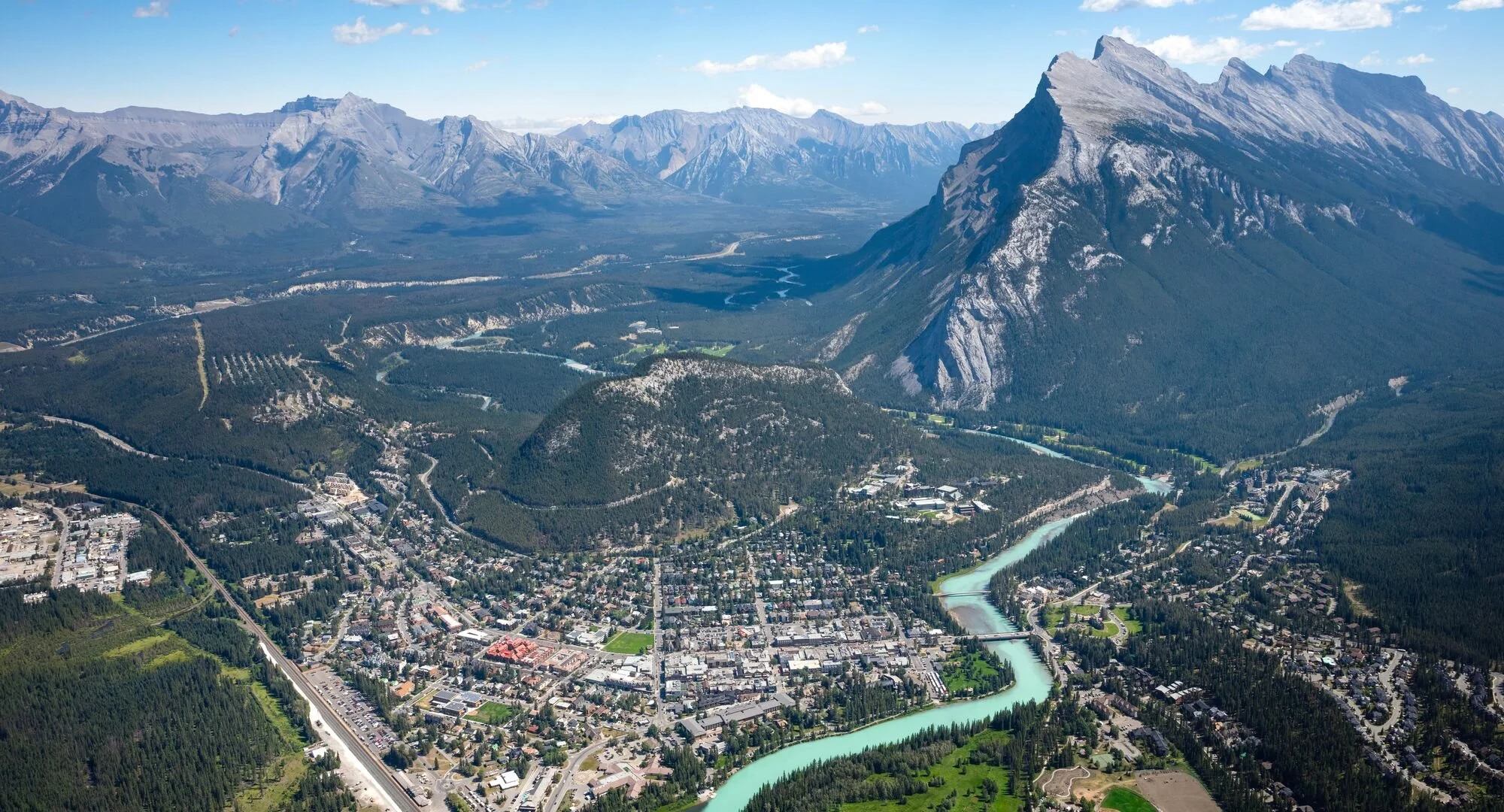
We stepped outside the RV and were greeted by towering peaks surrounding us in every direction. Snow-capped mountains rising above the valley floor. Crisp mountain air. A landscape that felt almost unreal.
That was the moment Banff became real.
Tunnel Mountain Trailer Court
Camping Inside Banff National Park
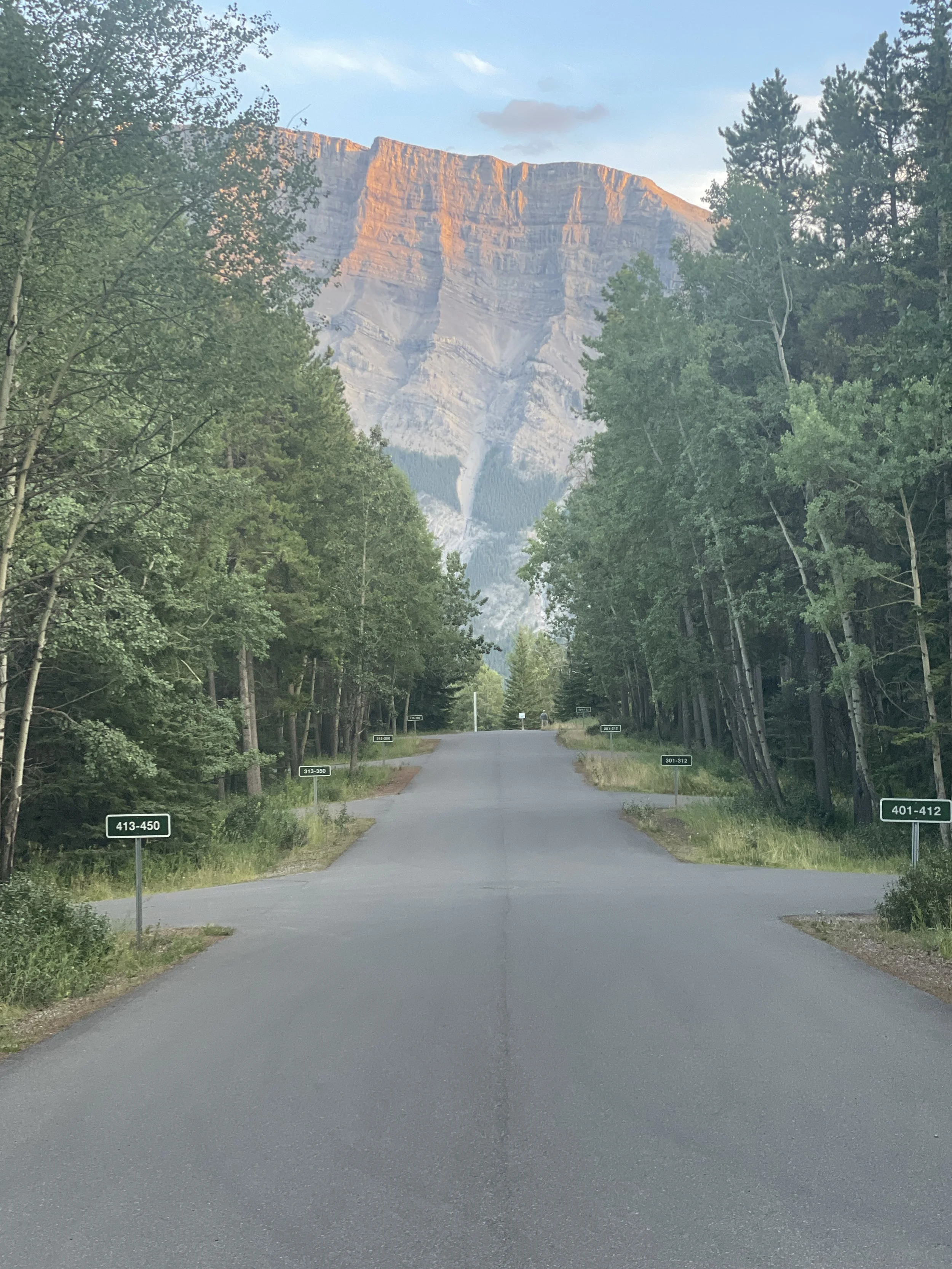
For our stay, we based ourselves at Tunnel Mountain Trailer Court, just outside downtown Banff.
For RV travelers, this campground is one of the best options in the entire Parks Canada system. Full hookups, well-designed sites, and a location that makes it easy to explore both the town and surrounding attractions.
What makes staying here even more unique is how central it is to everything. You’re close enough to town for convenience, yet still surrounded by mountain views that remind you exactly where you are.
That said, securing a site requires planning.
Parks Canada uses a reservation system that opens all at once in January. When the system goes live, thousands of people enter a virtual queue at the same time, all trying to book campsites across the country.
When I logged in, I found myself well over a thousand people deep in line. Friends traveling with us were tens of thousands back and had to wait nearly an hour just to reach the booking screen.
If Banff is on your list, booking early isn’t optional, it’s essential.
We break down the Parks Canada reservation process in detail here:
https://www.rvoutwest.com/episodes/pit-stop-the-parks-canada-reservation-process
Getting Oriented in Banff
Our first full day in Banff was less about checking off attractions and more about getting oriented.
The town of Banff itself has a mountain village feel. It’s walkable, filled with outdoor shops and restaurants, and serves as the hub for exploring the surrounding park.
One of the best places to start is the Banff Visitor Centre. The park staff there can help with transit options, hiking recommendations, and general guidance on how to navigate the area.
Banff can get busy, especially in the summer months, so having a plan, and understanding how to move around efficiently, makes a big difference.
Lake Louise and the Gondola Experience
One of our early excursions took us to the Lake Louise area, where we rode the scenic gondola at the Lake Louise Ski Resort.
The gondola climbs into the mountains and opens up sweeping views of valleys and peaks below. At the top, we stopped for lunch at Whitehorn Bistro, where the scenery alone made the meal worth it.
Midway through lunch, a lightning storm rolled in and temporarily shut down the gondola. It’s a good reminder that mountain weather can change quickly. We ended up waiting it out before making our way back down.
The First Look at Lake Louise
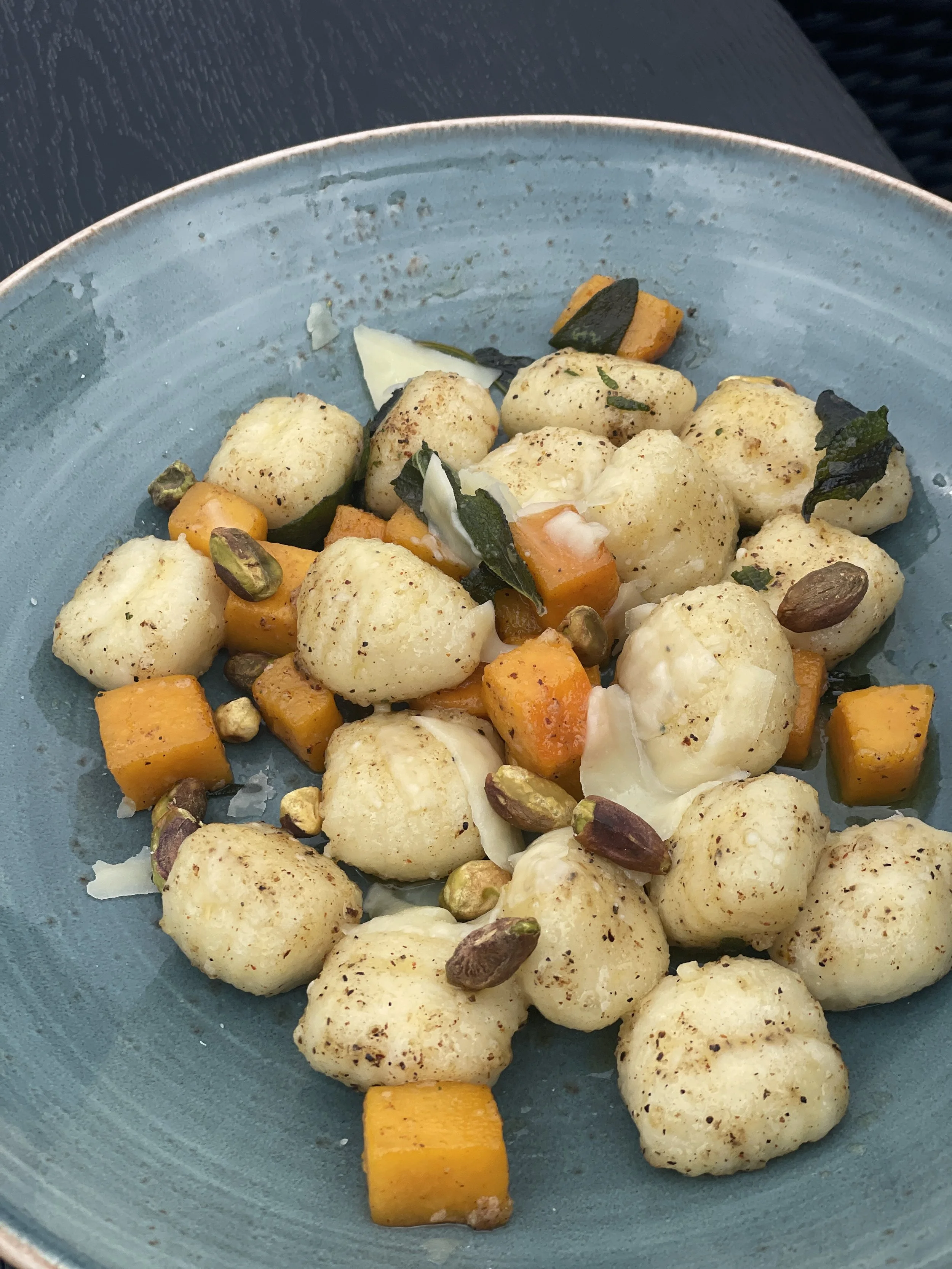
Even if you’ve seen it countless times in photos, nothing quite prepares you for your first view of Lake Louise.
The water is an almost surreal shade of turquoise, created by glacial silt. Surrounding peaks rise steeply from the shoreline, with glaciers clinging to the mountains above.
It’s crowded, it’s popular, and it’s absolutely worth seeing.
A shoreline trail allows you to walk away from the busiest areas and take in different perspectives of the lake, which helps you appreciate just how expansive and dramatic the setting really is.
Banff Upper Hot Springs
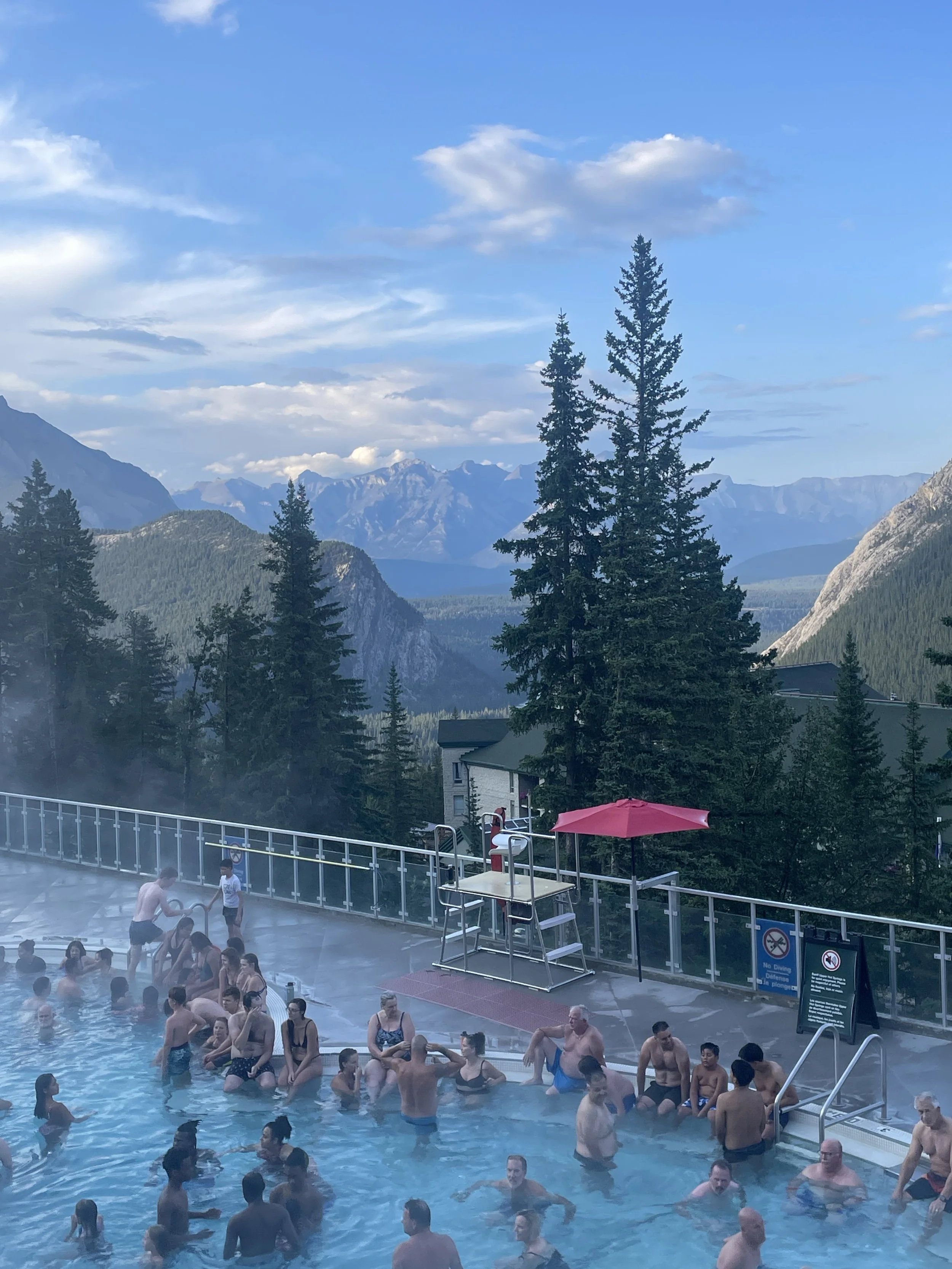
After a full day of exploring, we made our way to Banff Upper Hot Springs.
This isn’t a remote natural soak, it’s more of a developed, historic hot spring pool, but the setting is what makes it memorable. Warm water, cool air, and mountain views all come together in a way that’s hard to replicate.
It’s a great way to unwind after a long day, even if it’s something you may only do once.
A Detour That Became a Highlight: Takakkaw Falls
Not everything goes according to plan when you’re traveling, and that’s often where the best moments happen.
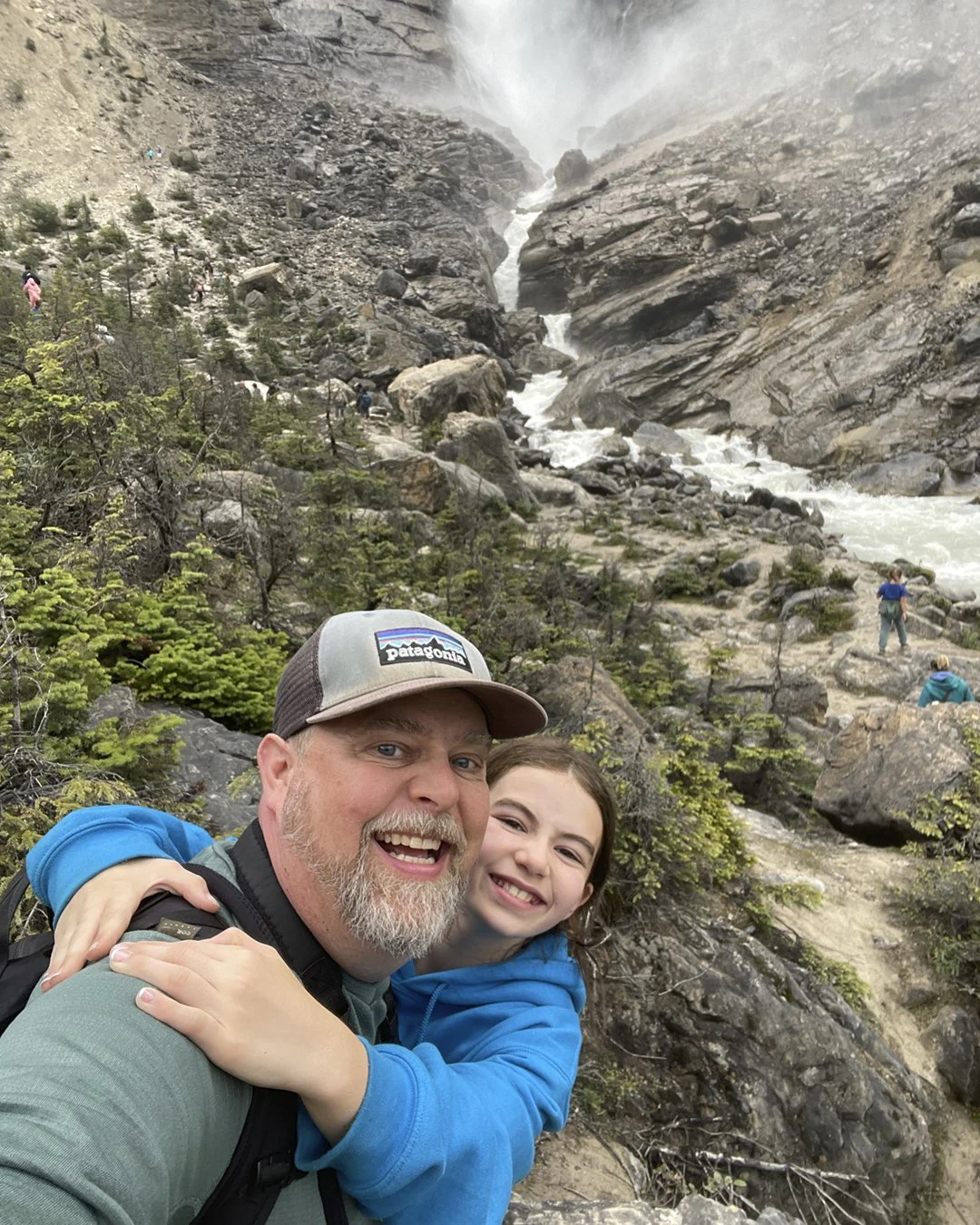
After missing a shuttle reservation one morning, we adjusted our plans and followed a recommendation to visit Takakkaw Falls in Yoho National Park.
The approach to the falls starts on a paved path that leads across a bridge and gradually transitions into a trail toward the base of the waterfall. As you get closer, the temperature drops and the sound of rushing water grows louder until you’re standing beneath one of the tallest waterfalls in Canada.
It ended up being one of the most memorable stops of the entire trip.
Driving the Icefields Parkway
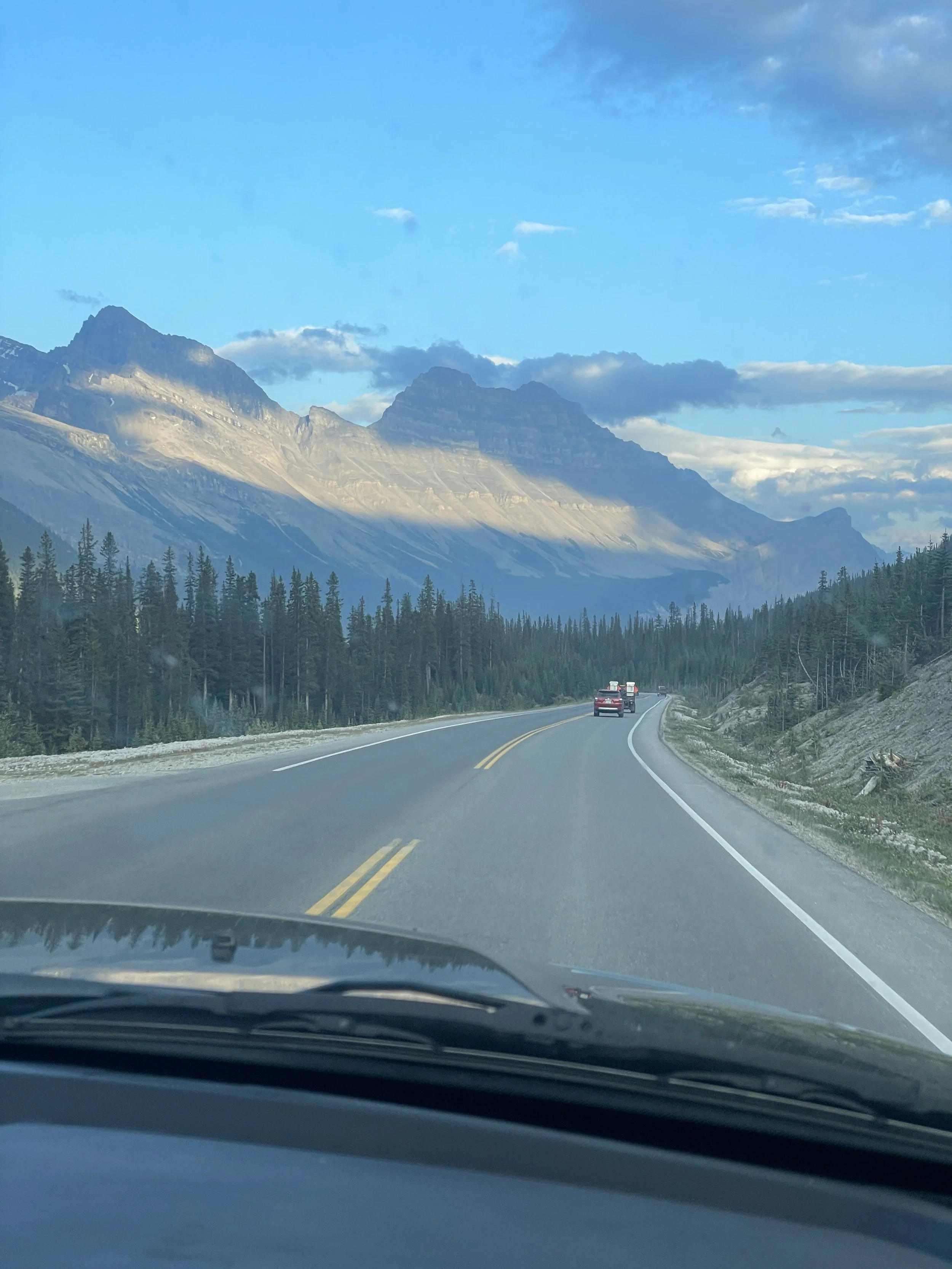
If there is one stretch of road that defines this entire journey, it’s the Icefields Parkway.
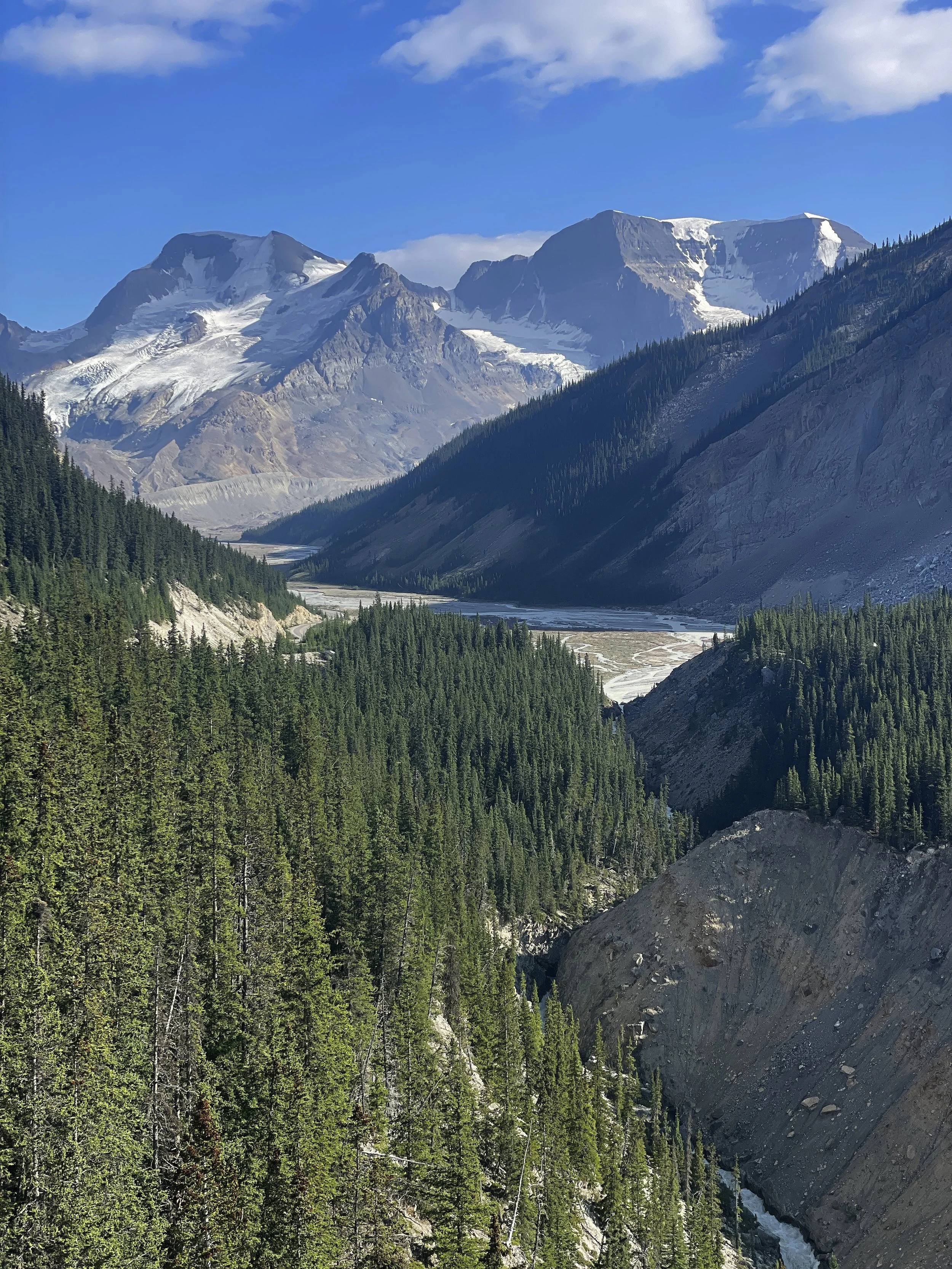
Running between Banff and Jasper, this highway is widely considered one of the most scenic drives in the world. Glaciers, alpine lakes, towering peaks, and wildlife sightings appear constantly along the route.Driving the Icefields Parkway between Banff and Jasper feels like moving through a living painting. The road pulls you forward as towering mountains rise straight ahead, their sharp peaks still streaked with snow. Glaciers cling to the slopes, glowing faint blue, while flashes of turquoise water appear through the trees, so vivid they almost don’t seem real. Each curve reveals something bigger, something more dramatic, until you find yourself going quiet, eyes locked on the windshield, trying to take in a landscape that refuses to be ordinary.
You’ll want to give yourself plenty of time here. The pullouts are frequent, and stopping is part of the experience.
Walking on a Glacier
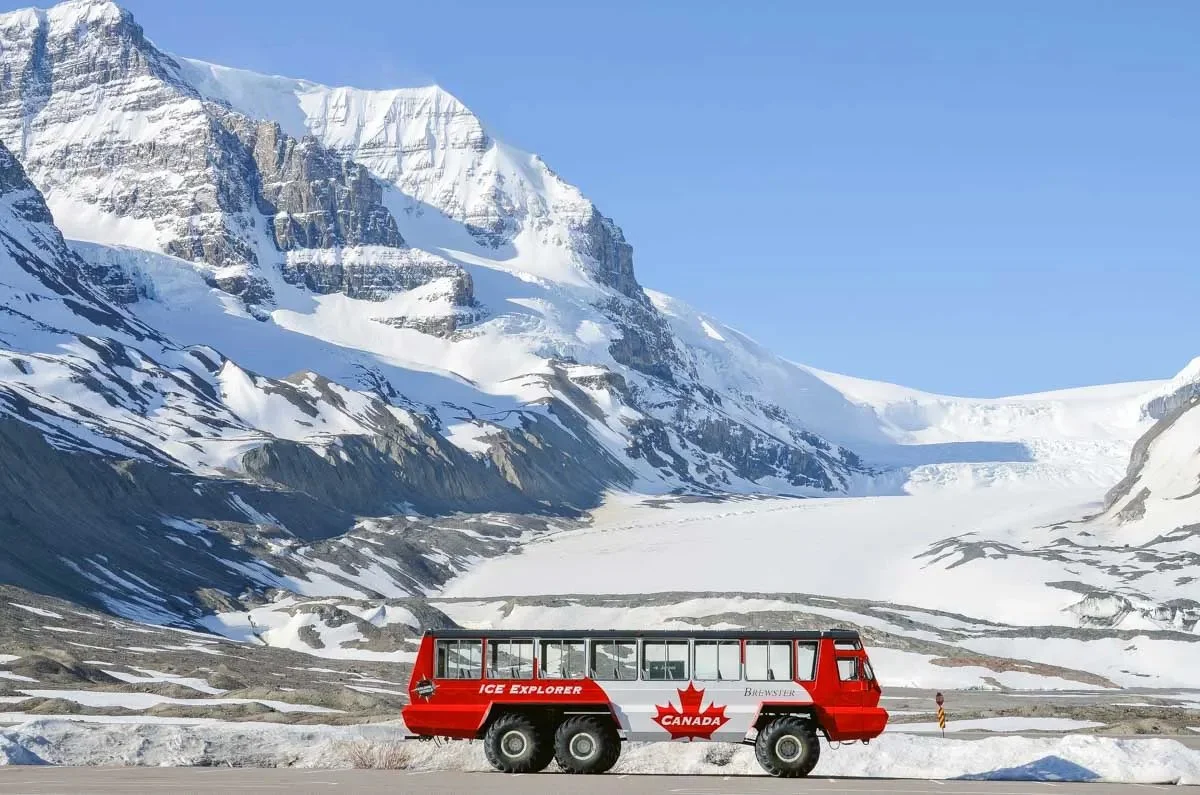
One of the most surreal experiences along the Icefields Parkway was visiting the Athabasca Glacier as part of the Columbia Icefield area.
The glacier has receded significantly over the past century, and markers in the valley show just how far it once extended.Stepping out onto the Athabasca Glacier, the air hits you first, sharp and clean, like it’s been untouched for centuries. Beneath your boots, the ice shifts in soft creaks, ancient and alive, and when you kneel to scoop a handful of that crystal water, it’s so clear it almost disappears in your palm. You bring it to your lips and it’s impossibly cold, the kind of cold that lingers, as if you’re tasting something far older than yourself. For a moment, everything goes still, the mountains standing guard, the wind whispering across the ice, and it feels like you’ve stepped into a place time forgot.
We took an Ice Explorer tour out onto the glacier itself, where we stepped onto the ice and even drank fresh glacial meltwater. The experience also included a stop at the Columbia Icefield Skywalk, a glass platform suspended above a canyon.
It’s one of those moments that feels hard to fully process while you’re standing there.
Why This Trip Stands Out
We only had a handful of days in Banff, and even with that limited time, it felt like we barely scratched the surface.
That’s perhaps the biggest takeaway from this entire trip.
Banff isn’t just a destination you visit once and move on from. It’s a place that invites you to slow down, explore, and return again with more time.
Why you MUST do this trip.
RVing from the Pacific Northwest into the Canadian Rockies is one of those rare trips where the journey and the destination are equally rewarding. From the forests of Washington to the mountain towns of British Columbia, and finally into the dramatic landscapes of Banff, every leg of the trip builds on the last. And when you finally arrive, step outside your RV, and take in the view for the first time, you understand why people have been talking about Banff for generations. If Banff has been sitting on your bucket list, don’t wait decades to experience it. Plan the trip, take your time, and go see it for yourself. Because this is one of those places where the stories you’ve heard, the photos you’ve seen, and the reality all come together exactly as promised.