Dismantle. Defund. Divest. What’s Happening to Our Public Lands
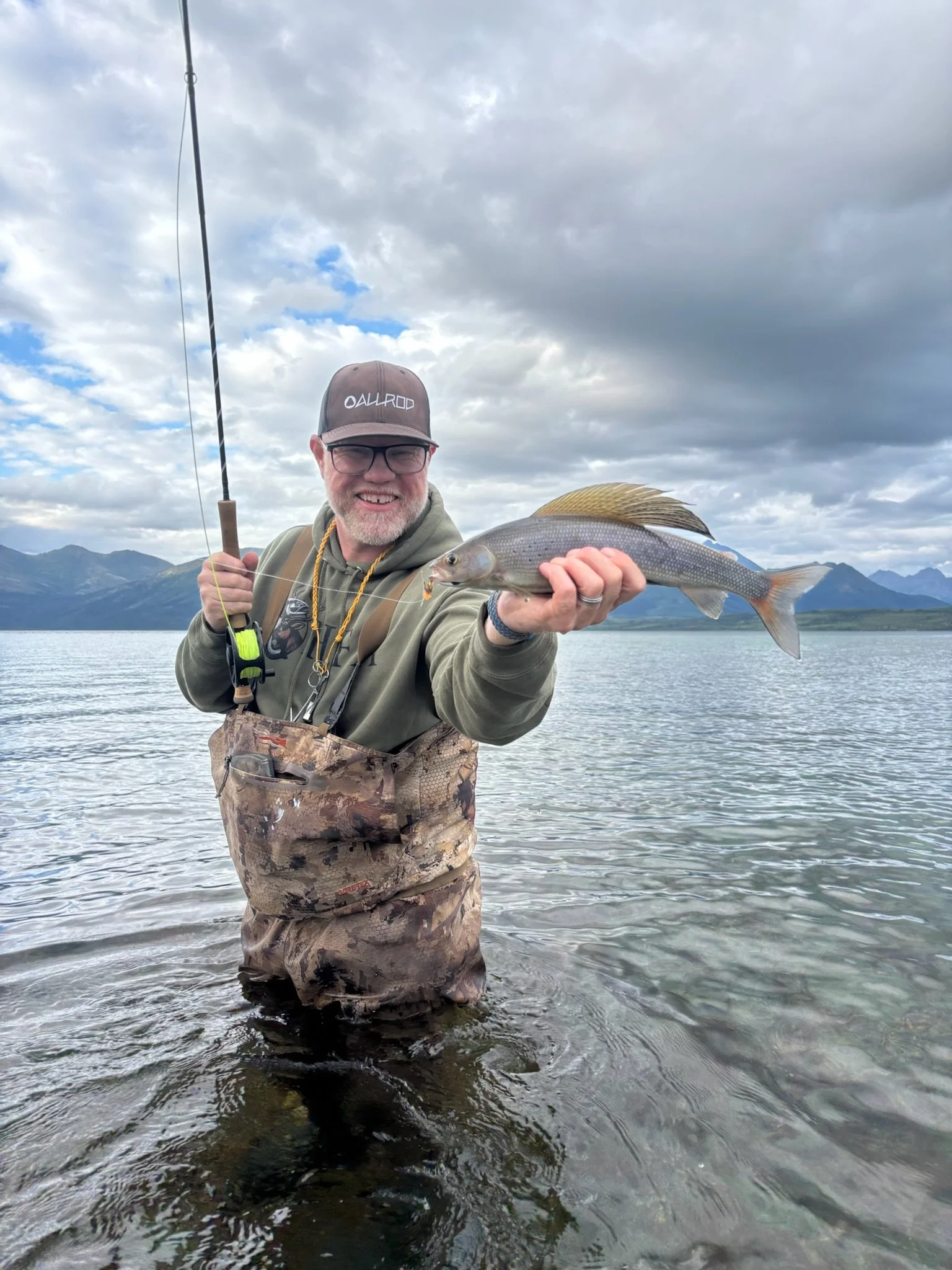
Land Tawney, co-chairman of American Hunters and Anglers, fly fishing.
Public lands belong to all of us. This episode takes a deeper look at why they matter and what their future could mean for everyone who enjoys the outdoors.
National Public Lands Day was just this past Saturday, September 26, a day dedicated to celebrating and caring for the parks, forests, trails, rivers, mountains, and open spaces that connect us to the outdoors. For RVers, campers, hikers, hunters, anglers, climbers, mountain bikers, paddlers, and anyone who loves getting outside, these places are more than destinations. They are where we make memories, find adventure, reconnect with family, and escape the noise of everyday life.
In this episode we’re talking about public lands, conservation, outdoor recreation, public access, and the future of the places we all enjoy.
Our guest is Land Tawney, co-chairman of American Hunters & Anglers and a longtime public lands and wildlife advocate. Land previously served as president and CEO of Backcountry Hunters & Anglers for a decade, helping lead national efforts focused on public lands, public access, wildlife, hunting, fishing, and conservation.
Land brings decades of experience to this conversation, and we go beyond the usual talking points. We discuss why public lands matter to all of us, the role hunters and anglers play in conservation, and what Land describes as the “Three D’s” of public lands: dismantle, defund, and divest.
This conversation is for anyone who hikes, camps, RVs, fishes, hunts, bikes, paddles, climbs, or simply enjoys spending time outside.
Our public lands enrich our lives. This episode is about understanding their value, the challenges ahead, and the role each of us can play in their future.
SHOW NOTES
Vote For The Show: 2026 Campies Awards
RV Out West is a finalist for the 2026 RVshare Campies Award for Best RV & Camping Podcast. RVshare's 2026 Campies include awards recognizing RV travel creators, including Best RV and Camping Podcast.
RVshare Campies 2026
Your vote will take less than one minute of your time, and it would mean the world to me. Thank you.
Dismantle. Defund. Divest. What’s Happening to Our Public Lands
Public lands belong to all of us. In this episode of RV Out West, Brooks sits down with Land Tawney, co-chair of American Hunters & Anglers, for a wide-ranging conversation about public lands, conservation, outdoor recreation, public access, hunting, fishing, wildfire, funding, and the future of the places we all enjoy.
With National Public Lands Day just passing on September 26, this conversation takes a closer look at why America’s public lands matter to RVers, campers, hikers, hunters, anglers, mountain bikers, climbers, paddlers and anyone who spends time outdoors.
Land Tawney grew up in Montana surrounded by hunting, fishing, public lands and conservation. He earned a wildlife biology degree from the University of Montana and has spent decades working in conservation and public-land advocacy, including leadership roles with the Theodore Roosevelt Conservation Partnership and Backcountry Hunters & Anglers. He now serves as co-chair of American Hunters & Anglers.
In This Episode
Brooks and Land discuss:
What public lands mean to Americans and why access matters
The roughly 640 million acres of federal land managed across the United States by multiple federal agencies
BLM land, National Forests, National Parks and National Wildlife Refuges
Why public lands provide opportunities for camping, RVing, hunting, fishing, hiking and other outdoor recreation
The responsibility of leaving public lands better than we found them
Leave No Trace principles and outdoor stewardship
The importance of public participation in land-management decisions
The concept of multiple-use management on federal lands
Land's description of the “Three D’s”: dismantle, defund and divest
The ongoing debate surrounding the federal Roadless Area Conservation Rule
Public-land funding, maintenance backlogs and recreation infrastructure
Increasing visitation to national parks and other public lands
Whether increased visitation is putting too much pressure on public lands
The economic importance of outdoor recreation
Public lands, clean water and wildlife habitat
The Prairie Pothole Region and waterfowl habitat
How hunters and anglers participate in conservation
Practical ways individuals can become more engaged with public-land issues
Why Land believes apathy is one of the biggest challenges facing public lands
What Land hopes public lands will look like 25 years from now
What Are America's Public Lands?
Federal public lands include areas managed by the Bureau of Land Management, U.S. Forest Service, National Park Service and U.S. Fish & Wildlife Service, among other agencies. The federal government owns roughly 640 million acres, with the four major land-management agencies administering the vast majority of those acres.
The BLM alone manages approximately 245 million acres of public lands and administers those lands under a multiple-use mandate that includes recreation, conservation, grazing, energy development, mining and timber production.
The National Park Service manages more than 400 park units across the United States, while the National Wildlife Refuge System includes more than 570 refuges.
The Roadless Rule
Land discusses the federal Roadless Area Conservation Rule, commonly known as the Roadless Rule. The U.S. Forest Service maintains official data for the 2001 rule, which established management direction for inventoried roadless areas on National Forest System lands. Idaho and Colorado later adopted state-specific roadless rules that supersede the 2001 rule in those states.
Learn more: U.S. Forest Service Roadless Area information
Public Lands and the Outdoor Economy
Public lands are also connected to a massive outdoor recreation economy. According to the U.S. Bureau of Economic Analysis, outdoor recreation generated approximately $1.3 trillion in gross output in 2024 and supported 5.2 million jobs, accounting for 2.4% of U.S. GDP.
That economic activity includes RVing, camping, boating, fishing, hunting, hiking, biking and countless other ways Americans enjoy the outdoors.
Prairie Pothole Region
Land also discusses the Prairie Pothole Region, an important wetland and grassland ecosystem across parts of the northern Great Plains. Ducks Unlimited identifies the region as one of North America's most important and threatened waterfowl habitats.
Learn more: Ducks Unlimited: Prairie Pothole Region
How Can You Get Involved?
Land offers several practical suggestions for people who care about public lands, including learning about the issues affecting places you use, connecting with organizations that represent your outdoor interests and communicating with elected officials.
The U.S. Capitol switchboard number mentioned in the episode is 202-224-3121.
You can also learn more directly from the federal agencies responsible for managing public lands:
Organizations Mentioned in This Episode
Land references several organizations involved in conservation, hunting, fishing, wildlife and outdoor recreation:
Land attended the 2026 Outdoor Writers Association of America conference in Madison, Wisconsin, held August 22–24.
Learn More About Land Tawney
Land is active with American Hunters & Anglers, which describes itself as a national organization focused on public lands, waters, wildlife and outdoor heritage.
Website: American Hunters & Anglers
No Land Grab: NoLandGrab.com
Follow them on Socials:
Theodore Roosevelt and Conservation
At the end of the episode, Brooks reads from Theodore Roosevelt's 1916 book A Book-Lover's Holidays in the Open, connecting conservation and the responsibility of the present generation to those who come after us. The Theodore Roosevelt Center documents the book and Roosevelt's writings on conservation and outdoor life.
Read more: Theodore Roosevelt Center Digital Library
Scenic Washington
This episode of RV Out West is sponsored by Scenic Washington.
Scenic Washington is a nonprofit organization dedicated to preserving, promoting, and enhancing Washington State's 29 Scenic Byways. Through free travel guides, maps, and trip-planning resources, Scenic Washington inspires travelers to explore the state's most beautiful roads, charming communities, and unforgettable landscapes.
Get their FREE Scenic Byways Guidebook & Map
Give them a follow:
Listen & Subscribe to RV Out West
Please subscribe on your favorite podcast platform and leave a review to help more RV travelers and Pacific Northwest adventurers discover the show. Please consider supporting the show to help keep it rolling.
Support the Show
RV Out West is built by a community of explorers, storytellers, and weekend wanderers like you. For just $5 a month, you can help keep the show rolling, support the time and resources that go into creating the show. Please consider making a monthly contribution.
👉 Sign up via the link in this episode description or visit https://rvoutwest.com/newsletter
Follow the Journey on Social Media:
Follow RV Out West for more stories about RV travel, camping, boondocking, road trips, live music destinations, and exploring the American West.
Another way to support the show is If you're planning to explore our incredible public lands this year, you'll likely need a park pass anyway. Purchasing your pass through our REI affiliate links is one of the easiest ways to support RV Out West. It doesn't cost you anything extra, but it helps fund future episodes, travel guides, and resources for the RV community.
Every purchase makes a difference, and your support truly means the world to me. Thank you for helping keep RV Out West rolling down the road.
The America the Beautiful Pass is an annual pass that provides access to more than 2,000 federal recreation sites across the country, making it a must-have for exploring many national parks, forests, and public lands in the Pacific Northwest while saving money on entrance fees. Buy pass from REI
The Discover Pass is Washington State’s annual recreation pass that provides access to millions of acres of state-managed lands, including forests, trails, and waterways, helping you explore some of the best outdoor adventures Washington has to offer while covering the cost of maintaining these public spaces. Buy pass from REI
The Northwest Forest Pass is an annual pass that provides access to many recreation sites on National Forest lands in Washington and Oregon, covering day-use fees at popular trailheads, picnic areas, and outdoor destinations so you can spend more time exploring the Pacific Northwest’s forests, mountains, and wilderness areas. Buy pass from REI
Podcast Episode Transcript (EP215):
Dismantle. Defund. Divest. What’s Happening to Our Public Lands with Land Tawney.
Brooks, Host Public lands belong to all of us. Today we're talking about why they matter. Welcome to RV Out West. I'm your host, Brooks. My family of four is base camp is located in the beautiful Pacific Northwest, and our RV adventures radiate out from there. Please grab a mug of coffee and join us as we discuss our RVing around the American West. From sweet camping spots, gear and equipment to tips and tricks, we've got you covered. We are RV out west. Hey, friends, welcome to the show. Today we're talking about something bigger than RVing, something that belongs to all of us. Before we get started with this episode, RV Out West is a finalist for RV shares twenty twenty six Campy Awards for best RV and camping podcast. The voting ends tomorrow. If you haven't yet voted for RV Out West, please pause and take a one minute break to do so. The voting link is right there in the podcast episode description for this episode. It'll only take you a minute to vote for RV out West. Please go vote today. Remember, voting ends tomorrow. If you've already voted for RV out West, thank you. It means a lot to me and I appreciate it very much. Come with an open mind and just for a moment, listen. Think about the last time you were outside and everything just got quiet. Maybe it was a trail through the forest, a mountain lake, a river, a campsite with your family. Maybe you were hiking, paddling, climbing, mountain biking, hunting or fishing. Or maybe you simply found a place to sit, breathe, and get away from the noise of everyday life. We all experience these places differently, but underneath all of those experiences. There's something we share. These places mean something to us. They give us adventure. They give us solitude. They bring us together. Sometimes they simply give us a place to breathe. These are our public lands. They belong to you. They belong to me. They belong to all of us. And someday, they'll belong to our children, our grandchildren and generations we haven't even met yet. Maybe protecting them looks different for each of us. But it starts with caring enough to leave these places better than we found them. And making sure they're still here for the people who come after us. These lands enrich our lives. And that's worth protecting. And to help us have that conversation, I wanted to bring in someone who has spent much of his life working to protect these places where we camp, hunt, fish, explore, and recreate. Joining us for this episode is Land Tawney. We are going to talk about public lands, why they matter, and what the future of these places looks like. Land Tawney is a fifth generation Montanan who grew up hunting, fishing and exploring the outdoors, eventually earning a degree in wildlife biology from the University of Montana. His conservation career spans more than two decades, including leadership with organizations like the Theodore Roosevelt Conservation Partnership and Backcountry Hunters and Anglers, where he spent ten years advocating for public lands. Today, land serves as co-chairman of American hunters and anglers working to bring hunters, anglers, conservationists and outdoor enthusiasts together around protecting public lands and the outdoor traditions that depend on them. Land, thank you so much for joining us here on RV Out West.
Land Tawney, Guest Brooks, thanks for having me. I'm excited to have the conversation today.
Brooks, Host Me too. So land, before we talk about public lands, take me back to Montana. What was your relationship with the outdoors as a kid? And when did you realize this wasn't just something you enjoyed, but something you felt responsible for protecting?
Land Tawney, Guest Oh, it's a great question, Brooks. I had the good fortune to grow up here in Montana, uh, with parents who got me outside at a young age. And so whether that was backpacking in the woods where I was on my mom's back on my dad's back when he was fishing, you know, I spent times on public lands and public waters as a kid, hunting, fishing, backpacking, picking huckleberries. So it's kind of immersed me really in the outdoors And at the same time, they were both involved in conservation. So my parents were the first full time conservation lobbyists at the state legislature. My father helped found the Elk Foundation and then was, uh, went on to do conservation easements on private land, mostly as a lawyer. And so I was around it all the time. You know, I was around conversations around the dinner table. I went to meetings, went to, you know, events. But I was just kind of, I guess, just who we were. I didn't really think that it was anything different than any other kid. And then my dad passed away when I was nineteen. I was going to school actually out in Seattle. I was getting a business degree and, you know, screwing around, uh, in school. And that had me come back home to Montana. And I think you ask about that kind of moment, I would break it down into one in particular. Again, I had this background. So I think it was lurking in kind of, you know, in the back of my mind. But one night, you know, I had come back to Montana and I was going home pretty late at night after hanging out with my friends and on the way home, a mountain lion ran across the road in front of me. So here's this big, huge predator. This gigantic cat that back was like glass. Like I didn't bounce at all. It went across the road and it stopped and it kind of looked at me and I turned around and ran across the road again in front of me. And so I got to see that epitome of probably wildness up close. And, you know, it's nice to be in the car. Um, but I just at that point, man, I was like, I want to be involved in something around wildlife. And then I got a wildlife biology degree here at the University of Montana. You know, I think I realized early on that I really didn't necessarily want to spend a career in wildlife biology. I wanted to work on policy. And I wanted to, you know, be a little bit like my parents, but, you know, do my own kind of, I don't know, my own riff on their music that they'd already played.
Brooks, Host Was there a moment where you were out in the woods and you were like, God, I love these places and I need to fight for these places specifically. Like, was there, that epiphany, if you will.
Land Tawney, Guest I was started painting houses right after I graduated school. Shout out to the Randall family for allowing me to work with them. But I realized then I think that I wanted to do more. And that's when I started volunteering for the Theodore Roosevelt Conservation Partnership. And that's really where I worked first for four years. And, you know, it's funny, the roadless Rule is really in the news right now. And two thousand, when I started working for them, we were working to pass legislation or pass that kind of rule back then because it was so good for hunters and anglers. And so, you know, those places, there's a place that I won't name outside of Missoula where I hunt. I've killed bighorn sheep and killed mule deer. I fished there all the time. And it is basically based on roadless areas, wild, cold, clean water and, you know, unloaded. And so these animals are there for security. So I think I wouldn't say there was one actual moment, but I think that, you know, I volunteered for the Theodore Roosevelt Conservation Partnership and then ended up working for them. And just through that process and being around some great leaders, I would say, is where that kind of that conservation ethic came from.
Brooks, Host Yeah, I can see that Public Lands Day was this past Saturday. And so, you know, I spent some time thinking about what public lands mean to me. But I guess what are we really talking about? Because from like an RV perspective, public lands might be a BLM campsite in the desert or a National Forest campground, or a place to boondock or river access point for a trailhead or along a river bank where they intend to fish in the morning, or a base camp for a bow hunting trip. Kind of. What are we really talking about here?
Land Tawney, Guest You know, we are talking about probably the most American thing in this entire country, and that's public lands. Like you and I and every single person who's listening to this owns six hundred and forty million acres. It doesn't matter if you're a Democrat. It doesn't matter if you're a Republican, an independent. Doesn't matter how much money your parents made last year or didn't. It didn't matter if you graduated from college or not. Like these lands are available to everybody and that is different than anywhere else in the world, right? I think we're the envy of the world when we think about that six hundred and forty million acres. And so as you describe, these are places that, you know, you can go camp, you can go fish, you can go hunt, you can go pick huckleberries, whatever you want to do. Like if you've got two feet or just a notion, or if you got, you know, that camper, you can get out there and go. And I think, you know, there's places that you will pay a fee, you know, at a campground, but there's also places where you can pull over on the side of the road and it's not a big deal and you can just camp there. And so public lands are the great equalizer, you know. And I think that, again, they're available to all. And there's places like in Europe where public lands are really controlled by the wealthy and the elite. And here in the United States, you know, we wanted a different system. And so, you know, we're talking about national parks. We're talking about Forest Service land. We're talking about Bureau of Land Management land. We're talking about us Fish and Wildlife Service refuges. Like there's many different types of public land, but the overall encompassing thing is they belong to all of us. And the government then is entrusted in managing them. For everybody listening to this and every American, really.
Brooks, Host There's all these kind of different kind of groups who come from all sorts of different backgrounds. What do all of these people have in common, do you think, when it comes to the responsibility of being a steward of our public lands?
Land Tawney, Guest Absolutely. That's a great question. I think the first thing is these are all our backyards, right? So treat it like it's your backyard. Treat it like it's your living room. And so do not create a huge mess. Pick up after yourself, you know, I think is a huge piece. And then, you know, that's part of that, I think contract of like, you know, this land that's available to all of us. Let's make sure that we leave it better than we found it. I think that's something that is talked about a lot. Or leave no trace. That is a huge responsibility. But I would also say none of these lands came to be in public ownership without action being taken. And so I think as we look going forward, it's vitally important that we're informed about our public lands and our public waters and policies and management regimes that are facing those, and then engaging in that process to make sure, one, that they stay in public hands. Like I think that is essential, but then that they're managed, you know, for the for the best use, for the most amount of people, for the longest amount of time. And I think that happens by people engaging in the process. And that can look like many different things. I saw a bumper sticker once and it said, stop bitching and start a revolution. Right. And I think what that meant to me is that, you know, you can't be that armchair quarterback and question decisions, but never get involved in the game. Like, another way to say it is that you're either at the table or you're on the menu. And so if you want to see your public lands managed in a way that is conducive to the things that you do outdoors, you have to be engaged in that process. And whether or not you get everything you want, you probably won't because it is public lands and they're managed for multiple use, which, you know, we've talked a lot about recreation today, but there's also oil and gas development. There's also mineral development. There's also grazing, timber harvest. All those things make up multiple use. And so we just have to make sure that our voice is heard. And I think that's a deep responsibility of people that utilize our public lands.
Brooks, Host It's a complicated way to manage those public lands. When you have all of those different various interests, all vying for kind of their own self-interest versus kind of coming up with the the greater good, which is a great segue to let's talk about the elephant in the room. When you look at the state of America's public lands right now, are you optimistic, worried or somewhere in between?
Land Tawney, Guest I'm an eternal optimist, right? The glass is always half full for me. And so we're facing like currently the largest attack on our public lands that we have ever seen. And I would say the history of having our public lands. And I've been doing this work for almost thirty years now, which means I got a little bit more gray in my beard. But it's the worst that I've seen it since I've been around. And I'm a big student of history. And sure, we've had some other troubling times. People are trying to fundamentally change our system right now. I would like to say it's dismantle, defund, and then ultimately divest. And divest is just a fancy word for sell it off, right? And I think we face some of this about a year ago, a little bit over a year ago, when Senator Mike Lee wanted to sell three million acres of our public land. I remember that, and that is just a preview of really what he and others want to do with our public lands, because they want them for themselves and not for we the people. In my career, I've seen, you know, this attack over here, this attack over there on many different issues. But we've always kind of been able to concentrate on those things when they happen. Right now, they're happening, you know, everywhere. All things, all attacks are happening at the same time. And I think that's being done. Yeah, done by design that they flood the zone and they only have to win some of these things once, right? If you sell three million acres and you do that, like it's gone forever, you know, you put a road through the middle of pristine habitat, through a wilderness, through a national park that's never coming back, right? Like you've changed that ecosystem fundamentally. And so that optimism in me, though, is that sometimes we take for granted public lands and these public waters and what they give us, where they came from. And so in moments like this, you know, I think the public in general awakens to one what they mean to them, and two, that they gotta fight, you know, to keep them the way they are or to improve them. So I look at this moment as really a galvanizing thing for folks across this country to step up and really voice their opinion on public lands.
Brooks, Host We've talked about why public lands matter, what they mean to each of us and the experiences they make possible. But we also had a difficult conversation about what the land about what land calls the three D's. Dismantle, defund and divest, and what those words could mean for the future of the places we love. When we return, we learn about what actions can be taken to ensure our public lands are there for generations. Stay with us. I'm Brooks, and you're listening to RV Out West. First, a word from our sponsor over at scenic dot com. Discover all twenty nine of Washington State's scenic byways with Scenic Washington's twenty twenty six guidebook and map packed with route details and must see stops. Best of all, it's free. Pick up one at visitor centers all across the state or at scenic dot com. You can also click the link right there in this episode's podcast description. So order yours today. What are you waiting for? Start planning your next adventure. Welcome back to RV Out West. I'm your host, Brooks. Let's get right back into our conversation with Lan Torney, co-chairman of American Hunters and Anglers.
Speaker 3 Do you think there's a particular threat that most Americans currently are not paying attention to?
Land Tawney, Guest I would say the biggest threat is apathy right now to our public lands. You know, I mean, that's one that people aren't really paying attention to because the word apathy means that you really don't care. You have to care about these public lands. And, and again, you know, our, our history, if you look at when our first public lands started being set aside. Yellowstone was set aside in eighteen seventy two. Yeah, that's one hundred and fifty whatever, four years ago. Right now. Right. Like that is a blip. I mean, our country is only two hundred and fifty years old. You know, as it sits. And if you look at history, that's not a time, you know, very much time at all. And so right now, again, people being like, oh, my voice doesn't matter. Or, you know, I'm just going to ignore what's going on and everything should be okay. Like that is pretty dangerous. So I would say that that threat is probably the biggest one that I would, you know, besides policy and some of these policies that are out there. I think that's a huge threat, um, to just our heritage. And, you know, it's one that we can rectify, but that, you know, that takes the people and, you know, that's the only thing we really have is our voices.
Speaker 3 Well, and conversely, what's something right now happening that is giving you hope?
Land Tawney, Guest Mhm. That's good. So I'm going to start with the negative. So the Trump administration decided to roll back the, uh, killing rules in, uh, the prairie pothole region. Prairie pothole region is absolutely essential for ducks. That's in Montana, North Dakota, South Dakota. Um, a little bit of Minnesota. It produces seventy percent of waterfowl in this country. So that's amazing for hunters or it's essential for hunters, but it's also for a host of other birds. People listening to this have never been to North Dakota in the spring. Get there. It is absolutely. The prairie is like amazing with wildflowers. But they were going to roll back these rules, and that was going to drain fifty percent of the wetlands, potentially in the prairie pothole region. And duck hunters from all across this country stood up and they said, we don't want that to happen. And two hundred and nineteen zero zero zero people weighed in with comments. Ducks unlimited waited in a huge way. Delta waterfowl waited in a huge way. And ultimately the administration said, oh, we hear you. And they haven't said they're not going to do it at all. But they've paused and they've stopped. And what the reason that that makes me feel good is that means the people's voices worked. You know, again, in that conversation when people think, oh, my voice doesn't count anymore. And I'm like, sure, if you don't use it in this case, you know, two hundred and nineteen zero zero zero, let alone all the things that were online from duck hunters across this country in particular, like that stopped this thing in its tracks. And, and I think I take some solace in that. And I hope that, you know, that helps us build energy on some other issues.
Speaker 3 So with that said, do you feel like kind of what has been going on is like a bit like death by a thousand cuts? Your video you did just last week talking about the roadless rule and how people are saying, oh, it's going to help us with wildfires, yet we humans are the ones who start like whatever it is, ninety five percent of wildfires, whether intentional or unintentional. So giving more access via roads is just another way to spark another wildfire.
Land Tawney, Guest Yeah. You know, I think a lot of us are choking on smoke right now, right? Like we call it smoke season now here in the West, in the Pacific Northwest, and really is the result of a hundred years of fire suppression. You know, Smokey Bear did a darn good job, and I think that's great. These fires we're having now are catastrophic, but it's being used as a political kind of tool to tell us that we need to do things differently. You know, the things that are being forgotten is that last year when Dodge came in and they and they went through our federal employees and cut a bunch of people. When they cut some firefighters, but they also cut the support people that are for those firefighters, and then they cut the people that were supposed to be out there reducing fire risk, right? So all that work that was supposed to happen in the spring and early summer, a lot of that work didn't happen this last year. In the case of Minnesota in particular, where there was a huge fire up there, you know, they didn't have the people on the ground to do the work. Now with that fire happened, maybe, but maybe it would have been a little bit different, but the work just wasn't being done. So you say death by a thousand cuts. You know, I go back to kind of the three D's, you have this dismantle. So that's the dodging I was just talking about. That's also, you know, taking back rules and regulations like the roadless rule. Then you have the defunding and, you know, the budget that was proposed by the the Trump administration was, you know, a drastic cut in what it was the year before that under the Biden administration. But I would say, you know, budgets for public lands, you know, over the last two decades have been going down already. And so like, we need to prioritize those things. But again, that's another one would be kind of the defunding that ultimately leads to, oh, it's broken. We can't manage this. We must privatize it. Right? And so we privatize it. Then these campgrounds, you know, that we're enjoying that are twenty five dollars or whatever. All of a sudden, those are one hundred dollars for a night, or they're not even, we're not even able to go there at all because they're private resort. Right. And I think that is where this six hundred and forty million acres that I keep going back to, that belongs to all of us, man, is there some people that want to privatize that for their own, you know, either private, honey hole or their private little ranch or farm or whatever, or they want to use it to, you know, to exploit the people and for money. And, and I just like to me, that's what's at stake here. But yes, death by a thousand cuts, that leads to divesture. At the end of the day.
Brooks, Host I was thinking a lot about kind of what you were just saying. And there is a growing tension around our increased visitation, which is, I think, a good thing to some degree. Right? People are, I think, because of Covid and people like I was cooped up too long that that they are getting out on the trails, they are hiking, they're going to visit our national parks. And so with more people discovering these places, that also is putting more pressure on our public lands. Do you think we're loving our public lands to death?
Land Tawney, Guest It's a great question, man. How awesome was Covid? You know, for getting people outside? Take away that maybe that sounds horrible. That's the worst like soundbite ever. How awesome was Covid? But I think what I meant to say is that it really reconnecting people with nature. And, you know, people found out that when they go outside and they feel the breeze on the back of their neck or a little sun on their face, it makes them feel better. And so what have they done? They've said, we want to go outside even more now, which is absolutely awesome. I think that, you know, this increased visitation, you see it a lot at national parks in particular, that creates pressure on our infrastructure and already talked about the budgets that were going down, you know, to manage these places. But that's also the backlog of maintenance. You know, there's billions of dollars. It's north, I think, of fourteen billion dollars right now in this country that we need to do on our public lands. And so we need to be investing, I would say, in our public lands, so that we have the infrastructure there to manage people. Now, is that going to be able to take care of all of the impacts? No, but it's going to make it a lot better. And I think having Rangers on the ground to make sure that people are doing the right thing on our public land bridges that work, having roads that are maintained, having facilities at trailheads or at campgrounds that are functional, like all those things are going to make for better experiences. And so to me, I don't think we're loving them to death. I just think we need to prioritize that these public lands are important to us. And I mean that as an American people. And so that we start properly funding these agencies that really are tasked with the stewardship of our public lands for all of us.
Speaker 4 I think the two things that are absolutely quintessentially.
Brooks, Host American is the road trip and our public lands. Those are two kind of the those are the most essential, I think America what it is.
Land Tawney, Guest I mean, I would say sorry, go ahead, continue that thought. Capital F freedom, right? Like, I mean, there's when you hit the road and you got, you know, kind of the, the mountains in front of you or the plains in front of you, and you get to go to these public lands and you might not even know where you're going. You may have a destination, in mind or not. But that is the beauty of that. The freedom capital F that you can go anywhere, really, and, you know, and and experience these public lands that are so diverse. And so yeah, capital F freedoms are public lands. And the road trip, which I love that you brought that in.
Brooks, Host Yeah, yeah, yeah. So if you could make an argument to someone who says, you know, land, I don't use public lands. So this really isn't my issue. I've got other things I care about. What would you say to them?
Land Tawney, Guest Great question. So the first thing I would say is I talk economics, right? Our public lands, just like outdoor recreation in general, which public lands and public waters are the cornerstone of that great American road trip that you were talking about, even if you're not going to take it, that brings in one point three trillion dollars every single year. And so that's a capital T trillion. That is something that is sustainable and something that we can grow right in our economy. And so, you know, the economy is such an important driver. You know, that's what people are thinking about, you know, in particular right now. Well, here's something that's sustainable that we can grow if we really invest in it. So the first thing I would say is just, you know, that addition to the American economy that is sustainable. Second thing I would say that matters to every single American would be clean air and clean water. In the northwest, seventy percent of our clean water starts on public lands. And so that is essential to everybody. We have a saying here in the West that, you know, whiskey is for drinking and water is for fighting. And the reason that is, is because water is such a finite resource, you know, so goes our water, really, so goes the people. And so I think that if you never set foot on public land, clean air and clean water are vitally important to you. And those ecological services, I think is what they call them, um, that that are provided by public lands. Like you can't put a dollar on that. You know, I put one point three trillion on the outdoor economy. But what is clean air and clean water really worth to you? And I think, you know, you can't put a number on that.
Brooks, Host And I don't want to get into the what's going on in Flint with their clean water, but that is just a sliver of looking at what it could be like if, you know, the water source gets contaminated.
Land Tawney, Guest Contaminated, or like, you know, think about this too, is like, what if somebody else owned the headwaters, right? Like, let's say these public lands that get privatized. And so, you know, now you have, you know, is it, you know, some foreign entity that owns it? Is it a big corporation? And now, you know, this water that is finite, you know, they can charge as much as they want for you to have that cold clean water. And so I think that's another thing to think about in this whole thing is that, you know, these public lands help keep that in public ownership, which is pretty awesome.
Brooks, Host Yeah. Conversely, now let's say somebody listening is sitting around a campfire with you right now having a whiskey and they say, okay, I care about this, but I'm just one person. What can I actually do?
Land Tawney, Guest Such a great question. First thing I'd say is just united we stand. I think sometimes people do think I'm only one voice and you know, I'm against some very big voices. You know, industry in particular, or very wealthy people that want to privatize our public lands. But, you know, we together, I think, can be a force. And so I would say a couple things. I think first thing would be to belong to an organization that is like represents you, right? And so hunting and fishing, there's tons of them, you know, trout, unlimited ducks, unlimited pheasants, forever, the Elk Foundation, you know, the International Mountain Bikers Association, you can look at, you know, their kayakers, like there's this RV association I'm sure is out there. So find an association that represents you, I think would be one that helps multiply their voice, right? And they can speak on your behalf. I would say for you as an individual, there would probably be two things I would tell you. And the first one would be is when there's issues that come up that you care about. Call your elected leaders and let them know how you feel about that. And that's pretty simple. You know, my name is Lantanae. I'm from Missoula, Montana, and I care about issue X, and this is why you can call this phone number, which is two oh two two two four three one two one. That's the capital switchboards. No matter where you live in America, wherever you're listening to this, they will get you to your two senators, which are, you know, every state has two or your representative, which is, you know, based on where you live in that state that is, you know, essential. They say one phone call is worth like at least a hundred emails. Right. And a lot of emails are I'm not going to say emails are bad, but I would just say that a phone call goes a lot longer. And then another thing, you know, we, we can do is we all got cell phones in our pockets. And this is something that, you know, we've found over the last probably year and a half that is vitally effective. But each one of these elected officials has their own social media pages too. And a lot of them are not doing town halls anymore, right. Either because they say they're too busy or they're too scared to face the music on some of these issues. And so social media is like a, it's like a, you know, a big, huge town hall. And so you can either tag your elected leaders in a post saying, man, I don't want you to rescind the roadless rule or, you know, the Trump administration is thinking about rescinding the roadless rule. Can you please step up and represent us? Or you can go on their own pages, you know, and go on on their posts and make comments and, you know, be respectful. I think super important to be respectful, but at the same time, be firm and let them know how you feel. And so social media, again, everybody's got a phone in their pocket these days. Easy way to get engaged. You can either make a phone call or you can get on social media. And those are just two simple ways. You know, I think there's other ways to get involved too. But those would be, I think, something that pretty low bar for anybody listening to this and get engaged.
Brooks, Host I can imagine after spending twenty plus years working fiercely to protect our public lands also work to conserve wildlife habitat and all of that. It's can be filled with lots of ups and downs. What's keeping you from becoming cynical?
Land Tawney, Guest Catch me on a different day. I mean, I would say two things. I think the first one is actually getting out into the public lands and the public waters that I love so much. I've got an eighteen year old and a fifteen year old throughout their entire lives. I did what my parents did and I got them out on the woods and waters. You know, we would do multiple day float trips on rivers. We would go hunting, we'd go backpacking. We've experienced the ocean, you know, together, which is a whole nother conversation about public access. Immersing myself in the places that you know, that I'm fighting for. I would say, number one, the second part of that is, is that, you know, being around people that are in the arena as well. So I was just at the Outdoor Writers Association annual conference. It was in Madison, Wisconsin. They move it around every year, but it was this year, it was in Madison. I would say two things. One, I was around a bunch of like outdoor writers and podcasters and, you know, just outdoor media folk. And that just like rejuvenated me because we're all kind of in this together and we can kind of commiserate about, you know, feeling like, you know, the weight of the world on our shoulders. There's one fight after the other, as you describe, but, you know, kind of sharing that and like, like resolving to, you know, continue the fight. But then also while I was in Wisconsin, I was there was a lake right next to this, this conference center, Lake Monona and I went fishing one day and there was these little bluegills in there, little tiny fish, but fun to catch and just to kind of get some fresh air. And I started talking to this woman who was retired that had come down from Milwaukee. So like an hour and a half away, I was talking to her and, and she isn't an outdoor writer, you know, she isn't really involved in like kind of the conservation policy, but she loves coming down there, you know, to fish for these bluegills. One to put them on a plate because she likes to fry them up. But two, just for the peace and quiet and to, uh, you know, find some solace. And so I would say get outside in the woods, but then also surround yourself with people that enjoy the outdoors and are fighting for them.
Brooks, Host Yeah. So land, if we have this conversation again twenty five years from now. Yeah, sitting around a campfire nursing on a bourbon somewhere on some public lands, what do you hope you can tell me we got right?
Land Tawney, Guest Oof, that is an awesome question. And, uh, Brooks, I don't think anybody's ever asked me that, uh, off the cuff. I think that we instilled that public lands and public waters and just conservation. That concept in general is part of the American ethos. And so that we understand that it's uniquely American. We understand that it didn't happen by accident. And so that we have this fabric that is woven throughout everyone's story that lives in America, that these public lands and these public waters belong to them. So I think if that was all that we had, I would be over the moon, having our public lands and waters be intact. And so that, you know, in twenty five years I'll be seventy six. And so who knows if I'll still be in the pie at that point? I hope so, but you would be passing that on to the next generation of conservation leaders, both at twenty to thirty to forty to fifty, to be having the same conversations that you and I are right now. Brooks. Right. Like that would be an accomplishment to have those people coming up in the ranks behind us. They're still going to be having the conversations, almost probably exactly what we're talking about today. You know, trying to fight greed and privatization versus like keeping this, you know, these public lands for all the people. And I think that tension, if they're still having that conversation in twenty five years and we're celebrating around the campfire, I think we won something. I'd be super excited about it, you know, and we'd win it because again, they cared about it and that they actually had something to fight for.
Brooks, Host Well, then I'll make sure I'll invest in some Pappy Van Winkle and it'll be something to celebrate land. Where can people follow along on the work you're doing? Learn more about the issues that are facing our public lands. Follow along on your socials, where they can get more information about ways that they can act.
Land Tawney, Guest You know, we are up almost every single day on Instagram and Facebook. So whether Facebook or Instagram is your place that that you hang out on social media. So those handles are just American hunters, anglers. There's no and in there, but just American hunters, anglers, both on Facebook and Instagram. Um, and like I said, we our biggest job at American Hunters and Anglers is to keep you informed about what's going on. There is so much, there's so much. And that's we're just talking about conservation and public lands and public waters. There's plenty of other issues going on in this country right now. So it's hard to keep track of things. And so that's where, you know, we keep you informed. And then also, um, help you make timely, uh, input to whether that's elected leaders or this administration, um, officials. And so that's where I think, you know, I would go. You can also sign up to get our newsletters and stuff or news releases. Excuse me, um, at No land grab dot com. That's our website. Uh, and that's not about me. That's about the public lands, but no land grab dot com. And so check that out. Sign up. But social media, if you're on social media, please come follow us or American hunters anglers to stay informed.
Brooks, Host I will also make sure that I have links to all of these organizations and links everywhere on in our show notes. So anybody listening can go over to RV out west dot com and get direct access to anything and everything that we talked about land. I would like to say thank you so much for coming on the show today. It has been my honor and a real pleasure to speak with you today. So thank you very much, Brooks.
Land Tawney, Guest Thank you so much. My parting words would be that let's celebrate what we have, right? It's absolutely amazing, these six hundred and forty million acres that belong to all of us. Let's not forget that it didn't happen by accident. And let's not forget that it's going to be carried forward by accident either. We all have to, you know, speak up to continue this great legacy that we have. And thank you for using your platform, man. I think this is, you know, this is a is a way to get out and talk to people and have a long conversation where social media, you know, a lot of stuff I do minute and a half to two minutes and that's hard to have a conversation sometimes.
Brooks, Host Well, thank you and.
Land Tawney, Guest Thank you so much, Brooks.
Brooks, Host Theodore Roosevelt once wrote in his nineteen sixteen book, a book. Lovers holidays in the open. The greatest good of the greatest number applies to the number within the womb of time, compared to which those now alive form but an insignificant fraction. Our duty to the whole, including the unborn generations, bid us to restrain an unprincipled present day minority from wasting the heritage of these unborn generations. The movement for the Conservation of Wildlife, and the larger movement for the conservation of all our natural resources, are essentially democratic in spirit, purpose and method. All right, my friends. The conversation doesn't have to end here. If anything we talked about makes you crave more information. Head over to RV dot com and take a moment to check out our show notes. We've got links to everything we mentioned so you can dive deeper and explore more. One last reminder. Please help us bring the Campese home to the Pacific Northwest. If RV Out West has helped inspire your next adventure, take a moment to vote for us for best RV and Camping podcast. Every vote means so much. Use the link right there in this episode description and vote today. Time is running out and voting ends tomorrow. And there's another simple way you can help. Think of two people in your life who love our public lands and send them this episode. Tell them about this episode and show. Invite them to listen and come along for the ride. Every supporter, every share, every rating, and every new listener helps this community grow. And I'm incredibly grateful to have you here along for the journey. Next Monday, I'm taking a short break from the show. I'm heading out of town for a punk rock show, and rather than rush out a crap episode just to have something published. I'd rather take the week off and come back with something worth listening to. And trust me, it'll be worth the wait. The following week kicks off our first mini series all about the Olympic National Park. There is so much to talk about and I couldn't fit it into one episode, so I'll see you in two weeks. In the meantime, smash that follow button in your podcast app so you never miss an episode. Thanks so much for listening to RV Out West. Join us again next week. Please like and subscribe to our podcast on Apple Podcasts or wherever you choose to get your podcasts so you never miss an episode. I sure would appreciate it if you left a rating or a review of the show. Special thanks to Scott Holmes Music for providing us the intro song. We Are One RV Out West can be found on Instagram and Facebook, where you can interact with us and follow along on our RV adventures around the Pacific Northwest. So get out there, explore and go see what's beyond the horizon.