Olympic National Park with Your Dogs: Part 2
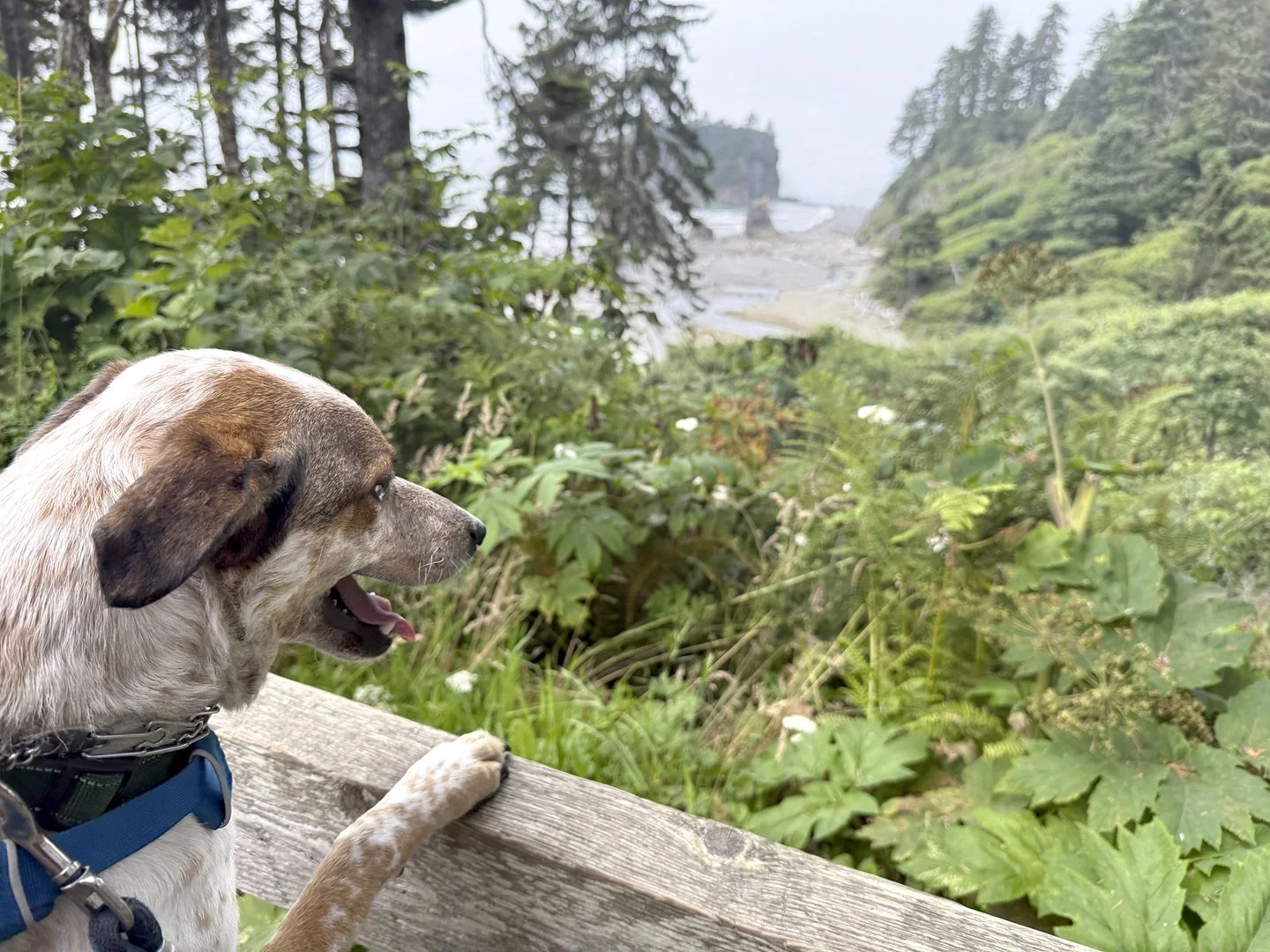
Beau, our dog, looking down as we start our hike to Ruby Beach in the Olympic National Park.
Discover the wild beauty of Olympic National Park as we head to Washington’s rugged Pacific coastline in Part 2 of our Olympic National Park adventure with our two dogs, Beau & Roxy. This is where towering forests meet the ocean, the shoreline tells a story of constant change, and some of the most unforgettable sights on the Olympic Peninsula are waiting to be explored.
In Part 1, we explored the northern side of Olympic National Park, discovering trails, waterfalls, lakes and places to adventure with our pups in tow. Now, we’re heading west to explore a completely different side of this incredible national park.
Along the way, we’ll encounter a remarkable tree that seems to defy gravity, a beach where massive sea stacks rise from the surf, and a dramatic stretch of coastline at the edge of the contiguous United States. Each stop reveals another reason why Olympic National Park is one of Washington’s most extraordinary places to explore.
We’ll share our experiences, talk about what makes this stretch of the Pacific Northwest so special and offer helpful insights for anyone planning an Olympic Peninsula road trip, camping getaway, or RV adventure.
From the sounds of crashing waves to the untamed beauty of the coastline, this is a side of Washington that deserves a place on your travel list.
Join us on RV Out West, the award-winning podcast celebrating RV travel, outdoor adventures, and the people, places and stories that make the Pacific Northwest worth exploring.
Hit play and discover the wild beauty waiting along Washington’s Pacific coast.
SHOW NOTES
The wild Pacific coast of Olympic National Park is full of unforgettable landscapes, unexpected detours, and places that make you want to return again and again. In Part 2 of our Olympic National Park mini-series, join Brooks and his family as they explore Washington’s rugged coastline, discover remarkable natural wonders, and share practical tips for planning your own Olympic Peninsula RV adventure.
We’re visiting the famous Tree of Life at Kalaloch, exploring the dramatic sea stacks of Ruby Beach, and venturing to Cape Flattery, the northwesternmost point of the contiguous United States. Along the way, we share the story of an RV campground reservation that didn’t go as planned, a favorite stop for fish and chips, dog-friendly travel experiences, and a relaxing visit to Sol Duc Hot Springs.
You’ll also hear why planning an Olympic National Park road trip takes more than looking at a map, where to stock up on supplies, and why giving yourself extra time can make all the difference.
Whether you’re planning an RV trip to Washington, searching for Olympic Peninsula camping ideas, or building a Pacific Northwest road trip bucket list, this episode offers destination inspiration and firsthand travel experiences to help you plan your next adventure.
Grab your coffee and join us on RV Out West, the award-winning podcast celebrating RV travel, outdoor adventures, and the incredible places that make the Pacific Northwest special.
Places and resources mentioned in this episode
Olympic National Park and the Pacific coast
Olympic National Park official website – Plan your visit, check park conditions, and explore trip-planning resources.
Tree of Life at Kalaloch Beach – Learn about the remarkable Sitka spruce whose exposed roots stretch across an eroded gap beneath its trunk.
Kalaloch Lodge – Find lodging, dining information, and details about visiting this coastal destination with your dogs.
Ruby Beach – Discover one of Olympic National Park’s most recognizable beaches, known for its sea stacks, driftwood, and dramatic shoreline.
Cape Flattery Trail – Explore trail information for the northwesternmost point of the contiguous United States.
Makah Tribe recreation permits – Find current permit requirements and purchasing options before visiting Cape Flattery.
Makah Tribe official website – Review information about Neah Bay, tribal attractions, and visitor guidance. Check current rules before bringing pets onto tribal lands.
Olympic National Park camping information – Review campground locations, facilities, seasonal operations, and RV camping options.
Olympic National Park pet regulations – Check where dogs are permitted before planning your hikes and beach visits.
RV parks, restaurants, and places to stay
Quileute Oceanside Resort – Explore oceanfront accommodations and RV camping in La Push, Washington.
Copalis River RV Park – Find RV camping information and reservation details for Copalis Beach.
Green Lantern Tavern – Check out the local tavern Brooks recommends for fish and chips and casual pub food on the Washington coast.
Sol Duc Hot Springs Resort – Learn about the mineral pools, freshwater swimming pool, and accommodations in Olympic National Park.
Sol Duc Hot Springs campground reservations – Review RV site details and reservation availability.
Seabrook, Washington – Plan a visit to this walkable coastal community with shops, restaurants, and beach access.
More Pacific Northwest road trip inspiration
Scenic Washington – Explore Washington road trip ideas and order the free Scenic Washington guidebook and map featuring the state's scenic byways.
Scenic Washington guidebook and map – Start planning your next Washington State road trip.
RV Out West newsletter – Sign up for free Pacific Northwest travel tips, destination ideas, and insider information delivered to your inbox.
RV Out West website – Explore more episodes, show notes, and RV travel inspiration.
RV Out West on Instagram – Follow along on our Pacific Northwest RV adventures.
What you'll hear in this episode
Exploring the wild Pacific coast of Olympic National Park with dogs.
What happened when a beachfront RV reservation didn't go as planned.
Visiting the Tree of Life at Kalaloch and seeing nature's resilience firsthand.
Discovering the sea stacks and rugged shoreline at Ruby Beach.
Hiking to the dramatic coastal viewpoints at Cape Flattery.
Understanding Makah recreation permits and planning a visit to tribal lands.
Finding local food and coffee stops along the Olympic Peninsula.
Relaxing at Sol Duc Hot Springs after days of exploring.
Planning RV routes, stocking up on supplies, and allowing enough driving time around Olympic National Park.
Listen & Subscribe to RV Out West
Please subscribe on your favorite podcast platform and leave a review to help more RV travelers and Pacific Northwest adventurers discover the show. Please consider supporting the show to help keep it rolling.
Support the Show
RV Out West is built by a community of explorers, storytellers, and weekend wanderers like you. For just $5 a month, you can help keep the show rolling, support the time and resources that go into creating the show. Please consider making a monthly contribution.
👉 Sign up via the link in this episode description or visit https://rvoutwest.com/newsletter
Follow the Journey on Social Media:
Follow RV Out West for more stories about RV travel, camping, boondocking, road trips, live music destinations, and exploring the American West.
Another way to support the show is If you're planning to explore our incredible public lands this year, you'll likely need a park pass anyway. Purchasing your pass through our REI affiliate links is one of the easiest ways to support RV Out West. It doesn't cost you anything extra, but it helps fund future episodes, travel guides, and resources for the RV community.
Every purchase makes a difference, and your support truly means the world to me. Thank you for helping keep RV Out West rolling down the road.
The America the Beautiful Pass is an annual pass that provides access to more than 2,000 federal recreation sites across the country, making it a must-have for exploring many national parks, forests, and public lands in the Pacific Northwest while saving money on entrance fees. Buy pass from REI
The Discover Pass is Washington State’s annual recreation pass that provides access to millions of acres of state-managed lands, including forests, trails, and waterways, helping you explore some of the best outdoor adventures Washington has to offer while covering the cost of maintaining these public spaces. Buy pass from REI
The Northwest Forest Pass is an annual pass that provides access to many recreation sites on National Forest lands in Washington and Oregon, covering day-use fees at popular trailheads, picnic areas, and outdoor destinations so you can spend more time exploring the Pacific Northwest’s forests, mountains, and wilderness areas. Buy pass from REI
Podcast Episode Transcript (EP217):
Olympic National Park with Your Dogs: Part 2
Brooks, Host We took our dogs to Olympic National Park's wild Pacific coast and what we found was unforgettable. Welcome to RV Out West. I'm your host, Brooks. My family of four is. Base camp is located in the beautiful Pacific Northwest, and our RV adventures radiate out from there. Please grab a mug of coffee and join us as we discuss our RVing around the American West. From sweet camping spots, gear and equipment to tips and tricks, we've got you covered. We are RV out west. Welcome, friends! Today I'm excited to share part two of our Olympic National Park mini series. This time we're heading to the wild Pacific coast to explore rugged beaches, dramatic sea cliffs, and some unforgettable stops along the way. If you're enjoying RV out west, please consider supporting the show. Your contributions help keep this award winning podcast going and bringing you more stories, destinations and adventures from across the Pacific Northwest. Visit the link in the show notes at rv dot com or right there in the podcast description for this episode to become a supporter. Every bit helps and I truly appreciate it. Do you want more RV inspiration made just for you? The next RV Out West newsletter publishes next week, and there's still time to sign up. I created this newsletter with you in mind, packed with Pacific Northwest travel tips, insider information, destination ideas, and inspiration to help you plan your next adventure. So don't miss out! Sign up today using the link in the show notes or in the episode description, and get ready for more great adventures delivered straight to your inbox. There's something about the Pacific Coast of Olympic National Park that makes you take a deep breath and realize just how wild this corner of Washington State really is. Here the forests meet the sea. Driftwood becomes part of the landscape, and the rhythm of the Pacific Ocean sets the pace for your adventure. In part one, we explored the northern side of Olympic National Park, discovering trails, waterfalls, lakes and places to explore with our four legged travel companions. Now we're heading west, following the rugged coastline to some of the most unforgettable places in the park. We'll wander beneath the legendary Tree of Life at Kalaloch, where the roots of a massive Sitka spruce cling to the eroding earth above a beachside bluff. We'll explore Ruby Beach, with its sea stacks rising from the surf and driftwood scattered across the shoreline. And we'll make our way to Cape Flattery, the northwesternmost point of the contiguous United States, where forested cliffs plunge towards the Pacific and the ocean stretches towards the horizon. Along the way, we're going to talk about what makes this coastline so special, share our experiences exploring these incredible places, and offer a few things to keep in mind if you're planning your own trip to the Olympic Peninsula. Travel days don't always go according to plan, and sometimes the best adventures start when things go sideways. We left Arviat Olympic on my wife's birthday, ready to continue our journey toward the Pacific coast. Our destination was the Quileute Oceanside Resort and RV Park in La Push, a place two different friends had highly recommended to us. We made our reservations way in advance, paid for a beachfront campsite, and we were looking forward to waking up with the Pacific Ocean right outside our door. But when we arrived, things didn't go quite as expected. Instead of the beachfront site we reserved, we were directed to a spot that wasn't oceanfront and sat right next to a porta potty. Why? Because this campground does not have flush toilet bathhouses. Now I understand that things happen when you travel, and sometimes reservations can get complicated. We talked with the staff and tried to work out a solution, but there wasn't one offered that worked for us. What made the situation more frustrating was how little effort there seemed to be to make things right. So we made the decision to cancel our reservation right then and leave. It wasn't exactly how I had planned to spend my wife's birthday, but that's RV life. Sometimes you can make all the reservations in the world, and you still have to be willing to pivot when things don't work out. We pulled out and headed into forks. We needed a place to park for a bit, get the dogs out for a walk, and figure out our next move. With a little research and some quick searching for availability, we found an opening at Copalis RV resort farther south along the Washington coast, and that's where this story takes a turn for the better. Sometimes getting back on track is simply a matter of finding the next place that works. We found our way to Copalis, got settled in and had the chance to explore a different stretch of the coast. We also made a stop at the Green Lantern Tavern in Copalis Beach, a classic local pub that makes a great addition to any day exploring the Washington coast. This place is in my top three for the best fish and chips in Washington State. If you're looking for a casual place to grab a bite, enjoy some pub food, and unwind after a day of adventuring, it's worth adding to your list. The best thing is they are also family friendly. Until nine p m after that, they do become twenty one and over. And with the Pacific Coast still waiting to be explored, our Olympic National Park adventure was far from over. In fact, it's just getting started. Our first stop took us to Kalaloch, where towering evergreens met driftwood strewn beaches, and the Pacific reminds you just how powerful nature can be. And if you've ever heard of the famous Tree of Life, this is where you're going to find it. The famous Tree of Life at Kalaloch made a memorable stop along the coast, and it was easy to see why this tree had captured the imagination of so many people. Just a short walk from the parking area, we found a Sitka spruce that seemed to defy gravity. Growing right along the edge of the coastal bluff, with its roots exposed and stretching across an open gap beneath the trunk, it looked almost as though the earth had been pulled out from underneath it, leaving this incredible living tree suspended between two sides of the bluff. How does a tree survive like this? The answer comes down to its roots, its environment, and the constant forces shaping the coastline. Over time, water has eroded the soil beneath the tree, carving away the ground and exposing its root system. The coastal environment here is constantly changing, shaped by rain, wind, salt air and the relentless Pacific Ocean. The National Park Service notes that the water flowing through the area has gradually eroded the earth beneath the roots, leaving the tree in this remarkable position. The tree has managed to survive by maintaining enough of its root system to keep drawing water and nutrients even as the ground around it disappears. Looking underneath, we could see rocks and earth tucked into the exposed root systems, a reminder that this wasn't some magic trick. It was a living example of how nature adapts. Even as the landscape around it changes. The tree's story was also a reminder that this coast is never truly static. Erosion is constantly reshaping the bluffs, beaches, and forests, and the tree of life won't be able to defy those forces forever. And one of the things I really appreciated about this stop was how accessible it was. We didn't need to tackle a long hike, or spend the day on a trail to experience it from the parking area. It was just a short walk down to the beach, making it an easy stop with the dogs. Once we taken in the tree, it was time to let the dogs do what dogs do best explore, sniff around and enjoy some of the freedom on the sand. Both Beau and Roxy trounced along the edge of the mighty Pacific Ocean with some extra pep in their step. Watching them run along the beach with driftwood scattered across the shoreline and the Pacific rolling in behind them was a great reminder that sometimes the best parts of an RV trip aren't these big plans, or the miles we cover. They're the moments like this when we get to explore somewhere extraordinary and enjoy being right there together. One of our stops along the coast was Kalaloch Lodge, where we stopped to grab some lunch. I had some incredible clam chowder while I was there, and it was nice that we took a little time to enjoy the oceanfront setting. The lodge has a dog friendly patio, which was perfect for us since we had Beau and Roxy in tow. But just keep in mind that there's no table service on the patio, so you'll need to order your food and bring it with you outside yourself. It's a great option for a casual bite with a view of the Pacific, and a convenient stop while exploring this stretch of Olympic National Park. From the wide open beaches of Kalaloch, we continued north towards the far reaches of the Olympic Peninsula, where the coastline gets even more dramatic. Our next stop was Cape Flattery, the northwesternmost point in the contiguous United States, where forest trails lead to rugged cliffs, crashing waves, and the sweeping views of the Pacific Ocean. This is where Washington feels like it's reaching the very edge of the continent, and we were ready to see it for ourselves. There are places where you can stand and feel like you've reached the edge of the world, and Cape Flattery is one of them. Looking out over the Pacific, you see waves crashing against towering cliffs. Sea caves carved into the rocky shoreline and thick green forests cling to the headlands offshore. Tattoo ash Island rises from the water. Its historic lighthouse standing watch over the entrance to the Strait of Juan de Fuca. It's a place that makes you stop and take it all in. The ocean seems endless. Seabirds circle overhead, and the power of the Pacific is on full display. This is the northwesternmost point and getting here is an adventure in itself. The Cape Flattery Trail is about three quarters of a mile each way, making it roughly a mile and a half round trip. The trail winds through lush coastal forests, crossing boardwalks, dirt paths, and wooden stairs before opening onto several viewing platforms overlooking the cliffs and ocean. The hike is relatively short, but sections can be slippery, so wear shoes with good traction and stay on the designated trail. Beyond the views, this place has a deep history. The Makah people have called this region home for thousands of years, with a cultural connection to these waters through fishing, whaling and gathering marine resources. Tattoo island, visible offshore, has long held significance for the macaw. Its lighthouse, built in eighteen fifty seven, help guide ships navigating this rugged stretch of coastline. The ecology here is just as remarkable. Offshore rocks provide habitat for seabirds, while the surrounding waters support seals, sea lions and migrating gray whales. The cliffs and sea caves have been shaped by the relentless force of the Pacific. While the wet coastal climate sustains the dense forest above, Cape Flattery is more than a spectacular viewpoint. It's a place where natural forces, wildlife and human history come together at the edge of the continent. Take your time at the viewing platforms, bring binoculars if you have them, and remember to respect the land and the Macau community that cares for it. This is one of those places that reminds you just how wild and extraordinary Washington's coastlines can be. On our way to Cape Flattery, we made a stop at Pat's place on the Macau Reservation for a treat we couldn't pass up. Indian fry bread. If you've never had it. Fry bread is a golden, pillowy piece of dough, fried until it's crispy on the outside and soft on the inside. You can enjoy it savory or sweet. And we went with cinnamon and honey. It was warm, sweet and absolutely hit the spot right next door. We found a cool little coffee stand with an intimate, laid back vibe, where I grabbed a really good cortado to pair with the fry bread, great coffee, fresh fry bread, and a chance to just chill out for a bit. That's a pretty good stop on any Pacific Northwest road trip. Quick planning tip. Cape flattery is on Makah tribal land outside Olympic National Park, so you're going to need a Macau recreation permit to visit. Currently, it's twenty dollars per vehicle for the calendar year. Permits are available online through the Makah Tribe or at designated businesses in Neah Bay. Check the tribe's official website for current rules before heading out. Also, one additional tip worth mentioning is that if you are traveling with your dogs, the Makah tribe has specific rules for pets visiting the reservation. Just make sure you are aware of their dog rules before you visit. We've covered a lot here about the Pacific side of Olympic National Park, and we are not done yet. There is more to come after the break. Stay with us. I'm Brooks and you're listening to RV out West. I'd like to take a moment to also tell you about Scenic Washington, who have helped me plan a few of our Washington state road trips, and they have a super handy map and guidebook, as well as a robust website with lots of road trip ideas. I encourage you to go check them out. And there is a link in the show notes. So go ahead, order their free map and guidebook. There's really no reason not to discover all twenty nine of Washington State's scenic byways with scenic Washington's twenty twenty six guidebook and map packed with route details and must see stops. Best of all, it's free. Pick up one at visitor centers all across the state or at scenic dot com. You can also click the link right there in this episode's podcast description. So order yours today. What are you waiting for? Start planning your next adventure. Welcome back to RV Out West. I'm your host, Brooks. Let's get right back into part two of our mini series on the Olympic National Park. From the northwestern edge of the continent, we turned our attention back down the coast, heading toward one of the most photographed stretches of shoreline in Olympic National Park, Ruby Beach. This is the kind of place that makes you want to put the camera down, though, for a minute and just take it all in. And with the dogs along for the adventure, we were absolutely ready to get back down to the water and explore. Ruby beach is one of those places that looks almost otherworldly the first time you see it. Imagine a rugged shoreline covered in smooth, dark pebbles and enormous pieces of driftwood, with towering sea stacks rising out of the Pacific just off shore. The waves roll around these rocky formations, sea mist hangs in the air, and the forest covered coastline stretches into the distance. Depending on the light, the water shifts between deep blue and slate gray, creating a dramatic backdrop that feels quintessentially Pacific Northwest. The beach gets its name from the tiny, ruby like crystals sometimes found in the sand, although what really captures your attention are the massive rock formations and the sheer scale of this landscape. Ruby beach is part of the Olympic National Park's coastal wilderness, where the relentless Pacific has spent thousands of years shaping the shoreline. The sea stacks are remnants of the original coastline, gradually separated from the mainland by erosion. While tides and winter storms continually rearrange the driftwood and pebbles along the beach, these rocky formations also provide habitat for seabirds. While the nearby intertidal zones support mussels, sea stars, anemones and other marine life at low tide, exploring the exposed shoreline can reveal an entirely different world. But it's important to watch the tides and keep an eye on incoming waves. Ruby beach isn't just a beautiful place to stop and make photographs. It's a living coastal ecosystem, constantly changing with the ocean and standing there watching the waves break around those towering sea stacks. You get a real sense of how powerful and untamed the Washington coast is. After exploring the rugged shoreline at Ruby Beach, we traded crashing waves and salty ocean air for a completely different side of the Olympic Peninsula. Our next stop took us back into the forest, where towering evergreens, rushing water and natural hot springs offer a chance to soak and recharge. We headed to Sol Duc Hot Springs, a place where the wild beauty of Olympic National Park meets a little relaxation. After eight days of exploring the Sol Duc, Hot Springs were the perfect place to slow down and recharge. Tucked beneath a canopy of towering evergreens in the heart of the Olympic National Park, the resort features three mineral hot spring pools at different temperatures, along with a freshwater swimming pool. There's something pretty special about slipping into a warm, mineral rich water surrounded by forest, letting the tension melt away while you take a break from the miles of trails and beaches. It's a different kind of Pacific Northwest adventure, one that invites you to put up your feet and simply enjoy the moment. The springs have a long history in the region, with indigenous connections to these waters predating the resort. The first hotel opened here in nineteen twelve but burned down just four years later. The resort was rebuilt over time and remains a popular stop for anyone who chooses to visit the Olympic Peninsula. If you want to learn more about the Springs, I actually hosted an episode about Sol Duc Hot Springs for the SI America podcast, where I dive deep into what makes this place so special, its history, and why it deserves a spot on your Olympic Peninsula itinerary. You can find that episode Sol Duc Hot Springs in the SI America Podcast feed, or check the link in the show notes over at rv dot com. I will say that staying here makes the experience even easier. We camped at the Sol Duc Hot Springs campground in the RV section of the campground, which is essentially a large gravel lot tucked in the woods with water and electric hookups. They do not have sewer in the campsites. It's not a private, secluded campsite, but the setting is peaceful and the real selling point is the location from your rig. It's just a super short walk to the resort and the hot spring pools so you can soak. Head back to the trailer and enjoy a relaxing evening without having to drive anywhere. For us, that convenience made it a great base for exploring this part of Olympic National Park. Looking back on this trip, I'm reminded that you can spend days exploring the Olympic National Park and still only scratch the surface of what this place has to offer. We didn't make it to the Hall of Mosses this time. There are still trails, beaches, and corners of the peninsula waiting for us to discover. Traveling with Beau and Roxie added another layer to our adventure. We had to think a little differently about where we could go and which trails made sense, but watching them explore the beaches and forests alongside us made the experience that much more memorable. There's something humbling about being surrounded by a place this grand where ancient forests, rugged mountains and the wild Pacific all come together. It reminds you how much there is still to see and how sometimes the best reason to take another trip is knowing you didn't get to see it all the first time. While Olympic National Park was the centerpiece of our trip, not every memorable stop happened inside the park boundaries. We also took a day to celebrate my wife's birthday in Seabrook, a coastal town just south on the Olympic Peninsula that offers a completely different kind of Pacific Northwest experience. With its walkable streets, beach access, local shops and places to grab a bite. Seabrook is worth adding to your itinerary if you have an extra day to explore the Washington coast. It was a chance to step away from the trails and rugged wilderness, enjoy a little bit more of a slower pace, and celebrate a special occasion. Along the way, let's talk logistics, because a little planning can make a big difference when you're living out here. Forks is the main hub on the western side of the peninsula, and it's where you'll find grocery stores, fuel and the essentials you might need along the way. But my recommendation is to do your major provisioning up in Port Angeles or down in Olympia before you head west to the coast, you'll generally have more options and better opportunities to shop around. While forex is better suited for those last minute stops, when you realize you're out of something and you need just a quick refill because convenience comes at a price. So stock up before you venture deeper into the peninsula and save forks for the things you forgot. One of the biggest things to understand when planning a trip to Olympic National Park is that there's no road running straight through the middle of the park. And I know I talked about this in part one of this mini series, but it's important and I want to express it again. Instead, you're going to be traveling around the perimeter of the peninsula, branching off to reach trailheads, beaches, waterfalls, and the places you want to explore. This does mean you're going to spend a fair amount of time behind the wheel, often driving the same stretch of road more than once. And don't expect to make highway speeds. Many of these roads wind through forests and small communities with lower speed limits. Curves, construction and plenty of reasons that are going to make you slow down. My advice is to plan for time, not miles. Give yourself room to enjoy the drive. Avoid cramming too many destinations into one day, and remember that getting from one side of the Olympic to the other can take longer than the map might suggest. This is a park best experienced at a leisurely pace, with time to stop and explore along the way. From the towering forests and waterfalls of the northern peninsula to the rugged Pacific coastline, the incredible Tree of life, the dramatic views at Cape Flattery and a well-earned soak at Sol Duc Hot Springs. This trip reminded us just how much there is to discover right here in our own backyard. We didn't see it all. And honestly, that's part of the beauty of a place this grand. There's always another trail to hike, another beach to explore, and another reason to come back. So if you're planning your own Olympic Peninsula adventure, I hope these last two episodes have given you some inspiration to get out there and explore. And please go share this episode and the one before with any of your friends and family who are looking or thinking about adventuring in the Olympic National Park. If you've been enjoying RV out West and want to help keep these stories coming, please consider supporting the show. You can do it for as little as three dollars a month. This podcast is independently produced and your support helps cover the time, equipment, hosting, and work that goes into bringing you new episodes every week. You can become a reoccurring supporter through the link in the show notes or in this podcast episode description. Every contribution makes a difference and I truly appreciate it. All right, my friends, the conversation doesn't have to end here. If anything we talked about makes you crave more information. Head over to RV out west dot com and take a moment to check out the show notes. We've got links to everything we mentioned so you can dive deeper and keep planning your own trip. If you enjoyed this episode, I'd love for you to help keep RV out west rolling. I encourage you to share this episode with two friends or family members who you know would enjoy this show. Every supporter, every share, every rating, and every new listener helps this community grow. And I'm incredibly grateful to have you here along for the journey. Think you've explored the best of the Pacific Northwest? Well, next Monday we're counting down. Seven Pacific Northwest RV trips that should be on your bucket list. From unforgettable coastal drives to mountain escapes and destinations worth every mile. These are the adventures you'll want to start planning now. So grab your coffee, get your bucket list ready, and join me next Monday right here on RV out West. In the meantime, smash that follow button in your podcast app so you never miss an episode. We'll see you next Monday. Thanks so much for listening to RV Out West. Join us again next week. Please like and subscribe to our podcast on Apple Podcasts or wherever you choose to get your podcasts so you never miss an episode. I sure would appreciate it if you left a rating or a review of the show. Special thanks to Scott Holmes Music for providing us the intro song. We are one RV Out West can be found on Instagram and Facebook, where you can interact with us and follow along on our RV adventures around the Pacific Northwest. So get out there, explore and go see what's beyond the horizon.