Olympic National Park with Your Dogs: Part 1
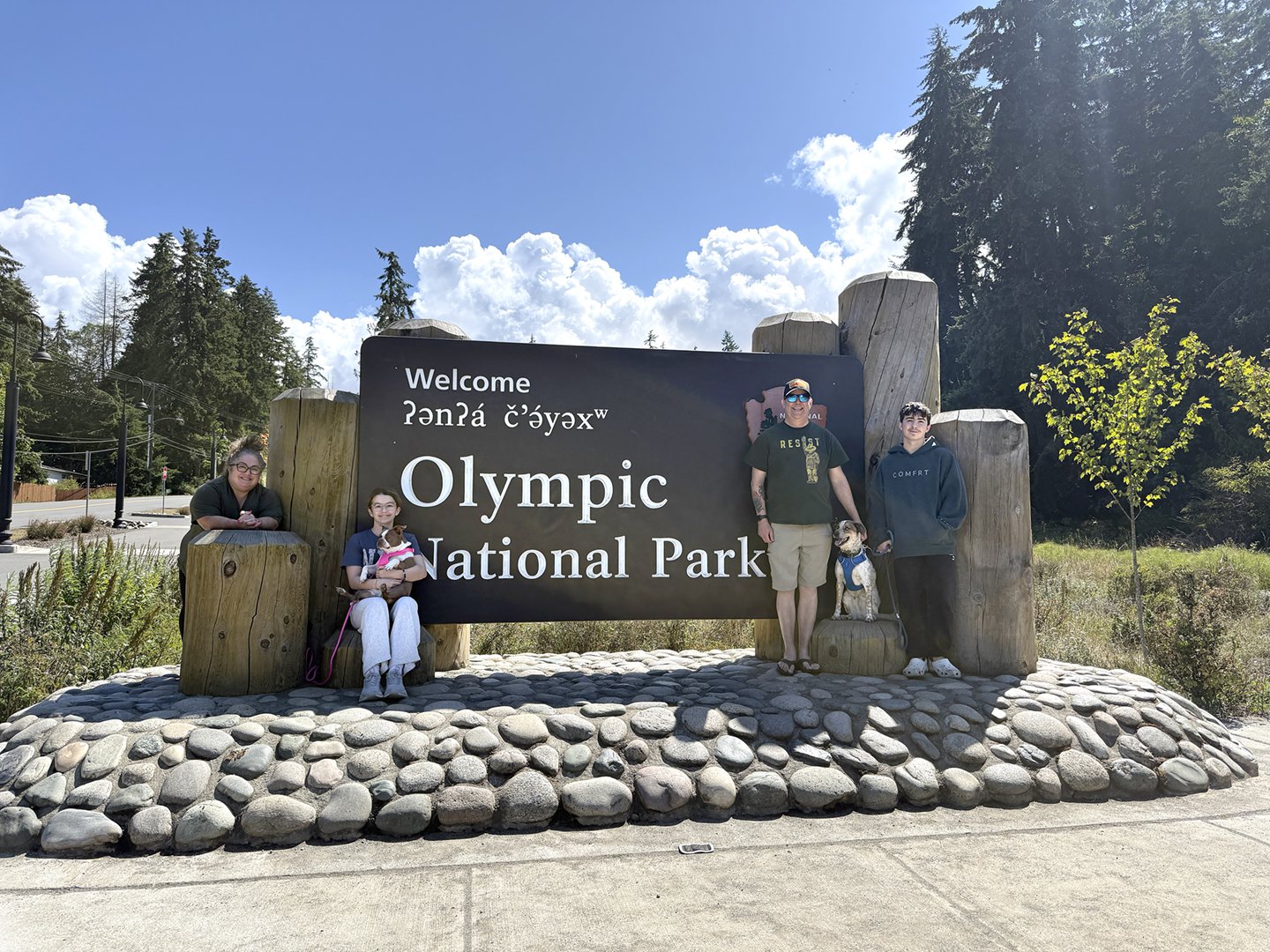
Crystal-clear water, mountain views, Olympic marmots, waterfalls, dog-friendly trails, and an RV adventure through one of Washington’s most spectacular national parks. This summer, we packed up the RV, brought the dogs along, and explored the northern side of Olympic National Park and the Olympic Peninsula.
Part 1 of this two-part mini series takes you along for the first half of our adventure, combining our real-world RV travel experience with practical tips for planning your own Olympic National Park RV trip with dogs.
We start around Port Angeles and Lake Crescent, sharing where we camped, how we planned our days, and what we learned about bringing dogs into Olympic National Park. From finding dog-friendly hiking options to understanding where your pups can and cannot go, we’ll share the information we discovered along the way.
Then we head toward Hurricane Ridge, one of the most spectacular destinations in the park. Along the way, we’ll talk about the hikes we found at the visitor center, the story behind the name Hurricane Ridge, the surprising fact that there is a ski area here, and the wildlife we encountered along the way. We even spotted Olympic marmots, a species found only in the Olympic Mountains.
This episode is part RV travel guide, part Olympic National Park adventure, and part trip report, giving you a look at what we actually did during our visit and what you can expect when planning your own trip.
And this is only Part 1.
In Part 2, we’ll continue exploring the Olympic Peninsula with more RV camping, dog-friendly hikes, Lake Crescent, waterfalls, trails, and places to explore.
Grab your coffee and join us for an RV adventure through Olympic National Park with our dogs in tow.
SHOW NOTES
EP216: Olympic National Park Part 1 | RV Travel, Dog-Friendly Hiking, Hurricane Ridge & Lake Crescent
Olympic National Park RV Travel With Dogs
Olympic National Park packs an incredible amount of scenery into the Olympic Peninsula, from temperate rainforests and alpine mountains to crystal-clear lakes and the Pacific Coast.
In this two-part Olympic National Park RV travel series, Brooks and the family explore the northern side of the park with their two dogs, discovering what you can actually do when traveling to Olympic National Park with pets.
Part 1 takes us from Port Angeles and Dungeness to Hurricane Ridge and Lake Crescent, with practical information about dog-friendly hiking, RV camping, driving distances, ferry travel, and some of the most memorable places to visit in northern Olympic National Park.
Along the way, we encounter Olympic marmots, explore the historic Spruce Railroad Trail, discover the story of a forgotten community beneath Lake Crescent, and visit the spectacular Devil's Punchbowl.
And this is only the beginning. Part 2 heads west to the Olympic Coast, with rugged beaches, sea stacks, crashing waves, and more RV adventures.
Traveling to Olympic National Park With Dogs
One of the biggest challenges of visiting Olympic National Park with dogs is understanding where pets are allowed.
Most park trails do not allow pets. The National Park Service permits leashed dogs in several specific areas, including:
Peabody Creek Trail
Madison Falls Trail
Spruce Railroad Trail
July Creek Loop Trail
Rialto Beach from the parking area to Ellen Creek
Kalaloch beaches
Campgrounds, parking areas and roads
Dogs must remain on a leash no longer than six feet in permitted areas.
Olympic National Park Pet Regulations
Dog-Friendly Olympic National Park Hikes Mentioned
Peabody Creek Trail
Located right at the Olympic National Park Visitor Center in Port Angeles, this short loop provides an easy introduction to the park's forest environment.
Peabody Creek Trail and Olympic Hiking Information
Madison Falls Trail
Located in the Elwha Valley, this short paved trail leads to Madison Falls.
Madison Falls and Olympic National Park Hiking Information
Spruce Railroad Trail
Following the northern shore of Lake Crescent along an old railroad grade, this is one of the most popular dog-friendly trails in Olympic National Park. It also provides access to Devil's Punchbowl.
Spruce Railroad Trail and Dog-Friendly Hiking Information
July Creek Loop Trail
Located along the north shore of Lake Quinault, this trail provides another opportunity to explore Olympic National Park with a leashed dog.
July Creek Loop and Olympic Hiking Information
Rialto Beach
Dogs are permitted on the portion of Rialto Beach extending north from the parking area to Ellen Creek, but current beach access and road conditions should always be checked before visiting.
Rialto Beach Current Conditions and Information
Important: Pet rules can change, and rules on neighboring National Forest, state and county lands can be different from Olympic National Park. Check the NPS regulations before your trip.
Hurricane Ridge
No trip to northern Olympic National Park would be complete without a drive to Hurricane Ridge.
Located 17 miles south of Port Angeles, Hurricane Ridge climbs to approximately 5,200 feet and provides some of the most accessible mountain scenery in Olympic National Park.
The name comes from the extreme weather experienced on the ridge. Strong winds, heavy snowfall and rapidly changing conditions are part of the environment.
Visit Hurricane Ridge | Olympic National Park
In the episode, we share what it was like making the drive during August and discovering that summer at 5,200 feet can still be very cold. If you're heading up in the summer, bring layers.
The National Park Service recommends preparing for changing mountain weather even during summer visits.
Hurricane Ridge Ski & Snowboard Area
Yes, there is actually a ski area at Hurricane Ridge.
The Hurricane Ridge Ski & Snowboard Area is one of the few remaining lift-served ski areas located within a U.S. national park. Winter operations are weather dependent.
Hurricane Ridge Ski & Snowboard Area
Olympic Marmots
One of the highlights of our Hurricane Ridge visit was spotting Olympic marmots.
These large rodents are endemic to the Olympic Mountains, meaning they are found nowhere else in the world. They live primarily in alpine meadows above 4,000 feet.
Olympic Marmot | National Park Service
Seeing several marmots along Hurricane Ridge was one of those unexpected wildlife moments that made this part of the trip especially memorable.
Lake Crescent
From the high country of Hurricane Ridge, we head down to one of the most recognizable destinations in Olympic National Park: Lake Crescent.
This deep, glacially carved lake stretches nearly 12 miles through the Olympic Mountains and reaches a maximum depth of 624 feet.
The remarkable clarity of Lake Crescent is one of the things that makes it so memorable, and Brooks shares a personal story about scuba diving in the lake and being able to see his bubbles reaching the surface from 80 feet below.
Lake Crescent | Olympic National Park
Spruce Railroad Trail & Devil's Punchbowl
The Spruce Railroad Trail follows the northern shoreline of Lake Crescent along the route of a former railroad.
The railroad was constructed during World War I to transport Sitka spruce, which was intended for aircraft construction. The railroad continued to operate after the war before eventually being abandoned.
Today, the former railroad grade has become a multi-use recreational trail.
And then there's Devil's Punchbowl.
This incredibly clear section of Lake Crescent has become one of the area's most popular swimming spots and is one of the memorable stops along the trail.
Spruce Railroad Trail and Lake Crescent Hiking Information
The trail is also particularly valuable for travelers with dogs because it is one of the few trails inside Olympic National Park where leashed dogs are permitted.
The Story Beneath Lake Crescent
Lake Crescent isn't just about beautiful scenery.
Long before it became a popular destination, the community of Piedmont existed along the northern shore of the lake.
Homes, a hotel, post office and railroad stop once occupied the community before a massive landslide in 1902 altered the landscape and caused water levels to rise.
Today, parts of Piedmont's story remain beneath Lake Crescent.
It's one of the fascinating pieces of history we explore during this episode.
Lake Crescent | Olympic National Park
Olympic Discovery Trail
We also discovered another section of the Olympic Discovery Trail while exploring Lake Crescent.
The trail system provides a non-motorized route across portions of the northern Olympic Peninsula, with sections suitable for cycling and other forms of recreation.
The Lake Crescent area includes the Spruce Railroad Trail, making this a particularly interesting option for cyclists traveling the Olympic Peninsula.
Olympic Discovery Trail Information
Dungeness Spit & Dungeness National Wildlife Refuge
Before entering Olympic National Park, we made a sunset stop at Dungeness Recreation Area, overlooking Dungeness Spit and the Strait of Juan de Fuca.
Dungeness Spit extends into the Strait of Juan de Fuca and is part of Dungeness National Wildlife Refuge, which protects important coastal and wildlife habitat.
Dungeness National Wildlife Refuge | U.S. Fish & Wildlife Service
The refuge includes the five-mile Dungeness Spit Trail, although it's important to note that pets are not permitted within the refuge.
Dungeness National Wildlife Refuge Visitor Information
Dungeness Recreation Area Campground
The nearby Dungeness Recreation Area offers 66 forested campsites and provides access toward the Dungeness area.
The campground does not have utility hookups.
Dungeness Recreation Area Camping Information
RV Camping Near Olympic National Park
One of the biggest considerations when RVing Olympic National Park is choosing the right basecamp.
Olympic is a large park, and roads do not cross directly through the interior. U.S. Highway 101 forms the primary route around the peninsula, while roads branch off toward individual destinations. The National Park Service recommends allowing plenty of travel time between destinations.
Here are the camping options discussed in the episode.
Salt Creek Recreation Area
Located approximately 20 minutes west of Port Angeles, Salt Creek Recreation Area sits along the Strait of Juan de Fuca.
The campground has 92 campsites, including utility sites with electric and seasonal water hookups. The recreation area also offers shoreline access, hiking, tide pools and World War II history.
Salt Creek Recreation Area | Clallam County
Salt Creek Campground Reservations & Information
Dungeness Recreation Area
Located near Sequim, Dungeness Recreation Area offers 66 forested campsites without utility hookups. The campground is adjacent to Dungeness National Wildlife Refuge and provides access to the surrounding Dungeness area.
Dungeness Recreation Area Camping Information
RV@Olympic
For RVers looking for a full-hookup RV park near Olympic National Park, RV@Olympic in Port Angeles is another option.
The park offers full-hookup sites, 50-amp service, Wi-Fi, a dog park and other amenities. Its location provides convenient access to Port Angeles, Hurricane Ridge and northern Olympic National Park.
RV@Olympic | Port Angeles RV Park
Getting to Olympic National Park With an RV
U.S. Highway 101 is the primary RV-friendly route around the Olympic Peninsula.
From the south, travelers can approach via Olympia and U.S. 101 or connect with U.S. 101 near Aberdeen. From the north, U.S. 101 travels west from Port Angeles along the Strait of Juan de Fuca and past Lake Crescent.
The National Park Service emphasizes that Olympic is a large park and that no road travels directly through the park's interior. This means you can spend significant time driving between destinations.
Olympic National Park Directions & Transportation
For RV travelers, this is an important planning consideration. Choose your campground based on the areas you want to explore, and don't underestimate driving time.
Taking Your RV on a Washington State Ferry
Another option for reaching the Olympic Peninsula is using Washington State Ferries.
Routes discussed in the episode include:
Edmonds to Kingston
Seattle to Bainbridge Island
Port Townsend to Coupeville
Washington State Ferries | Routes, Schedules & Tickets
For RV travelers, pay particular attention to the Port Townsend/Coupeville route, because vehicle reservations are available and strongly recommended for this route. Other routes load vehicles on a first-come, first-served basis.
Washington State Ferries Vehicle Reservations
Related RV Out West Episode
Want more information about traveling aboard Washington State Ferries with an RV?
Episode 87: Pit Stop | RV Travel Aboard the Washington State Ferries
When to Visit Olympic National Park
The episode focuses on a summer visit, but late summer and early fall can be particularly appealing for exploring northern Olympic National Park.
July and August typically bring some of the warmest and driest conditions, but they are also among the busiest months.
September can offer a nice balance of generally favorable weather and fewer visitors.
The National Park Service recommends considering May or September if you're looking to avoid some of the busiest summer periods.
Olympic Rain Shadow Travel Guide
If you're planning an RV trip around the northern Olympic Peninsula, don't miss the Olympic Rain Shadow.
This region includes Port Angeles, Sequim and Port Townsend and makes an excellent base for exploring Olympic National Park.
RV Out West's free destination guide includes information about camping, things to do, communities to explore and how the Olympic Rain Shadow can work as a basecamp.
RV Out West: The Olympic Rain Shadow Destination Guide
Related RV Out West Episode
Episode 108: Destination Olympic Rain Shadow
Check out the episode and use the free guide to help plan your Olympic Peninsula RV adventure.
RV Out West Olympic Rain Shadow Destination Guide
Places Mentioned
Olympic National Park
Official Olympic National Park Website
Olympic National Park Visitor Center
Olympic National Park Visitor Center
Port Angeles
Gateway community for Hurricane Ridge and northern Olympic National Park.
Sequim
A popular Olympic Peninsula basecamp located within the Olympic Rain Shadow.
Port Townsend
Historic coastal community and one of the gateway communities to the Olympic Peninsula.
Dungeness Recreation Area
Dungeness Recreation Area | Clallam County
Dungeness National Wildlife Refuge
Dungeness National Wildlife Refuge
Hurricane Ridge
Hurricane Ridge | Olympic National Park
Lake Crescent
Lake Crescent | Olympic National Park
Devil's Punchbowl
Located along the Spruce Railroad Trail on Lake Crescent.
Lake Crescent & Spruce Railroad Trail Information
Elwha Valley
Elwha River Valley | Olympic National Park
Lake Quinault
Quinault Rain Forest | Olympic National Park
Olympic Discovery Trail
Hurricane Ridge Ski & Snowboard Area
Hurricane Ridge Ski & Snowboard Area
More From This Episode
EP216 also celebrates RV Out West winning Best RV & Camping Podcast and Fan Favorite at The Campies.
If you're new to RV Out West, the show focuses on RV travel, camping, destinations, gear, tips and adventures throughout the Pacific Northwest and American West.
Listen to Part 2 Next
The northern Olympic Peninsula is only half the story.
In Part 2 of the Olympic National Park mini series, we're heading west toward the Pacific Coast for rugged beaches, towering sea stacks, crashing waves and some of the most spectacular coastal scenery in Washington.
Follow RV Out West in your podcast app so you don't miss Part 2.
Planning Your Own Olympic National Park RV Trip?
Before you go, check the official park pages for current road, trail, weather and campground conditions. Olympic National Park conditions can change quickly, particularly at Hurricane Ridge and along the coast.
Olympic National Park Current Conditions & Alerts
And if you're trying to score a campsite during a busy season, Camper Alerts can monitor campground availability and notify you when cancellations open up.
A note on current conditions
Because this episode describes a summer 2026 trip, some conditions mentioned in the recording may change after publication. Always check current NPS conditions before heading out.
OUR SPONSORS
Bar Run Golf & RV Resort | Roseburg, Oregon
Bar Run combines an RV resort, golf course, cottages, food and drink and a scenic setting along the South Umpqua River. RV Out West listeners can save 10% on stays from October 2026 through March 2027 by using promo code OUTWEST when booking.
Camper Alerts
Finding campsites at popular campgrounds doesn’t have to be frustrating.
Camper Alerts monitors sold-out campgrounds and notifies you the moment a campsite becomes available, helping you book those hard-to-get reservations before someone else does.
Listen & Subscribe to RV Out West
Please subscribe on your favorite podcast platform and leave a review to help more RV travelers and Pacific Northwest adventurers discover the show. Please consider supporting the show to help keep it rolling.
Support the Show
RV Out West is built by a community of explorers, storytellers, and weekend wanderers like you. For just $5 a month, you can help keep the show rolling, support the time and resources that go into creating the show. Please consider making a monthly contribution.
👉 Sign up via the link in this episode description or visit https://rvoutwest.com/newsletter
Follow the Journey on Social Media:
Follow RV Out West for more stories about RV travel, camping, boondocking, road trips, live music destinations, and exploring the American West.
Another way to support the show is If you're planning to explore our incredible public lands this year, you'll likely need a park pass anyway. Purchasing your pass through our REI affiliate links is one of the easiest ways to support RV Out West. It doesn't cost you anything extra, but it helps fund future episodes, travel guides, and resources for the RV community.
Every purchase makes a difference, and your support truly means the world to me. Thank you for helping keep RV Out West rolling down the road.
The America the Beautiful Pass is an annual pass that provides access to more than 2,000 federal recreation sites across the country, making it a must-have for exploring many national parks, forests, and public lands in the Pacific Northwest while saving money on entrance fees. Buy pass from REI
The Discover Pass is Washington State’s annual recreation pass that provides access to millions of acres of state-managed lands, including forests, trails, and waterways, helping you explore some of the best outdoor adventures Washington has to offer while covering the cost of maintaining these public spaces. Buy pass from REI
The Northwest Forest Pass is an annual pass that provides access to many recreation sites on National Forest lands in Washington and Oregon, covering day-use fees at popular trailheads, picnic areas, and outdoor destinations so you can spend more time exploring the Pacific Northwest’s forests, mountains, and wilderness areas. Buy pass from REI
Podcast Episode Transcript (EP216):
Olympic National Park with Your Dogs: Part 1
Brooks, Host We came for the mountains and then we found crystal clear water, a forgotten town and a wild story hiding beneath the surface. Stay tuned. We're talking about the Olympic National Park. Welcome to RV Out West. I'm your host, Brooks. My family of four is. Base camp is located in the beautiful Pacific Northwest. And our RV adventures radiate out from there. Please grab a mug of coffee and join us as we discuss our RVing around the American West. From sweet camping spots, gear and equipment to tips and tricks, we've got you covered. We are RV out west. Hey, friends, we did it! Not only did we bring the Campers Award for best RV and camping podcast home, but new. This year they added a category called Fan Favorite and we brought that award home as well right here to the Pacific Northwest. I'm so honored that you all took the time out of your busy lives to cast your votes for our show. It means the world to me and inspires me to keep producing episodes for all of you. Today, I celebrate you and our Pacific Northwest, our RVing community. From those of you who call this area home, to those of you listening elsewhere in the United States and beyond, I sincerely thank you not only for your vote, but for tuning in each week to hear RV Out West. I'm excited to bring you a two part mini series all about RV travel around Olympic National Park. There is just so much to see and do in this part of Washington State that it really should be on your list of destinations to check out. For me, it's only about a two hour drive away, and yet I haven't been there in over a decade. So it was time to hook up and drag the family out there. This two part Olympic National Park mini series is also going to have a different spin, because originally we were going to board our pups and not bring them with us. Well, that fell through at the last minute. So our two dogs, Bo, an anxious red heeler on a daily dose of Prozac and our Boston terrier, Roxy ended up joining us on this trip. As you may know, bringing dogs to a national park can change your trip because there are a lot of restrictions with pets in national parks, especially on trails. If hiking is a big goal of yours. Here is what you can expect in this special Olympic National Park Destination mini series. In part one this episode, I'm focusing on the activities and adventures we experienced in and around the northern area of the park. I'm not going to spend much time on the surrounding communities of Port Townsend, Port Angeles and Sequim. If you're looking for more information about that area, go back and listen to episode one hundred and eight Destination Olympic Rain Shadow. You can also check out our free Destination travel guide, which covers where to camp and what to see and do, and why this region makes such a great base camp for visiting Olympic National Park. Of course, I'll have links to both episode one hundred and eight and the free Destination Travel Guide in the show notes for this episode over at RV Outwest dot com, be sure to check them out or go listen to episode one hundred and eight in our archives. So that's what you can expect as we explore Olympic National Park. But before we hit the road, let's take a quick stop to thank one of our sponsors, Bar Run Golf and RV resort, where you can save ten percent on your stay anytime from October through March twenty twenty seven. Just use promo code out west when you book your stay. Discover a different kind of RV getaway at Bar Run Golf and RV Resort in Southern Oregon. Set in Roseburg along the South, Umpqua River Bar Run offers full hookup sites, championship golf and other amazing amenities. Just steps away from fishing, wineries, hiking, and more. Perfect for long term stays or quick getaways. RV Out West listeners use promo code out West to receive ten percent off stays from October twenty twenty six through March twenty twenty seven. Plan your visit at Bar Run golf dot com today. Let's get into what makes Olympic National Park so incredible and why you should put it on your list and some of the places you'll want to experience when you're there. The first thing you notice in Olympic National Park is the sound. Water drips steadily from moss covered branches, tapping leaves and fern fronds as a cool mist hangs in the air beneath your boots. The forest floor gives slightly, with every step softened by years of rain and fallen needles. The air smells of wet earth, cedar and something almost sweet, and everything seems impossibly green. Massive trees rise above you, their trunks wrapped in a thick blankets of moss, while ferns spill across the forest floor like waves frozen in place. You reach out and touch the bark, rough and damp beneath your fingertips, and for a moment, the outside world feels very far away. There is no grand entrance to this place. The forest simply closes around you. One quiet step at a time. Then the landscape changes. Follow the road higher and the dense forest gives way to open sky, where mountains stretch towards the horizon, their ridgelines catching the afternoon light far below. Valleys disappear into layers of blue and green. And you find yourself amongst the clouds. Later, along the coast, the smell of salt replaces cedar, and the Pacific crashes against dark sea stacks with a force you can feel in your chest. Wind pushes against your jacket as you walk across cool sand, while waves pull stones back towards the ocean with deep rattling hiss. An Olympic National Park. You don't simply look at your surroundings. You hear them, smell them, touch them, and feel their weather on your face. And somewhere between the rainforest, the mountains and the ocean, you realize that the magic of this place isn't just how much there is to see, it's how completely it surrounds you. Olympic National Park's story began long before it became a national park. Indigenous peoples have lived on the Olympic Peninsula for the last thirteen thousand five hundred years, and eight tribes maintain traditional connections to the lands within the park. Today, the federal government first protected part of the region in eighteen ninety seven when President Grover Cleveland created the Olympic Forest Reserve. But it was the Roosevelt Elk that helped push the area toward stronger protection. By the early nineteen hundreds, hunting had dramatically reduced the herds. In nineteen oh nine, President Theodore Roosevelt designated about six hundred and ten thousand acres as Mount Olympus National Monument, specifically protecting the elk and their forest habitat. Nearly three decades later, the monument became something much larger. After a long campaign to protect the peninsula's ancient forests, mountains and wildlife, President Franklin D Roosevelt visited the Olympic Peninsula in nineteen thirty seven. The following year, on June twenty nine, nineteen thirty eight, he signed legislation establishing Olympic National Park. Initially protecting about six hundred and thirty four thousand acres. Today, the park encompasses roughly nine hundred and twenty two thousand acres and is recognized internationally as both a Unesco World Heritage Site and Biosphere Reserve. In a fitting bit of history, the Roosevelt elk that shaped inspired the original monument still roamed these forests today, carrying the legacy of the park's earliest conservation story with them. Olympic National Park is remarkable because it is less a single environment than a whole geological world. Compressed into one peninsula. The Olympic Mountains were born from the ocean, their rocks deposited offshore millions of years ago before tectonic forces folded, uplifted and pushed them skyward. Today, glaciers, rivers, rain and waves continue the work, carving deep valleys and shaping terrain that stretches from sea level to the seven thousand nine hundred and eighty foot summit of Mount Olympus. The Pacific Ocean sits just thirty three miles from the park's highest peak, and that proximity helps explain the incredible variety found here. Within a relatively small area, you can stand on a wild Pacific beach, walk through an ancient forest, and hours later look across a glacier clad alpine setting. And then there's the rain. Moisture laden air rolls in from the Pacific and slams into the Olympic Mountains, dropping enormous amounts of precipitation on the western valleys before the mountains wring the clouds nearly dry. In the HOH, Quartz and Quinault valleys, they can mean roughly twelve to fourteen feet of rain in a year, creating one of the finest remaining examples of a temperate rainforest in the world. Temperate rainforests are far less widespread than their tropical counterparts, occurring in relatively small, scattered regions, including the Pacific Northwest, southern Chile, New Zealand and southeastern Australia. In Olympic, the combination of mild temperatures and extraordinary rainfall creates a forest where mosses and ferns climb. Living trees. Fallen logs become nurseries for new growth, and enormous conifers compete for every patch of light. Much of the original temperate rainforest that once stretched along the Pacific coast has disappeared outside protected areas, making what survives in Olympic National Park especially significant. Now that we've got a sense of how this place was shaped, it's time to get out and explore it for ourselves. And because we had Bo and Roxy along for the trip, we were looking for ways to explore the Olympics that welcomed all of us. Four legs included. These were some of the ways we experienced Olympic National Park together. But before we crossed into Olympic National Park, we made one stop just outside its boundaries at Dungeness Spit Recreation Area. Now, I've talked about this stretch of coastline before in episode one hundred and eight, and again, that link will be available in the show notes over at RV dot com. But on this trip, we arrived as the day was beginning to surrender to the evening. We set out with Bo and Roxy and the rest of the family for a sunset walk along the bluff overlooking both Dungeness Spit and the Strait of Juan de Fuca, stretching towards the horizon. As the last light caught the water, the breeze carried the smell of salt and seaweed waves whispered against the shore, and with every step, the sky seemed to grow a little darker and more golden. It was a quiet beginning to our trip and a reminder that on the Olympic Peninsula, sometimes the journey into the park begins long before you reach the entrance. The next morning brought a fresh start, and before setting out, we stopped at the Olympic National Park Visitor Center to talk with the Rangers about what we could do with Bo and Roxy. The parking lot was pretty full when we arrived, but I was able to find parking for my one ton pickup. Once inside the visitor center, we quickly learned that Olympic is not a park where you can simply bring your dog onto any trail, which I had a pretty good idea that was going to be the case. Most trails are off limits to pets, but there are still some great options, including Peabody Creek Trail right there at the visitor's center, Madison Falls Trail in the Elwha Valley Spruce Road Trail along Lake Crescent and July Creek Loop at Lake Quinault, and a stretch of Rialto Beach from the parking area to Ellen Creek. Please do note that dogs need to remain on a leash no longer than six feet, and the restrictions are there to protect wildlife, vegetation and the experiences for everyone. With our plan in place, we were ready to see just how much of Olympic we could experience together for legs and all. And of course, no trip to a national park is complete without a little passport tradition. Both of our kids pulled out their national park passports and added the Olympic stamp, including the special America two fifty stamp celebrating the nation's two hundred and fiftieth anniversary. Here's a quick look at the trails the park ranger shared with us, including their locations, distances and what you can expect along the way. Peabody Creek Trail, which begins right at the Olympic National Park Visitor's Center, is a short half mile loop that drops into a mossy lowland forest alongside Peabody Creek. It's a moderate little hike with some inclines, steps and wooden bridges, but it's a great introduction to the forest without committing to a long trek. Madison Falls Trails in the Elwha Valley is about as easy as it gets. Just a tenth of a mile each way on a paved path leading to a beautiful sixty foot waterfall. It's short, but the payoff comes quickly as the sound of rushing water grows louder with every step. Then there's Spruce Road Trail, which follows the northern shore of Lake Crescent, along the route of an old railroad for about four miles. This is a longer, more leisurely option, with the trail moving through forest, while the blue green water of Lake Crescent appears through the tree. And we're going to talk about this a little bit more in this episode. And on the western side of the park, July Cedar Loop at Lake Quinault offers another dog friendly way to experience the rainforest. Winding through the lush forest along the north shore of the lake. All four of these trails are designated by the National Park Service as places where pets are permitted. But again, dogs must remain on a leash no longer than six feet. For us, that was the key takeaway. Olympic may have plenty of trails, but only a select few welcome your dog as a hiking partner. Knowing where you can go makes this trip easier for everyone, especially when you're sharing a protected area with the wildlife that calls it home. After getting the lay of the land at the visitor's center and learning about the routes we could explore with dogs, we headed higher into the park towards Hurricane Ridge. And that name isn't just for dramatic effect. The ridge is known for its strong, sometimes hurricane force winds, especially during the winter, giving Hurricane Ridge its fitting name. As the road climbs out of Port Angeles, the scenery begins to change almost imperceptibly. The trees tighten around the road. The air feels cooler and each turn reveals a little more sky. Then, almost at once, the forest gives way to sweeping mountain views, jagged peaks and deep valleys stretching towards the horizon. The higher you climb, the smaller everything below begins to feel until you're surrounded by the vast mountain country of Hurricane Ridge, with the Olympic Mountains rising in every direction. Here's a few numbers to help put the drive into perspective. Hurricane Ridge climbs seventeen miles from Port Angeles to five thousand two hundred and forty two feet, gaining roughly five thousand feet in elevation along the way. The drive took us about forty five minutes, although Pullouts traffic and summer congestion can add time. The posted speed limit is thirty five miles an hour on most of the road, dropping to ten miles per hour in the Hurricane Ridge parking area. And then there was the temperature. We made this drive during the first week of August, expecting summer weather, and arrived at the ridge in shorts and t shirts. That was a mistake. It was cold. Really cold. Cold enough that we ended up buying sweatshirts in the gift shop because apparently we forgot that five thousand two hundred feet in the mountains doesn't care what month it is, so don't be like us. Bring layers. The National Park Service specifically recommends being prepared for changing mountain weather even during the summer. And after our experiences, I totally agree. Here is a fun fact from my skiing and snowboarding friends. Did you know there's actually a ski area right here at Hurricane Ridge? The Hurricane Ridge ski and snowboard area is one of the few remaining volunteer operated ski areas in the country, offering lift served skiing and snowboarding when winter conditions allow. That's pretty cool and something to consider if you want to visit the national park during the off season, it could be a fun way to experience the mountains in a completely different season. The more you know. Standing at Hurricane Ridge, with the mountains stretching out in every direction, it's easy to feel overwhelmed by the scale of it all. But this high country environment isn't just something to admire. It's home to wildlife that has adapted specifically to life in the Olympics. And while we were there taking in the views, we spotted one of the Olympic Mountains most special residents, the Olympic marmot. Found only on the Olympic Peninsula, these chunky little rodents are found nowhere else in the world, making every sighting Pretty exciting. We were lucky enough to see several of them along the ridge. Popping in and out of the rocks and alpine meadows as we made our way. Through the high country environment. We've talked about what makes Olympic National Park so incredible, from the diversity of its ecosystems and how the landscapes were formed, to the history behind the nation's twenty third national park dating back to nineteen thirty eight. We covered some dog friendly trails you can explore within the park, shared a little about Dungeness Spit National Recreation Area, and talked about why you may want to add some extra time to your trip for this stop just outside of the park. And of course, we made our way above the clouds at Hurricane Ridge, deep in the heart of the Olympic Mountains. Coming up after the break, we're talking about Lake Crescent. What makes this part of the park so breathtaking and what you can do there with your dogs. We'll also share some great camping options you may want to consider when planning your Olympic National Park trip. Stay with us. I'm Brooks and you're listening to RV Out West. First, a word from our longtime sponsor and friend over at camper alerts dot com. Sold out campgrounds used to mean one thing. Game over. Not anymore. Camper alerts dot com keeps watch on the most in-demand, hardest to get into campgrounds out there, the ones that are booked solid for months, and the moment a site opens up, you get the alert. No constant checking, no lock based refreshes, just real time access to cancellations and openings before they disappear again. The dream spot everyone is fighting for. Yeah, you just got it. Say goodbye to sold out campgrounds because fall doesn't have to mean finished. Visit camper alerts dot com and set your alert today. Welcome back to RV Out West. Let's get right back into part one of our Olympic National Park mini series, leaving the wind swept heights of Hurricane Ridge behind. We traded alpine views for a winding descent through forests that seemed to close in around us. Before long, the trees parted and Lake Crescent appeared below. It's deep blue water stretching between the mountains like a mirror offering a completely different side of Olympic National Park. Standing alongside the shore of Lake Crescent, it's easy to understand why this place stops you in your tracks. The water stretches out in shades of blue, reminiscent of the Caribbean Sea, framed by steep, forest covered mountains, while the stillness of the lake makes every ripple, breeze and bird call feel a little louder and more distinct. Lake Crescent is the largest lake in Olympic National Park, stretching nearly twelve miles through a steep, glacially carved valley. Massive ice sheets gouged this basin thousands of years ago, leaving behind a lake that reaches an official maximum depth of six hundred and twenty four feet. About seven thousand years ago, a massive landslide reshaped the area separating Lake Crescent from what is now neighboring Lake Sutherland. Today, the lake covers roughly eight square miles, and its remarkable clarity comes in part from its low levels of nitrogen, which limit algae growth and allow light to penetrate deep into the water. I will add that as a former scuba diver, there was a time I dove in Lake Crescent, and it was the first time in my life I had ever been able to look up at the surface of the water. I was eighty feet down and I saw my bubbles pop at the surface. It was wild. I'd never seen that before. I do also want to share one fascinating chapter in Lake Crescent's history that lies beneath the surface. Long before the lake became a destination for visitors, the small community of Piedmont sat along the northern shore, complete with homes, a hotel, a post office, and a railroad stop. But in nineteen oh two, a massive landslide swept down from the mountains, blocking the creek that connected Lake Crescent to Lake Sutherland and dramatically reshaped the area. Over time, the water rose, flooding much of the community and leaving pieces of Piedmont story beneath the lake. From the quieter shores of Lake Crescent, our trip continues along the Spruce Road Trail, where the forest eventually opens to one of the lake's most memorable views, Devil's punchbowl. As you step onto the bridge, the trees give way to an impossibly clear turquoise water far below, revealing the rocky bottom and the mountains rising behind it. It's the kind of place that makes you stop walking. Lean over the rail and simply take it all in. And on a warm day, there's even better reason to linger. Devil's Punchbowl is one of the most popular spots on the lake for a refreshing swim. The Spruce Road Trail follows roughly four miles of Lake Crescent's north Shore, tracing the route of an old railroad grade with about one hundred feet of elevation gain. The relatively flat paved route makes it approachable. Outing for families, casual walkers, cyclists and hikers of a wide range of ages and abilities. Depending on your pace and how often you stop to take in the lake, plan on roughly two to three hours for the four mile, one way route, or longer if you make it an out and back. But this isn't just a scenic pathway. The railroad was built in nineteen eighteen, during World War One to harvest and transport Sitka spruce, intended for aircraft construction. The war ended before the local spruce could be used for that purpose, but the railroad continued operating for logging and freight before it was eventually abandoned in nineteen fifty one. That historic rail grade has been transformed into a multi-use trail along the lake. And for anyone traveling with a four legged adventure buddy, the Spruce Road Trail is particularly valuable within Olympic National Park. Dogs are permitted here on a leash. Yep, you guessed it, six feet or shorter, making it one of only a handful of park trails where you can legally bring your dog. Bikes are also allowed, and portions of the route connect with the Olympic Discovery Trail. So if you wanted to bike it and do kind of a a longer bike ride, that is absolutely an option you can look into. If you want a quieter way to see Lake Crescent, there's another option through Overton, along the eastern portion of the Olympic Discovery Trail. We ended up on this trail thinking originally it was Spruce Road. We walked it for about a mile before kind of figuring out we were on the wrong trail. But this route is cool. This route gives cyclists a chance to get away from some of the busier sections of the lakefront, while still enjoying the scenery, making it a good choice. For those of you who might be looking for a more relaxed bike ride. We did witness people on both bicycles as well as e-bikes, so both would be great to take out on this road. Getting to Overton, we did turn off the main road that was there that goes along Lake Crescent Lake onto a side road, which did eventually turn into a dirt road, but the parking at Overton was plentiful and pretty easy. There was not a lot of people out there, so if you did want to, you know, bring your bikes out and stop there and use that as your point to go visit Devil's Punchbowl. That's something you could easily do. If you are interested about the broader Olympic Discovery Trail that follows the northern shore of Lake Crescent for about ten miles, connecting trail sections and providing a non-motorized alternative to highway one hundred and one. By the time we leave Lake Crescent, it's hard not to feel like we've experienced a little of everything that defines Olympic National Park towering mountains, deep forests, crystal clear water, and the trails where history is woven into the surroundings. But there's still plenty more to cover, so let's shift from the trip itself to the practical side. If you're planning to visit the northern side of the park, let's talk about how to get there, the best routes to take, and where you can set up camp so you can spend more time enjoying the area. The key to exploring the northern side of Olympic National Park is remembering that U.S. highway one hundred and one is the peninsula's main RV friendly spine. From the south, you can approach from Olympia via I-5 and US one hundred and one or from the Washington, Oregon coast by connecting with US one hundred and one near Aberdeen. Then following the highway north through the Hood Canal area towards Port Angeles. From the north, US one hundred and one runs west from Port Angeles, along the Strait of Juan de Fuca, passing Lake Crescent before continuing towards forks. Another option from the Seattle area is to take a Washington State ferry to Kingston or Bainbridge Island and connect with US one hundred and one, while the Port Townsend Ferry route connects to US one hundred one via State Route twenty. The important thing for all of you to know is that Olympic is not a drive through park. US one hundred and one circles the peninsula, while the roads in the park branch off from it and generally do not connect across the interior. There were days where we had a two to two and a half hour drive just to get to one of our destinations, and then two, two and a half hours to get back to camp. So you will do a lot of driving. The National Park Service describes us one as suitable for all types of vehicles, but individual spur roads can be narrow, steep gravel or unsuitable for RV's and trailers, so stick to the main highway when moving your rig and explore the park's interior. After you set up camp, if you plan to come from the south and the Greater Puget Sound area, taking a Washington State ferry can turn the journey to Olympic National Park and do part of the adventure. The Edmonds-kingston, or Seattle Bainbridge Island routes puts you on the peninsula with a connection to US one hundred and one, while the Port Townsend Coupeville Ferry provides another route onto the northern Olympic Peninsula, connecting with highway one hundred and one via State Route twenty. The National Park Service specifically lists Kingston, Bainbridge Island and Port Townsend as ferry getaways to the Olympic National Park. It's worth knowing that vehicle reservations are currently only available on the Port Townsend to Coupeville and Anacortes as the San Juan Island routes, while the other routes load vehicles on a first come, first serve basis. And that's important to know, especially if you are planning to do the Port Townsend to Coupeville with your rig. You absolutely will want to make a reservation. And if you want a deeper dive into what it's actually like to take your RV aboard a Washington State ferry, then go back and check out our episode eighty seven Pit Stop Washington State Ferries, where we get into the practical details of traveling the ferries with an RV, from navigating the terminals to getting your rig aboard. If you've never been on a ferry with your RV, you will want to go back and listen to this episode. I'll have a link to this episode in our show notes over at RV dot com. There are a few good camping options in this area depending on how you like to camp. Salt Creek Recreational Area is about twenty minutes west of Port Angeles, sits on one hundred and ninety six acres along the Strait of Juan de Fuca and has ninety two campsites, including thirty nine utility sites with electric and seasonal water hookups. It also puts you close to shoreline access. Tide pools World War Two era history and trails east of Port Angeles. Dungeness Recreation Area near Sequim offers sixty six forested campsites, but none have electric or water hookups. And I would not say this campground is big rig friendly. The campground is adjacent to the Dungeness National Wildlife Refuge and provides access to trails leading towards the famous Dungeness spit, It, which we've talked about in episode one hundred and eight. So be sure to go back and listen to that one as well. For those of you who prefer full hookups and a more traditional RV park setup, RV at Olympic and Port Angeles is another option and can serve as a convenient base for visiting Lake Crescent, Hurricane Ridge and the other northern Olympic Peninsula destinations. And they do have a fabulous dog park. If you're wondering when to make the trip late summer into early fall is a sweet spot for the north side of Olympic National Park. July and August typically bring the warmest, driest conditions, with daytime temperatures generally in the sixty five to seventy five degree Fahrenheit range. But they're also the park's busiest months. September can be especially appealing, with generally drier weather fewer visitors than the heat of summer, and the first hints of fall beginning to show. The park itself suggests considering May or September. If you want to avoid some of the longer summer lines. And there's something pretty great about those early fall days around Port Angeles, Lake Crescent and Hurricane Ridge. The crowds begin to thin. Those of us with kids were back in school. The air gets a little crisp, and you can spend more time looking at the scenery instead of looking for a parking spot. Maybe that's the magic of Olympic National Park. You can start your morning standing above the clouds at Hurricane Ridge, watching the Olympic Mountains stretch towards the horizon, and by afternoon, find yourself. Besides the impossibly blue waters of Lake Crescent, following an old railroad grade through the forest to the Devil's Punch Bowl. Along the way, there are marmots on the mountainside, towering trees overhead, stories beneath the lake and trails where the journey is every bit as memorable as the destination. It isn't just one setting, it's an entire collection of them, all packed into one extraordinary corner of Washington state. And that's why Olympic National Park is a place you should experience for yourself. Slow down. Take the scenic route. Leave enough time to pull over when the view demands it and take the trail you weren't planning to hike. Bring the family. Bring the dog. Bring your RV and give yourself a few days to wander. Because long after you've driven home, it may not be the list of places you visited that stays with you. It'll be the feeling of standing beside the blue green lake, looking up at those mountains and realizing there's still so much more of the Olympics waiting around the next bend. This week we explored the northern side of Olympic National Park, from the breathtaking heights of Hurricane Ridge to the crystal clear waters of Lake Crescent. But hold on to your hiking boots because we are far from finished. Next week we're heading for the wild Pacific coast, where rugged beaches, towering sea stacks, crashing waves, and some of the Olympics most jaw dropping scenery are waiting for us. All right, my friends, the conversation doesn't have to end here. If anything we talked about makes you crave more information. Head over to RV southwest dot com and take a moment to check out our show notes. We've got links to everything we mentioned so you can dive deeper and keep planning your own trip. If you enjoyed this episode, I'd love for you to help keep RV out west rolling for as little as three dollars a month. You can become a supporter of the show. That's a dime a day. Seventy five cents an episode and it helps makes these conversations, stories, and adventures possible. Just click the support link right there in this episode description. And if you want to help the show for free, I encourage you to share this episode with two friends or family members who you think would enjoy this show. Every supporter, every share, every rating, and every new listener helps this community grow, and I'm incredibly grateful to have you along for the journey. That's a wrap on part one of Olympic National Park Adventure, but we are just getting started. Next week we're heading west to the Pacific Coast to explore a completely different side of the park where the rugged beaches, towering sea stacks, crashing waves, and the Pacific Ocean stretching out as far as you can see. And trust me, there are a few stops along the coastline you're not going to want to miss. So grab your coffee and come explore. Part two of the Olympic National Park mini series with us next week. In the meantime, smash that follow button in your podcast app for this show so you never miss an episode. And be sure to join us next Monday. Thanks so much for listening to RV Out West. Join us again next week. Please like and subscribe to our podcast on Apple Podcasts or wherever you choose to get your podcasts so you never miss an episode. I sure would appreciate it if you left a rating or a review of the show. Special thanks to Scott Holmes Music for providing us the intro song. We Are One RV Out West can be found on Instagram and Facebook, where you can interact with us and follow along on our RV adventures around the Pacific Northwest. So get out there, explore, and go see what's beyond the horizon.