On the Edge: A Whitewater Kayaker’s tale
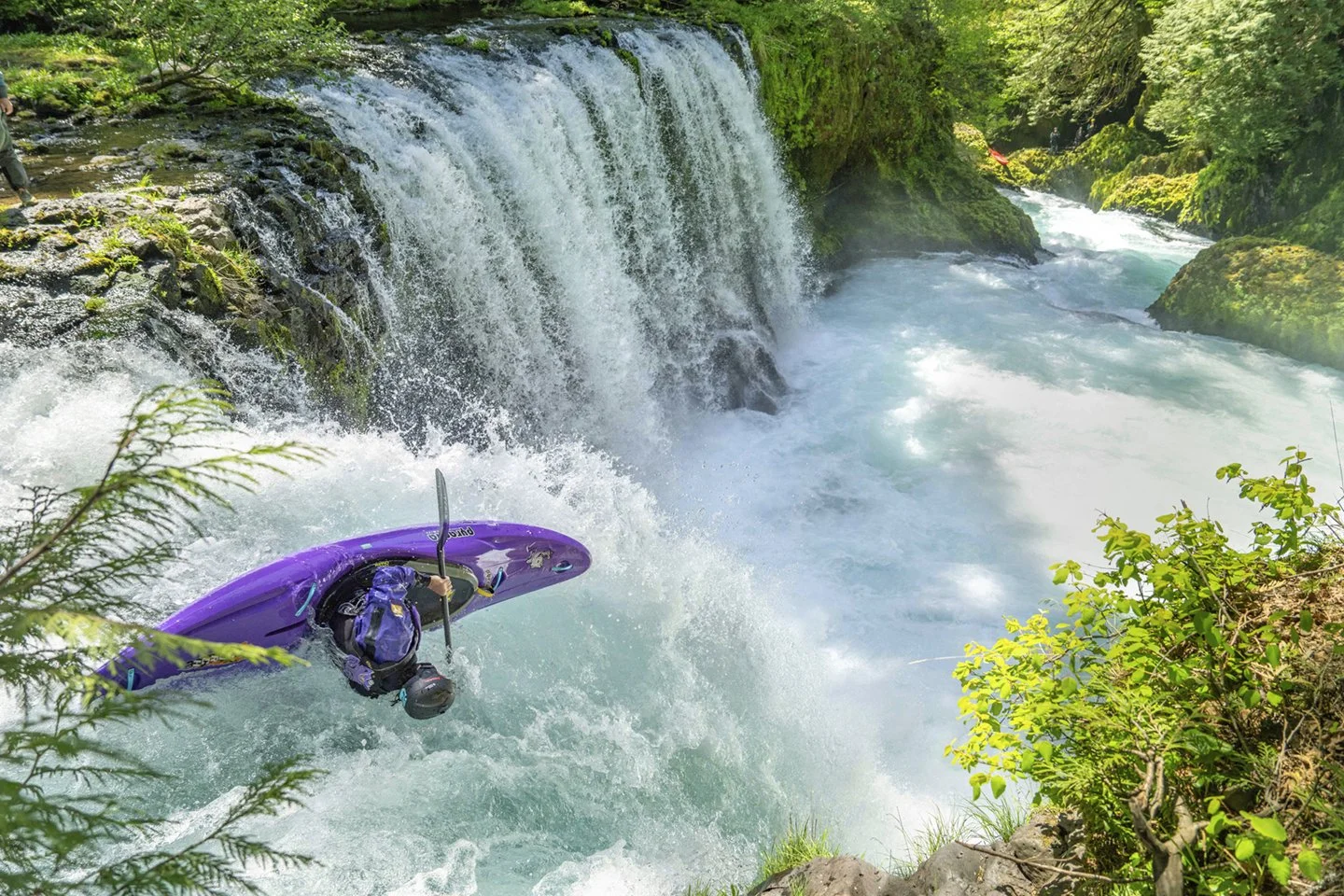
Dave Fusilli, Pryanna Kayer, going off of a waterfall
We sit down with whitewater kayaker Dave Fusilli, who shares the powerful story of how he discovered his passion for whitewater kayaking and transformed it into a lifelong pursuit of adventure on the river. Dave takes us back to the moment that first sparked his connection to moving water and how that curiosity evolved into a career spent chasing rapids, waterfalls, and some of the most demanding rivers in the Pacific Northwest as well as across the United States.
Along the way, he opens up about the lessons he’s learned in high-pressure environments, the mindset required to stay calm when conditions become unpredictable, and the near-death experiences that have shaped his deep respect for risk on the river. His stories give a raw, honest look at what it truly takes to paddle at an elite level in extreme whitewater kayaking.
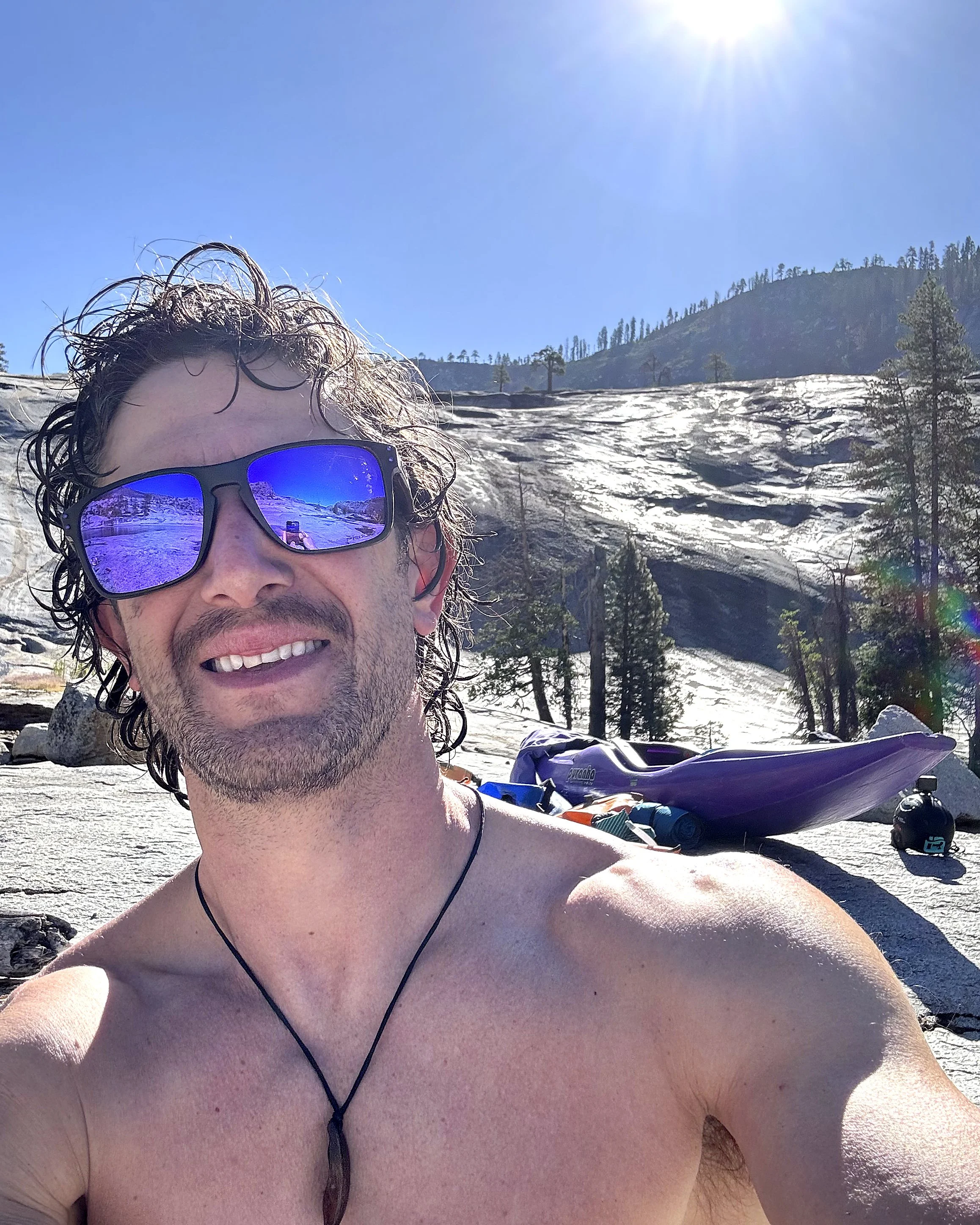
Dave Fusilli
Some people chase calm water and Dave Fusilli chases moments. Every rapid is a story, every drop a decision, and somewhere between the roar of the river and the pull of the current, he found not just adventure, but purpose.
We also explore the Columbia River Gorge, where Dave highlights some of his favorite places to camp, explore, and paddle. This iconic Pacific Northwest destination is a must-visit for RV travelers, outdoor enthusiasts, and anyone planning a river adventure in Oregon or Washington.
Dave also shares valuable paddling safety tips, technique insights, and guidance that applies to paddlers of all levels, including those enjoying recreational kayaking or stand up paddle boarding on flatwater lakes and calm rivers.
This episode also highlights how your RV can serve as the perfect basecamp for outdoor adventure travel. If you’re interested in whitewater kayaking, RV road trips, Columbia River Gorge camping, or stories of adventure, risk, and discovery, this episode is for you.
SHOW NOTES
Episode Highlights
From Pennsylvania to a Life on the Water
Dave Fusilli shares how he got started kayaking as a kid in Pennsylvania and how a turning point at the Cheat River Festival in West Virginia sparked a lifelong pursuit of whitewater. That early exposure led to a career built around rivers, travel, and progression in the sport.
Sponsored Kayaking and Travel Lifestyle
After earning a sponsorship with Pyranha Kayaks, Dave began traveling across the country to paddle some of the most well-known rivers in the U.S.
Learn more about Pyranha Kayaks: https://www.pyranha.com/
This lifestyle closely mirrors RV travel—constantly moving, exploring new terrain, and building a life centered around outdoor adventure.
Waterfalls, Expeditions, and the Grand Canyon
Dave shares stories of running waterfalls, including a 40-foot drop on California’s North Fork of the American River, and what goes into those moments mentally and physically.
He also breaks down the experience of paddling through the Grand Canyon multiple times—both with raft support and fully self-supported kayak trips.
Grand Canyon National Park: https://www.nps.gov/grca/index.htm
Team USA Freestyle Kayaking
Dave explains how he qualified for Team USA’s freestyle kayak team and describes freestyle kayaking as a mix of surfing and acrobatics performed on river waves. His journey shows how passion and consistency can open doors to high-level competition.
Best Places to Paddle in the Pacific Northwest
Dave shares accessible paddling locations for both beginners and experienced paddlers:
Columbia River (WA/OR) – Scenic flatwater paddling through the Columbia River Gorge
https://www.fs.usda.gov/crgnsaSkykomish River (WA) – Beginner-friendly whitewater with clear water and mountain views
https://www.recreation.govPacific City, Oregon – Ocean paddling, surfing, and coastal camping
https://www.oregoncoast.org/cities/pacific-city/Nehalem Bay State Park (OR) – Calm bay paddling perfect for beginners
https://stateparks.oregon.gov/index.cfm?do=park.profile&parkId=149
RV Camping and Basecamp Ideas
Stay near Pacific City and walk to the beach, paddling areas, and Pelican Brewing Company
https://pelicanbrewing.com/Explore Mount Hood National Forest for lakes and scenic paddling
https://www.fs.usda.gov/mthoodCamp near Hood River for easy access to both flatwater and whitewater paddling
https://visithoodriver.com/
Whitewater Safety Tips for Beginners
Dave shares practical advice for paddlers of all skill levels:
Always wear a life jacket, even on calm water
Watch for hazards like fallen trees and river debris
Maintain visual contact with your group
Use proper paddle technique by engaging your core instead of just your arms
Real-Life River Rescue Story
Dave recounts a high-stakes rescue where a fellow paddler became stranded above a waterfall. The story highlights the importance of awareness, preparation, and teamwork when paddling in moving water.
RV Life and Outdoor Adventure
This episode reinforces how RV travel serves as a basecamp for outdoor experiences. Whether it’s kayaking, hiking, or exploring new terrain, having your home on wheels allows you to fully immerse yourself in places like the Pacific Northwest.
Follow Dave Fusilli
Instagram: https://www.instagram.com/davefusilli/
Stay Connected With The Show
Podcast Episode Transcript:
On the Edge: A Whitewater Kayaker’s tale
0:00:00 Host, Brooks: He's launched himself off waterfalls most people wouldn't even get close to. He's built a life on that razor's edge where control disappears and instinct takes over. But what does any of that have to do with our RVing and life on the road? Stick around. This connection is not what you think. Welcome to RV Out West. I'm Brooks, based in the Pacific Northwest. My family of four hits the road to explore the best of RV life out west. From hidden gems and epic destinations to helpful tips and real road stories. So grab your coffee and join the journey! Hey, quick moment before we dive head first into this episode. This is episode one hundred ninety four, which means I'm getting really close to episode two hundred. And yeah, that tattoo goal is right around the corner. It's starting to feel a little more real every week. And honestly, I'm glad you're along for the ride and showing up here with me. That means a lot. Thank you. Also, heads up, our next newsletter drops next week and you're going to want it. We're putting together a destinations travel guide all about the Olympic Peninsula rain shadow, which includes the towns of Port Townsend, Sequim and Port Angeles. If that's an area that's been on your list or you're just looking for your next trip, this is a solid place to start. If you're not on the list yet, jump in now. Hit the link in the podcast description and get signed up before it goes out. For a lot of us. The RV isn't just a way to travel, it's where adventure begins and ends. It's the trailhead before sunrise, the place you come back to after a long ride, a paddle, or miles on foot. It carries us from one stretch of wild country to the next. As we chase that feeling of being outside, of resetting and seeing something new. Today's guest has taken that pursuit to another level. He's followed Whitewater across the Pacific Northwest and beyond, launching off waterfalls, pushing himself in ways most of us only watch from the shoreline and earning a spot on team USA's freestyle kayak team along the way. But this conversation goes further than the runs and the rapids he opens up about the drive behind it all, the spark that kept pulling him forward and how it shaped the life he's built. We also get into the kind of practical tips that matter when you're out there on the water yourself as a recreational paddler, so you can build confidence, sharpen your skills while staying safe on the water. Dave Fusilli, thank you so much for joining us here on RV out West.
00:02:42 Guest, Dave Fusilli: Yeah, yeah, I know, I know, how's life.
00:02:44 Host, Brooks: Life has been well. Let's start at the beginning of your journey. That moment where curiosity turned into something more like a calling. I'm curious what those early days look like for you when that pull toward whitewater really started to take shape. So Dave, for those who may not know your story, tell us briefly about your background off the water, as well as how whitewater kayaking first took hold in your life.
00:03:07 Guest, Dave Fusilli: I grew up in northwestern Pennsylvania, in a small town, real rural area, and basically, yeah, my family, my dad and my mother got me into whitewater kayaking. My dad, he, um, he basically saw rafting on, on the river south of Pittsburgh. He grew up in Pittsburgh. Thankfully, he was just drawn to the outdoors, grew up in the city, you know, or in the outskirts of the city. So basically my parents got me into paddling when I was really young. I was like seven years old. My dad was teaching me how to roll a kayak in a swimming pool, and my mom and dad would take me down some local creeks near the house and stuff. At a young age, I was not super drawn to it. It was just like, this was like, this was a while ago. So the gear sucked. It was like cold and wet. And yeah, I wasn't, I wasn't super drawn to it when I was younger, but I did end up having all the skills, you know, from being a kid. So then fast forward a few years. Basically, I didn't paddle much. Uh, I don't know. Nine, ten. Well, there's a, there's a handful of years there, basically up until I was about a junior or a senior in high school.
00:04:17 Host, Brooks: Okay.
00:04:18 Guest, Dave Fusilli: I, uh, for whatever reason, I think honestly, it was I was really into sports in high school. And I think I knew that high school was about to come to an end, so I should I'm going to have to have something else to do with this energy. Um, luckily I, I think I knew that about myself anyway. And so I was like, I should try kayaking again. And we were at the cheat River Festival in West Virginia, still one of my favorite whitewater festivals. And I decided to get back into kayak. And I was probably sixteen years old, fifteen or sixteen. And I had so much fun and I already had the skills from being a kid. I knew how to read Whitewater. Uh, I was actually able to, like, get the thing vertical really easily and play around with a kayak. I just, I just had the skills from a kid and then it just clicked.
00:05:05 Host, Brooks: That day just took off. Yeah. So that really was kind of that moment where you were like, okay, this is something I'm gonna do. It is, you know, that shaped your life in that sense.
00:05:16 Guest, Dave Fusilli: Yeah, it's, it's just, I don't know, I guess, I guess as a parent, uh, which I'm not, but I just think about my dad and mom giving me that tool. I didn't really have to choose that tool, you know, or that experience. But I think I'm grateful that they did. They exposed me to a lot of stuff. And that's something that stuck so hard that like, it was literally that day. It just like it just the light switch just clicked on that day. And I started chasing kayaking as much as I possibly could for many, many, many years.
00:05:56 Host, Brooks: Well, so then as that journey had unfolded, you know, the scope naturally starts to widen, right? You're going to go from your local familiar runs. And what began kind of close to home quickly led into bigger whitewater, pushing your skills and perspective as you take on rivers around the world. So let's get into that about what that step really looked like. Well, you know, Dave, you've kind of paddled in some incredible places. Can you take us through a few standout expedition trips around the world that changed your perspective, both as a paddler and as a person?
00:06:28 Guest, Dave Fusilli: Yeah, dude. For sure. Basically, that one day turned on a extremely hot fire, lit a really hot fire. And I, um, I wanted to figure out once, pretty much after that day, I wanted to figure out how I could kayak as much as possible. I started raft guiding And that put me on the water. And that got me a lot better at the sports because I was able to be on the water every day. Um, so my skills improved.
00:06:59 Host, Brooks: Was that in Pennsylvania?
00:07:00 Guest, Dave Fusilli: That was in Pennsylvania? Yeah, on the Yaquina River. From there, I basically just wanted to see as much of this stuff as I possibly could, and I couldn't really see how to. I was starting to read magazines and there were some videos, you know, pro paddlers and sponsored athletes. And I didn't know any of this existed until I was basically seventeen or eighteen. I didn't even know that was a thing. Actually, one of my buddies, Josh, uh, he, he, I thought I was getting better. I was paddling a lot and my buddy Josh, he made me do a freestyle competition. So there's, you know, there's these little competitions in whitewater, there's races and freestyle where you're doing different tricks and scoring points, um, surfing waves. And uh, so my buddy Josh, he made me do this competition. I wasn't going to do it. I was like, no, dude, I can't do that stuff. And I ended up I think I won that thing. And so then then that was another, you know, that was another light bulb, you know, another fire lit. I was like, oh, wow, I am getting good at this. Maybe I can actually, you know, my thought was if I could get sponsored, I could get sent around the country to see all these rivers that I've now been like, reading about and seeing in magazines and stuff. And I'm just like drooling over this stuff like this. How do I do this? You know? And, and so it ended up that I did get sponsored by Piranha Kayaks, who in two thousand and seven, I worked for them today still. So it's been that was a good thing, obviously. Um, they're great people.
00:08:33 Host, Brooks: Yeah.
00:08:34 Guest, Dave Fusilli: And that, that ended up taking me all around the country.
00:08:39 Host, Brooks: Was there ever like a really aha moment there on the river where it was like, I don't know, first time going off a waterfall or, you know, something along those lines.
00:08:48 Guest, Dave Fusilli: Yeah, there was one that stood out, though. You know, it was it was like that first year traveling around the country for now or for one, I'm, I'm now paddling all this stuff that I dreamed of and I saw in magazines and stuff. And the dream has, is coming true and right in front of my eyes. And it is so, so amazing. But yeah, there was one specific moment at a waterfall actually. Um, we were in the Royal Gorge in California, um, North Fork of the American and we were standing, but we get to this like forty foot waterfall and it's like one of the most beautiful waterfalls I'd ever seen. It was like the tallest waterfall that I'd ever seen from Pennsylvania. You know, like West Virginia. I had never seen anything that tall and completely runnable. Like this thing was like, right, perfect. It was like so good to, to kayak off of. And yeah, I remember looking at that thing and, and kind of, yeah, having that moment, just like you're saying was like, Holy heck, here I am. Him, and I'm about to pack off like the biggest and one of the most beautiful things I've ever seen. You know, it was. And then it expanded from there. And then it went from there. That that trip kind of.
00:10:01 Host, Brooks: Let's back up real quick. Let's back. So you did a full send off that waterfall then.
00:10:05 Guest, Dave Fusilli: Of that height. Yeah. Yeah. It was about forty feet ish tall. I'd only seen like anything from, I don't know, maybe twenty five feet ish at that time. So it was, I was getting close to doubling what I'd ever seen.
00:10:22 Host, Brooks: How did that make you feel when you were, you know, you're all alone in your kayak. Sure. You've got your buddies standing around watching in there to help rescue if necessary, but it's you against nature as you're getting ready to prep to go off. What kind of was going through your mind?
00:10:37 Guest, Dave Fusilli: As time has gone on? I that that moment has kind of like slowed down a lot for me above a waterfall. But that one. Yeah, that specifically was definitely heart racing. You know, it was like it looked so good though. Like it looked so clean and, and um, yeah, like a very, very good waterfall. But yeah, just trying to stay calm and, and focusing on the line and also focusing on not doing much with your body movement in general, you know, any kind of small movement becomes a larger movement at the bottom. So you really got to stay. I was really thinking about just kind of staying neutral and not doing anything too erratic, you know?
00:11:17 Host, Brooks: Have you done any first descents?
00:11:19 Guest, Dave Fusilli: I have, I have done a few, but not many. I was never I was never a focus of mine and never anything I really cared about.
00:11:28 Host, Brooks: Tell me about one of those.
00:11:29 Guest, Dave Fusilli: I've run a couple waterfalls and I think one on Rock Creek, a couple drainages over from where I live now, another forty foot waterfall and there was a twenty footer somewhere in Pennsylvania, but it was nothing I ever really desired or cared about. Yeah, it was nothing that it didn't really drive me. It was it was all about just like seeing things for my first time.
00:11:51 Host, Brooks: And you've done the Grand Canyon?
00:11:52 Guest, Dave Fusilli: Yeah. Like five, five different five different times. Yeah.
00:11:57 Host, Brooks: Were those all unsupported? I mean, just you and, you know, your paddling buddies and friends and taking your food and going.
00:12:04 Guest, Dave Fusilli: I did two raft support where the rafts had they, they, you know, they set you up with all your food and everything you need. And then I've done three self supports. So just all the food and, and drink and cooking all that stuff all in your kayak. Yeah.
00:12:19 Host, Brooks: What's that trip like just in a nutshell.
00:12:21 Guest, Dave Fusilli: It's so.
00:12:21 Host, Brooks: Nice.
00:12:22 Guest, Dave Fusilli: Yeah. It's the, those two trips are very if you're in the raft or in the kayak support, they're very different. Like the raft is like you have a whole setup. So you're set up an entire kitchen and it's much more elaborate. Right. Which it's nice though. It's really comfortable and a lot slower. The kayak support is just much more simplified. So you pull up to the beach, you pull out your one chair, you pull out your freeze dried meal, you start boiling some water, you know, so it's a much, much more simple version of it. And I like them both. I, I, I couldn't really just being in the canyon is really special.
00:12:59 Host, Brooks: That's awesome.
00:13:00 Guest, Dave Fusilli: I take it either way. Yeah.
00:13:02 Host, Brooks: Speaking of which, you've talked about, you know, what it's like to go through some of these canyons and, and paddle some of the whitewater. How has that kind of translated into a different kind of challenge? And really, I'm curious kind of at what point did your paddling path lead you towards that more competitive side and ultimately representing team USA on the freestyle team?
00:13:25 Guest, Dave Fusilli: That's a good question. I might not even know the answer for I, uh.
00:13:30 Host, Brooks: Was there ever a moment where you're like, you know, you've been doing all these freestyle comps around, you know, the United States and then kind of how did you get put on team USA because that's a pretty big.
00:13:43 Guest, Dave Fusilli: Yeah.
00:13:44 Host, Brooks: No that's.
00:13:44 Guest, Dave Fusilli: Good. Yeah it was it was basically part of the job to compete. You know, that was like, that was part of what I needed to do to represent the the brand as I was traveling around. Right. I was never, I've never been like that competitive in paddling. Of course, I've been competitive against myself. Like, especially in freestyle kayaking where you're doing, you're trying to land a trick to score points. It's always fun to try to learn stuff, right? So like learning those tricks and trying to figure that stuff out was I was competitive against myself. I guess it's just like, I want to, I want to figure that out. And that just naturally, obviously I got better at it. And then US freestyle team trials was in Colorado where I was already traveling through. So naturally we we competed at team trials at the US team trials. And I, uh, it was on a wave feature. So in freestyle there's kind of like two features. There's like a hydraulic. More foam pile and then a wave, which is a little taller, greener. I was much better and enjoyed much better at it because I enjoyed it a lot more. But surfing waves and that that team trials ended up being on a wave in Colorado and one that I, I liked. And so yeah, I ended up, I think I ended up placing third and they took the top five top five competitors, went to the US or went to world championships. Yeah, I was really excited. I was it was cool. I'd seen some guys that beat me a lot and it was just my style. It was just it was just handed, you know, it fit my style of paddling, the wave and everything. And I felt pretty confident and I like it. It was more it was it was fun, you know. But yeah, that was really it was a cool experience. Got a life jacket still to hang on to and yeah. Got to go. It was on the the Ottawa up in Canada and it was on a wave there too. But, uh, it was cool. Yeah, it was cool.
00:15:44 Host, Brooks: Let me ask you this. For someone who's probably unfamiliar, how would you describe freestyle kayaking in a way that captures the intensity and skill involved?
00:15:53 Guest, Dave Fusilli: It's kind of like acrobatics. It'd be like a mix of acrobatics and surfing. I would say if you're if you're familiar with surfing surfboard, you've got like that speed, you're doing aerials to score points, which is it's crazy because people are just now starting. I mean, well, from, to my knowledge, more recently I'm seeing aerials and surfing. I hadn't seen aerials in surfing until, I don't know, the last five or so years. And I've always thought like, why have surfers not airing it out? Like, we've been doing this in the kayak for a long time.
00:16:24 Host, Brooks: Right?
00:16:24 Guest, Dave Fusilli: Um, so yeah, you're, you're doing like aerial maneuvers off of a wave similar to a surfboard. Um, and in the river, in the ocean, the wave is moving towards the beach and in the river, the, the, that same exact shape is just staying in one spot because the water is moving and the rock or some kind of a feature under the water is creating.
00:16:44 Host, Brooks: The.
00:16:45 Guest, Dave Fusilli: The the water to stand up. Yeah. But very, very similar. And you now see surfers are starting to realize that you can find these waves on rivers too. Yeah. And so you start to we're starting to see more surfers on the river. Yeah. It's really fun though.
00:17:01 Host, Brooks: Dave Fusilli has walked us through how it all began, the rivers that pushed him forward, and the journey that led to team USA's freestyle kayak team. Stay with us. When we come back, we'll get into the lessons behind those experiences and what they mean for all of us out on the water. The RV Out West newsletter keeps you connected. Between episodes. You'll get episode highlights, Pacific Northwest destination guides, plus helpful tips, fun trivia, and opportunities to share your RV stories. It's everything you love about RV out West, delivered straight to your inbox. Sign up now using the link right there in this episode's podcast description, or head over to RV Outwest dot com to join today. You're not going to want to miss the next issue. Welcome back. The conversation picks up right where it left off. Getting into the lessons behind the runs, the mindset it takes, and what it all means once you're out there on the water yourself. It's pretty cool that you've experienced the intensity of competing at that level. And over time, it seems that, you know, your focus has started to shift into something more about the lifestyle and where you want to be. That move from Pennsylvania out to Washington feels like a big part of that evolution. What was it that called you West, and what did you find here that's kept you rooted?
00:18:29 Guest, Dave Fusilli: Yeah, I mean, initially it was just I like I was talking about earlier. I ended up, you know, sponsored by Piranha Kayaks and sent all over the country, you know, and I consciously end my travels would just kind of like check out all the towns and think about, could I live here? Could I live there? I was Pennsylvania was a great place to grow up, but I was I was trying to leave there when I was like sixteen. I just, I, you know, I can't I had amazing parents, like I have amazing parents. And, um, they showed me. Yeah, great time. But for whatever reason, deep inside of me, I was ready to get the hell out of there. Yeah, as soon as possible. So anyway, as I traveled around the country, I was kind of like, okay, where, where, what's the hot spot? Where would I enjoy living the most? And it had always landed here in the Pacific Northwest. I think, you know, from then it was basically the beauty of the whitewater, the accessibility pretty much I was. It was like these beautiful deep canyons and crystal clear pristine water, beautiful waterfalls. Yeah. Just the need. Like the the ferns, the moss.
00:19:45 Host, Brooks: The ecosystem out here is unbelievable.
00:19:48 Guest, Dave Fusilli: It's so beautiful. Um, and one a, a big thing was the like how beautiful the water was because I grew up in, in northwestern Pennsylvania, it's like it was all strip mined. And so like every, the, the creeks that I grew up on were like fully polluted, like orange, like no life in them. And so that could have been another reason that I didn't even know about. It was just like that seeing the beauty of the water. And that was just like, wow, that that's so special. It's amazing because I, I didn't really grew up like that.
00:20:20 Host, Brooks: Let me ask you this. What are some of your favorite rivers? Um, or even, you know what? Because, you know, I think a lot of our listeners are, are not chasing Whitewater. They're more kind of the recreational flatwater paddlers. So what are some of your favorite places here in the Pacific Northwest that are just great paddling spots that offer full experiences for all sorts of paddlers at different, you know, yeah, stages of experience.
00:20:45 Guest, Dave Fusilli: Yeah. I mean, like for me, locally, just even the Columbia is a beautiful paddle. I mean, it is like, it's cool, like coming I come out of the white, the mouth of the white salmon, which you know, is harder whitewater upstream, but paddling out into paddling out into the Columbia like that view is it's so beautiful. The ocean like I go to Pacific City and paddle around and surf out there sometimes it's super, super, super beautiful place. There's a brewery there. It's really nice.
00:21:13 Host, Brooks: It's cool.
00:21:14 Guest, Dave Fusilli: You.
00:21:14 Host, Brooks: Know, paddle and then grab a pint.
00:21:16 Guest, Dave Fusilli: Yeah. No doubt. I was just on the Skykomish last weekend. Okay. Um, it's like it's easier Whitewater class, I think two or three, but crystal clear water, like amazing mountains nearby.
00:21:30 Host, Brooks: Is there any cool lakes? Just like real chill flat water for, you know, some. Yeah, practically zero skill, but at least it's beautiful one.
00:21:41 Guest, Dave Fusilli: There's a couple up on hood that I've been to. I don't know if I'll know the names, though. With beautiful views of Mount Hood.
00:21:49 Host, Brooks: I actually was at one of those lakes with you.
00:21:52 Guest, Dave Fusilli: What was it? Do you remember?
00:21:55 Host, Brooks: Yeah. Um, we were shooting that video with Josh. Yeah. Josh Riccio.
00:21:59 Guest, Dave Fusilli: Totally.
00:22:00 Host, Brooks: And that's.
00:22:00 Guest, Dave Fusilli: The one. That's the one I'm thinking of.
00:22:02 Host, Brooks: I don't remember that's just upside out. It's just outside of Mount Hood, the town of Mount Hood. It's yeah, that was a beautiful lake.
00:22:09 Guest, Dave Fusilli: It's so cool. Yeah. It's it's out there a little bit. And you have a amazing view of, uh, hood.
00:22:17 Host, Brooks: Google it and put it in the show notes because I don't remember. So I'll have to go look at a map and find it.
00:22:22 Guest, Dave Fusilli: That one comes to mind. Yeah, that.
00:22:24 Host, Brooks: Was.
00:22:24 Guest, Dave Fusilli: A.
00:22:24 Host, Brooks: Really cool, like.
00:22:25 Guest, Dave Fusilli: Spectacular. Yeah.
00:22:27 Host, Brooks: Well, for we are an RV show. And so for someone traveling in a van or an RV, we're have been some fun go to camping spots that kind of play perfectly for a day on the water paddling. And then, you know, you're easy to camp right there. And do you have any recommendations on some fun space?
00:22:46 Guest, Dave Fusilli: If we could remember the name of that dam Lake, that that would be good.
00:22:52 Host, Brooks: There was a National Forest campground up there. So I will find that lake and that campground, and I will put it in the show notes. So perfect. That one was a cool place.
00:23:01 Guest, Dave Fusilli: Perfect. I was thinking too, honestly, when I was talking about Pacific City out on the coast. That place is really awesome too. There's like, there's a campground right across the street. It's really small and I think they have RV hookups there. And then you can, like I said, you walk right across the street, you've got the pub right there, then the oceans there, the sometimes really good surfing. If you're doing some paddling, if the. If the tide's not, or the waves are not too aggressive, you can paddle out around the corner or out around the rock. That place is really cool. Really pretty.
00:23:36 Host, Brooks: Um, you remember the name of it? It's okay if you didn't. I'm just.
00:23:39 Guest, Dave Fusilli: The campground. I don't know, but it's it's, uh. It's, uh, Pelican brewing.
00:23:44 Host, Brooks: Oh, yeah. Okay.
00:23:45 Guest, Dave Fusilli: So it's like, it's right across the road from there. That's a really cool spot. I'm trying to think of other ones that would be that would be easy, easy access.
00:23:54 Host, Brooks: You know, I know one two would be like Nehalem Bay State Park. And on the Oregon coast you got some decent flat water because that Halong Bay, you have the bay and then you have the ocean too. So you can kind of do both. There is there's.
00:24:10 Guest, Dave Fusilli: Sorry to interrupt.
00:24:11 Host, Brooks: No. You're fine.
00:24:11 Guest, Dave Fusilli: There's also a RV park right across the bridge in hood River here. Actually, this one is on the Washington side on your way to White Salmon. So you just cross. You just cross the. You're coming from hood. Cross the bridge into Washington and it's right on your right. Okay.
00:24:27 Host, Brooks: Yeah, well, camping really serves as a base camp for paddling, but once you're on the water, it can be a whole different environment. And that's where some potential real risks come into play. So I'd like to kind of get into a few moments and experiences that have stayed with you. Can you share an experience where something has gone wrong on the water? What did it look like in real time, and how did you and your friends or team respond?
00:24:54 Guest, Dave Fusilli: Yeah, I've got unfortunately, I've got a couple of them.
00:24:57 Host, Brooks: That's okay. I mean, you know, in the at the level with which you paddle, unfortunately, it's, you know, it's bound to happen sometime. So can you share with us one of those experiences or two. Sure.
00:25:09 Guest, Dave Fusilli: Yeah. One of my one of my wilder ones, I, I've got like myself beaten up pretty good.
00:25:17 Host, Brooks: But yeah, the first time I missed you, met you, you had a chipped tooth and I was calling you Chip.
00:25:22 Guest, Dave Fusilli: You were calling me Chip. That's right.
00:25:24 Host, Brooks: Because you had a little incident with a rock, and the rock won and your tooth lost.
00:25:28 Guest, Dave Fusilli: So I think that was probably an upper cherry.
00:25:31 Host, Brooks: You're still in my phone as Dave. Chip, you silly.
00:25:35 Guest, Dave Fusilli: I love that I got a new tooth, like, honestly, recently, it's not even that old. Um, yeah. So yeah, that one, that experience was flipping over and hitting my face on a rock on a rock wall, which you just being a non kayaker, you'd think that would happen quite often, but it really doesn't. It's like it's funny you, you also, you don't even, you don't hit your head that often either. Like sometimes I've honestly hit my head like, like three times in my whole life of kayaking, flipping over. Yeah, okay. One time hit my face, which is where Chip came from. Um, uh, yeah, I had a, I had a wild experience with one of my, one of my best friends who. Yeah, he, uh, we were running this waterfall and it was a, it was like a two tiered waterfall, and it was a twenty footer into like a fifty or sixty foot drop. And the twenty footer was very it was kind of a little tricky. It was kind of technical. So you had to take like a kind of a specific stroke off of the waterfall to make to land pointing, right, which you needed to do if you didn't land pointing. Right. There was kind of an undercut wall on the left or an overhanging rock that I would, you'd get kind of shoved up against. And I was explaining this to my buddy and I was like, yeah, man, you gotta, you know, just make sure you take a late, late left sweep stroke. So your bowel leans to the right and there's another calm spot there where we can regroup before you run the sixty footer. And well, he didn't take the sweep stroke. He ended up getting shoved up against the rock and getting swimming out of his kayak. So now and then he somehow. So he's right above a sixty footer. So he swims out of his cock and I'm like, oh my God, he's going to swim off this next waterfall, right? And he somehow grabs like the wall of yeah, where he swam this like undercut wall. So he's hanging on and I'm on the other side of the river trying to figure out what to do. And there's no, no, there's like, it's like walled in. So there's like no real good place for me to get out. Usually we have for your listeners, we have a, you know, a bag of rope basically. And you, that's how you save people. You throw them the bag of rope, they grab the rope, you pull them towards you. But I didn't really have a great place to get out to throw the rope. He's hanging onto this wall, just hanging there, getting like kind of pulled under it, trying not to go off the sixty footer. I end up finding this like crack in the wall where I'm able to, like, kind of wedge my kayak and crawl out of it. And now I'm standing on this like small rock basically attached to my kayak because I didn't have anywhere to put it. So I have a strap on it. And then I yelled at him through the rope across the river. Somehow he grabbed it. And then I start pulling as hard as I can. And you gotta you gotta remember there's current in there and it's sweeping off the waterfall. So I think he has the rope in his hand, but I still was like, he's probably going to swim over this waterfall anyway, but I'll do my my best to see if I can get him over here. So I'm just pull and pull and pull and pulling and ended up pulling him over and swinging him into this soft, this like somewhat calm spot where I was standing and got him out of the river and all was good. But it was a, it was a wild experience that stick with me forever. It was crazy.
00:29:02 Host, Brooks: That is really intense. And how long would you say start to finish that took that rescue took?
00:29:09 Guest, Dave Fusilli: Oh, it was probably like it was probably like two or three minutes.
00:29:15 Host, Brooks: Okay. So he was hanging on two to three minutes there before you were able to get the rope to him?
00:29:20 Guest, Dave Fusilli: I think so. It wasn't long, I was, I moved quick. I knew he didn't have much. You know, it's like I knew he wouldn't be able to hang on very long. So I was just going as fast as I could. But something like that. Yeah.
00:29:33 Host, Brooks: Yeah. And how has that experience shaped your mindset today when you go paddling or in general? Um.
00:29:40 Guest, Dave Fusilli: Yeah, I definitely, I definitely like to see that next person come down if I'm running a drop or something like that. I always want to have an eye. I just want to keep my eye on the people behind me. Um, just trying to be in good eye contact and make sure they make that next move before I move further downstream, especially if it's someone that I'm not familiar with. Um, which is kind of more rare, I guess, but these days. But yeah, I just like to definitely make sure they make the last rapid before I move downstream all the time. And that could be anything I'm doing. Like if I'm on my dirt bike to cruising around, which I do a lot, you know, I just want to make sure they make that move or make sure they make that turn because it's so easily you get separated. It's, it's like crazy. Even when you think the person knows where to go, you know, it's still next thing you know, you're looking around for them for an hour, you know, should've waited there for one minute, two minutes.
00:30:42 Host, Brooks: You know, after talking about some of those bigger, more intense moments on the water, it's helpful to bring it back to where most people are, which is just getting out and paddling recreationally. So let's shift into some practical tips and advice for the everyday paddler looking to stay safe and build confidence on the water. What would you say are the biggest safety fundamentals they should understand?
00:31:05 Guest, Dave Fusilli: Yeah, I would say if you were, even if you're getting on to any, any kind of moving current, just I think like making sure there's like, no, even if it's pretty mellow. But moving wood is always a problem, especially in the northwest. Making sure there's no trees or anything in the area or like across the river, because that can cause you a lot of problems really quickly. But yeah, just essentially having like a, at least a life jacket, you know, you don't always need a helmet, but you should definitely always have a life jacket on. I would say.
00:31:36 Host, Brooks: Even if you're on the lake, right? Life jacket on.
00:31:38 Guest, Dave Fusilli: Yeah. Even if you're chilling on a lake. Yep. Yeah. And if you're just, if you're just lake paddling. Yeah. You want, you want that and, and keeping an eye on your, your people too, because you can still get separated and might not be in too much danger, but could cause you a bunch of wasted time, you know?
00:31:53 Host, Brooks: Can you break down kind of the basics? And I know we're an audio only podcast, but can you kind of just break down the basics of an effective paddle stroke and where most beginners get it wrong?
00:32:04 Guest, Dave Fusilli: You want to basically engage your core. Most people are just going to be like sitting back on the back band and just kind of like, yeah, recliner the kayaks, not not really a recliner. So you, you know, you want to sit. Think about your your weight being on your your butt or your butt bones. So you're sitting straight up. And then when you're taking a forward stroke, you want to be like reaching your arms straight out, putting it in the water and then rotating with your entire body, that's going to be the most efficient. It takes time. It's easy for me to just say this than, you know, to to go do it. But yeah, you want to think about using your core and sitting up straight. You know, your, your core is much stronger. Your arms get tired quickly. If you can get some rotation with your core as you're pulling, that'll, that'll help you out a lot. I'd say those are the two, two quickest and easiest tips.
00:32:53 Host, Brooks: And what, what should your grip on the paddle shaft be like.
00:32:57 Guest, Dave Fusilli: About shoulder width apart.
00:32:58 Host, Brooks: And then your actual grip, is it loose. Is it kind of is it whole hand? Like how are you.
00:33:03 Guest, Dave Fusilli: Yeah, you pretty much pretty much yeah. Whole hand around it. All paddles are going to have like a control hand. So your right hand generally is going to be turning the thing back and forth. And your left hand can be really loose. I think when I'm pushing away, I'll loosen my hand so you don't have to be totally gripping all the time. But yeah, whole hand around for sure.
00:33:23 Host, Brooks: Okay. And if you could give one piece of advice to a brand new paddler, what would it be?
00:33:28 Guest, Dave Fusilli: I think that that just what I said is probably the most important thing. If you've never kayaked, if you've never paddled at all and you're just getting on out on any kind of moving water. Um, yeah, just sitting up and thinking about using your core to paddle. I think it's like the most important and you're going to have a better time because you're not going to feel as tired if you're using, you know, more of your whole body than just your arms. And I think that experience is going to be more fun and enjoyable if you have a little bit of a just kind of think about your body positioning when you're doing it a little bit better.
00:33:59 Host, Brooks: Okay. To wrap it all up, if you had to sum up, what has kayaking and the lifestyle around it taught you about how to live well out here in the Pacific Northwest?
00:34:10 Guest, Dave Fusilli: That's that. I could talk forever about that. I think.
00:34:13 Host, Brooks: I know.
00:34:15 Guest, Dave Fusilli: I mean, it is it's completely shaped my life. Um, it's just, it's just the experiences. It's the adventures. It's the beauty, it's the flow. It's the vibe of the community and the community in general. It's very tight. It's like a family that I'm so grateful to be a part of.
00:34:37 Host, Brooks: Fair.
00:34:37 Guest, Dave Fusilli: Yeah, it is my life. And it, it's it, it's it's, yeah, it's an, it's an amazing community. It really is. Everyone's so, so positive and helpful. And like the story I was telling you, you know, especially when you're doing hard kayaking, you're, you're looking out for each other. So it's like a, it's a team. It's like a, it's a family and a team at the same time. But um, yeah, just being out and, and I do other sports and I always say this, there's not some of the sports that I do, I like a lot like riding my dirt bike and stuff, it's really cool. You still get out in nature, you still get these amazing views and it's a challenge and all that stuff and teamwork as well sometimes. But there's nothing that puts you in the element. And I've said this before, but you're like, in kayaking and whitewater, it's like you're dancing with one of the most powerful elements on the planet. And being able to do that is it's just, it's just really special. And yeah, being in the flow, being in it, being with neutral, moving with it. It's, it's really, it's really awesome. And I'm grateful for it.
00:35:46 Host, Brooks: Well, Dave, you know, you've done paddled big Whitewater, you've set up camp and done van life in the Pacific Northwest. It's clear how much time and passion that you put into this. So to wrap things up, where can people find you online so they can follow along on your adventures and keep up with everything you're doing?
00:36:04 Guest, Dave Fusilli: It's a at Dave facilitate Instagram. That's where I post the most. So I put a lot of videos up there.
00:36:11 Host, Brooks: Well, Dave, thank you so much for coming on RV out West. I really appreciate it.
00:36:14 Guest, Dave Fusilli: Yeah. Thank you guys for having me. Hope you all have a great, great afternoon.
00:36:21 Host, Brooks: All right, my friends, if you enjoyed this episode, please share it with a friend or family member. Also, the conversation doesn't have to end here. If anything we talked about sparked your curiosity, head over to RV outwest dot com and check out the show notes. We've got links to everything we mentioned so you can dive deeper, explore more, and maybe even start planning your next adventure. And while you're there, make sure to sign up for our free monthly newsletter. That's where we share things first, like behind the scene updates, new destination travel guides, and a few extras we don't always talk about on the show. It's the best way to stay connected with us and be a part of the community we're all building. I appreciate you being here. Thanks so much. If you think you've seen a lot of Washington, next week just might change your mind. We're sitting down with author, podcaster, hiker, trail runner Craig Romano, a guy who's logged more than thirty five thousand miles on trails. And he's bringing that experience straight to the show from well-known routes to the kind of places most people drive right past. We're digging into what makes hiking in Washington State so deep, so varied, and so worth exploring. Thanks for listening to RV Out West. Be sure to follow the show so you never miss an episode. And if you enjoyed the show, tell a friend and please leave a rating or review. It would mean a lot. Special thanks to Scott. Home music for our intro song. We are one. Follow us on Instagram and Facebook to join in on the conversation. Now get out there, explore and go see what's beyond the horizon.