RV Tech Secrets Every RVer Needs to Know
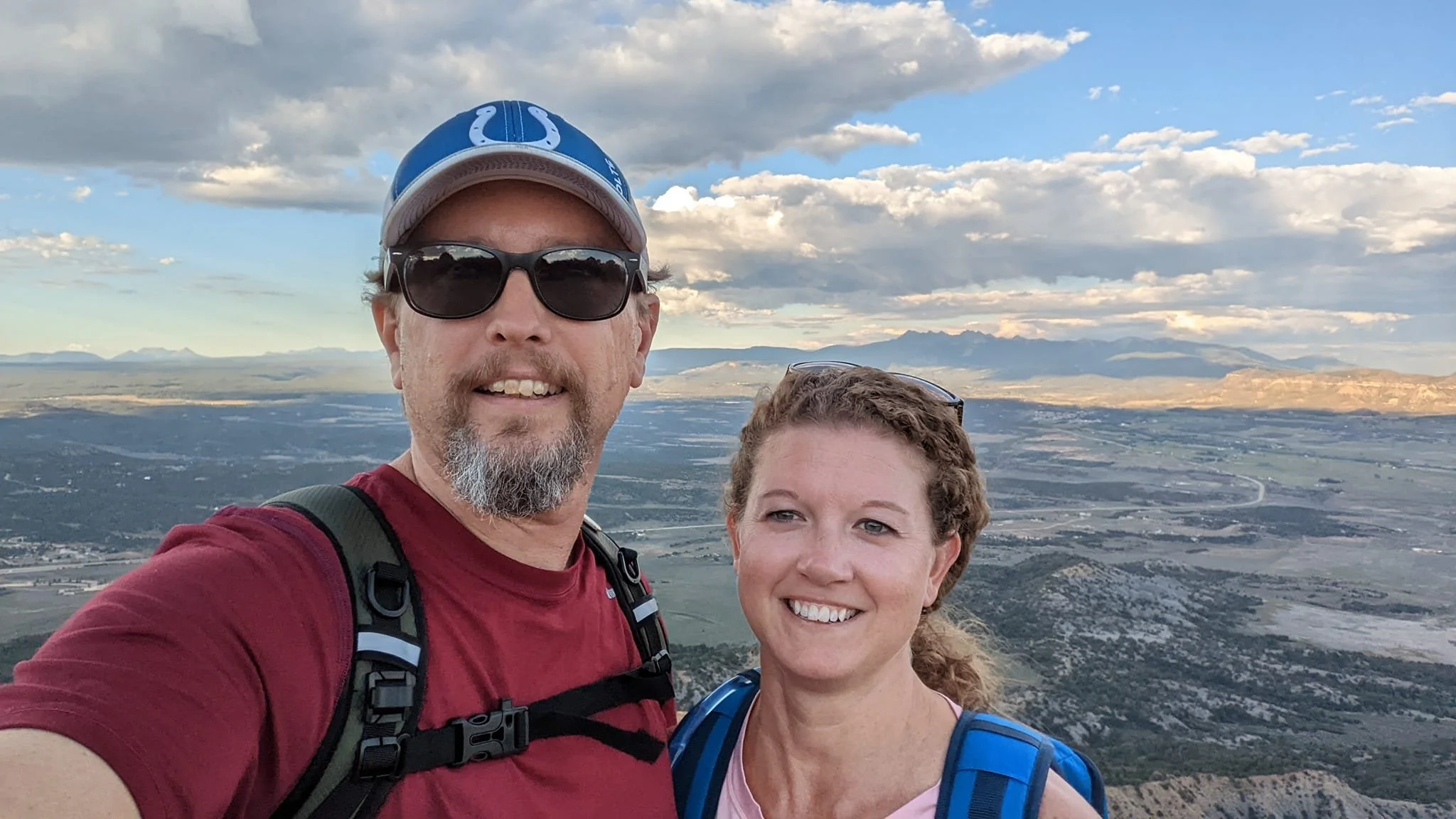
Jeremy and Candice of Fair Winds RV
Living full time in an RV gives you a firsthand look at what works and what breaks on the road. In this episode of RV Out West, we sit down with the couple behind Fair Winds RV, full-time RVers who share practical RV maintenance tips, advice for full-time RV living, and stories from their travels across the United States and the Pacific Northwest.
From routine checks to preventing common breakdowns, they provide real-world guidance every RVer can use to keep their rig running safely and smoothly. Their experience as certified RV technicians makes these tips actionable, helping you avoid costly repairs and enjoy life on the road with confidence.
Beyond maintenance, they share favorite destinations, travel lessons, and insights from exploring the Pacific Northwest by RV. Whether you’re planning your first adventure or looking for inspiration for your next trip, their stories highlight what makes full-time RVing rewarding and practical.
If you’re an RVer looking for RV travel tips, maintenance advice, and full-time RV stories, this episode is packed with valuable guidance. Tune in to hear the experiences, advice, and adventures of the couple behind Fair Winds RV, and learn how to make the most of your journey on the road.
SHOW NOTES
Ever wonder what really breaks on the road and how to keep your RV running smoothly? In this episode of RV Out West, we sit down with Jeremy and Candace of Fair Winds RV, a full-time RV couple who fix RVs for a living. Jeremy, a certified RV technician, shares insider tips every RVer should know—from essential maintenance tasks and tire care to water seals, air conditioners, and electrical protection.
Beyond repairs, they share stories from their travels across the United States and the Pacific Northwest, including favorite spots in Utah, Michigan, and their adventures while Jeremy was stationed in the Navy. From tent camping mishaps to fifth-wheel life, their experiences highlight the highs, lows, and lessons of full-time RVing.
Learn practical advice for keeping your rig safe, comfortable, and road-ready, plus small upgrades that can save time, money, and headaches. Whether you’re a weekend warrior or full-time traveler, this episode delivers tips, inspiration, and behind-the-scenes stories from the road.
What You’ll Learn in This Episode:
How to understand your RV’s basic systems to avoid costly breakdowns.
Essential RV maintenance tips for tires, water heaters, air conditioners, and seals.
Why a quality surge protector with electrical management can save thousands.
Small upgrades that make life on the road easier and safer.
Insider insight from a certified RV technician on real-world RV issues.
The most common things that break in an RV—and how to fix them.
Life lessons from full-time RV living in a fifth wheel.
Favorite RV destinations across the Pacific Northwest, Utah, and Michigan.
How RVing offers flexibility to balance adventure and personal obligations.
Practical advice and tips from experiences you won’t find in an owner’s manual.
Connect with Fair Winds RV:
Website: fairwindsrv.com
YouTube: Fair Winds RV
RV Tech Services: Rothamsted Mobile RV
Resources & Newsletter:
Sign up for the RV Out West newsletter for episode highlights, PNW guides, and road trip inspiration at RV Out West: https://www.rvoutwest.com/newsletter
Follow the Journey on Social Media:
Podcast Episode Transcript:
RV Tech Secrets Every RVer Needs to Know
Our guests live in their RV, fix them for a living and see what really breaks on the road. So stay tuned to hear their story. Welcome to RV Out West. I'm Brooks, based in the Pacific Northwest. My family of four hits the road to explore the best of RV life out west. From hidden gems and epic destinations to helpful tips and real road stories. So grab your coffee and join the journey! Fairwinds RV is built on the belief that the road feels better when you know your rig is ready for it. Behind the name is a couple who live full time in their RV, chasing new horizons while helping fellow travelers stay safe, comfortable, and confident wherever they're parked. Their life on the road isn't just a lifestyle choice, it's the foundation of how they understand RVs, travel, and the real world challenges that come with both. Jeremy and Candace are full timers, and Jeremy is a certified RV technician, and the two of them work together as a team. They know what breaks because they've lived through it, fixed it, and found their way to keep on rolling down the road. I'm thrilled to have them on the show, and for them to share with us about their experiences and their insights on some of those things that we, as our viewers, should be doing to make sure our rigs are in tip top shape. Jeremy and Candace, welcome to RV Out West, and thanks so much for coming on the show. Yeah, thanks for having us. Thank you again. And let's just kind of jump right into it. I'm really curious, what kind of was your journey into the RV life? Tell me a little bit about that. We had a small travel trailer for a couple of years and we're looking to upgrade. And then Covid hit and the housing prices shot through the roof, and we decided to just sell everything and we bought a forty two foot fifth wheel, put the house on the market, sold it, and just about everything we owned in a two month time span and moved into the fifth wheel, and we just pretty much jumped right in. So we lived stationary for about a year. I always like to tell people, um, that was kind of our test run to make sure, um, we didn't kill each other. Uh, being in such a tight space. Um, and then after that year, yeah, we both quit our jobs and kind of went into semi-retirement, and, um, um, then we hit the road and it's been kind of on and off. I'm sure we'll get to what that was all about, but it's been kind of on again, off again on the road since then. So and, you know, for my, for my part of it, you know, my grandparents are avid um, and I spent a lot of summers with them, uh, traveling, uh, mostly back and forth between Indiana and Colorado. Um, and I, it kind of always knew, You know from then that I wanted to have an RV someday and do what they did. That's really cool. So let's talk a little bit about some of your RV adventures that can be beyond the PNW. What has kind of been some of the big highlights for you guys that you've done and enjoyed and, and in places you've seen that you've liked? Well, first and foremost, uh, we love the southwest. Um, we haven't, you know, we haven't had the opportunity yet to travel the entire country. Um, again, there have been some things that have caused us to get off the road, but, uh, our first summer, we we went from, um, basically Columbus, Ohio, and out through Colorado. Spent some time there and then out to Utah, southwest Utah in Kanab, Utah. And that was by far. It's going to be hard to top that, I think, in, in our future, um, travels. It's just really, really beautiful out there. So I think for both of us, I think I can speak for her on that. That's been our favorite so far. Did you guys hit the Big Five when you were out there in Utah? Well, we were we were, we planned, um, to to hit the big five. We hit one, we hit Zion. Okay. And that was just an amazing experience. And then life happened and we had to we had we basically had to drop everything that we were doing. So my dad was diagnosed with Lewy body dementia, and, um, he was really he took a real bad downturn. So we we stopped everything we were doing out there in Utah and hightailed it back, um, to help out with with that, we stayed there for about a year. So that's one of the that's one of the, you know, scenarios that got us off the road for a little, for a little while. So and that's one of the reasons that we love this lifestyle is not only can we go where we want to go when we want to go there, we can go the places that we need to be at any time. We can just stop what we're doing and and be anywhere we need to be at that moment. That makes so much sense. Has there been any other places besides the southwest? It's left its impressions on you guys? Yeah. So we even though Jeremy grew up in Indiana and we lived in Indiana and Ohio at various points in our marriage, we had never been to Michigan. And we went up there, uh, the summer of twenty four, and both of us were just totally blown away by how absolutely gorgeous it was, in a different way than Utah. Yeah, of course, you know, we went we went pretty much up the western side of the state and then up into the U.P. so the Upper Peninsula and it we just both we only spent five weeks up there. But we're it's definitely on our list of must go back. And what time of year were you up there for that. We did May and June. And how was it, weather wise? Absolutely beautiful. Cool. Okay. It was, um, we missed, you know, the. Not that they get terrible heat, but the heat of the summer. Um, we were lucky enough to leave Michigan before the mosquitoes came in, because that was going to be my next question. Yeah. Yeah, that was my next question. Um, we we missed all of that, which we're thankful for. The weather was just right. That's a great time to go. Okay. One of the other questions I wanted to kind of circle back on is that you said, right, as Covid kind of was coming on strong, is when you guys made the decision to, you know, sell your house, sell your stuff, downsizing and get into your, uh, fifth wheel. What were you guys doing for jobs at that time? Yeah. So I so I retired from the Navy in twenty fifteen, and then I got a job at a big tech company in Columbus, well, just north of Columbus, Ohio. Uh, working as a training manager. Um, and I worked there for about six years. By the time it was all said and done, and we sold it all and left the area. When you were in the Navy, you were stationed out near Bremerton, correct? I was we were we were stationed at subbase, Bangor. Uh, we lived on base for a little while, and then, uh, we moved. Well, actually, we started out in Silverdale. We lived there for a little while. Uh, so then we got some base housing that opened up on on the base there, and then we moved in to a or a duplex in Bremerton. So we spent about four and a half years, five years, something like that out there. Um, and that's just as, you know, uh, that's a beautiful area of the country out there. Um, so, you know, we didn't get to do as much as, you know, we get to do now, but we got to do quite a bit while we were there. Well, tell me a bit. I'm curious, what was some of the the highlights of the bits that you did get to do when you were out stationed out here. We were just actually talking about this the other night. And, um, I remember some of the, some of the highlights, uh, that that were more personal. Uh, but I don't really remember a lot of the areas that we went to. I can remember a few. But, Candace, you want to take this one. So we were able to we didn't have an RV at the time. That's okay. So we did. This was in our tent camping days. Yeah. And our kids were young. And so we spent, um, we did a couple of trips out to Crescent Lake, which we absolutely loved, and not true camping, but we did go out to Pacific Beach. There's a a Navy kind of lodging out there. You can rent cottages. And we did that a couple of times with various friends. That was really cool. We loved the, you know, Bainbridge Island, uh, Port Orchard, Poulsbo, um, taking the ferry over into Seattle. Jeremy's favorite restaurant. He still talks about. Which is, uh, crab pot. Oh, yeah. Yeah, yeah. Okay. Yeah. Nice. Yeah. Unfortunately, the time, um, I did not eat seafood, and I did not drink coffee, so I didn't get the full, you know, Seattle, Washington. You know, I just. Yeah. Now I drink coffee and I eat free food. So it'll be a different experience when we go back. And so, I mean, because it sounds like. Right, if you're using Bainbridge and Bremerton and and or. Well, the part that's not part of the Kitsap Peninsula is kind of your base camp. The springboard out to the Olympic National Park is just that much easier, because you just got to go over the Hood Canal Bridge and bada bing, you're there. So, um, was there any favorite? Did you guys do any cool hikes that you might remember that was kind of I mean, I don't need the trail name, but like, were there any great hikes you did out in that area during that time period, or did you make it to like oysters? I've never been there. I don't know if you guys are oyster eaters, but we are not. Um, but and I, I was looking at the map the other day, and I can't remember where we used to go. Um, Jeremy might remember it was probably about an hour or two away from where we lived, but we used to take the kids up into the mountains to a place that you could go sledding. Um, and it was it was in one of the national parks. It might have been Olympic, I don't remember. That's okay. But, yeah, that was always fun for us. Um, I'm pretty sure we did go into, um, the Olympic National Park. Um, I mean, Crescent Lake Crescent is part of the park, so. So, yeah. Yeah, I was just trying to remember, you know, where we did we go to Olympic or did we go to Rainier? kind of equidistant too. So, you know, right around or up and north and out. You know, you got you got options if that's your base camp. Yeah, exactly. Yeah. For me, here's what I take out of all that. And I know it really doesn't have specifically to do with the Pacific Northwest, but they're interesting stories. So I had three very clear memories of, uh, camping out there, um, or staying, you know, vacationing out there in the Pacific Northwest. So number one, our, our daughter, um, had a couple of injuries in there. She's got a permanent scar on her lip where she fell and hit her. Her face on a rock. Um, our dog. When we stayed at that Crescent Lake, we took a canoe out, and our dog, um, decided that she wanted to jump into the lake from the canoe and immediately sank, um, to the point where I almost had to jump in after her. And then I think it correct me if I correct me if I'm wrong here, but I think, um, our son also tried to light our tent on fire when we went camping in the eastern part. So so when I, you know, when I say those were some of the memories that that I remember, those were the big ones that stick out. And of course at the time they weren't fun. But when you look back on them, you know, lots of lots of, you know, just neat stories to tell about. Terrifying now, but are terrifying then, but make for great campfire stories now. So that's you know. Yes, absolutely. I think Crater Lake. It's crazy. It is so deep. It's. I think it's six hundred feet deep. It's deep because it was carved over time by glacial ice and whatever. And so like it's crazy. I'd like to take a brief pause right now and share a little bit with you about our newsletter. The RV Out West newsletter keeps you connected between episodes. You'll get episode highlights, Pacific Northwest destination guides, plus helpful tips, fun trivia, and opportunities to share your RV stories. It's everything you love about RV out West. Delivered straight to your inbox. Sign up now using the link right there in this episode's podcast description, or head over to RV to join today. You're not going to want to miss the next issue. Hey welcome back. We're talking with Jeremy and Candace about living the RV life full time, their travels around the Pacific Northwest when Jeremy was stationed in the Navy. And now I kind of want to transition and talk to you a bit about kind of the path to becoming an RV tech. But before I get into kind of what that path looked like, share a bit with us about your particular journey on the decision and kind of how that came to be for for you. So the decision really wasn't that hard once, uh, you know, we had a couple of things that happened where, uh, we, where we said, you know what? We don't we don't like having to rely on other people or rely on other people to work on our RV. And once we kind of made that decision, it was really easy because of my veteran status. Uh, the whole training program was, uh, covered by my, my VA benefits. Um, basically the GI Bill paid for all of that. So as far as making the decision that that was a really easy decision to make once we decided we don't like other people working on on our rig or we didn't like relying on, you know, being on somebody else's time to come and do that. And I've always, you know, I'm I've always been someone who likes to know how things work. Uh, I like to be able to fix them. Um, so it was really just kind of a no brainer that that I was going to end up at that school in that school. Is that the, uh, in our VA one down in is it in East Texas, West Texas, whatever. Down there in Texas with Todd. Yeah, it's the nvta. Down in Athens, Texas. And you know, they've got they've got several different programs you can go through. I went through the certified technician course and the certified Inspector course, and this was back in I think May, May, April and May of this year. And how long a process. You know, kind of I mean, obviously with you guys living in your fifth wheel, that was easy. Just tow it down. Do they have, you know, hookups or whatever there on property for you guys to, you know, while you're taking classes, you can just kind of get up and go from home to school. Yeah. It was about a, I don't know, one hundred and fifty yard bike ride for us. Uh, or for for me. Uh, and yeah, they have a campground right there on site. Now, technically, the campground and the schoolhouse are not. They're separate entities. Gotcha. They're basically the same. Uh, they're, you know, there's a there's a lot of, um, there are people that work at the campground, but also, you know, their spouses work at the school house and so forth. So it's all kind of one unit, but they are separate entities and it makes it really convenient and nice to to just be right there for all of that. And how long were you there for total in total time to take those two courses. Seven seven weeks. So the technician class, it's actually three classes. If you want to get technical. It's a it's a it's a basic one week class. And that's really more of a owner oriented class to familiar, you know new owners with their RVs and the basic systems of it. So after the the basic course, then it's four weeks of the advanced technician class. So that's that's basically a total of five weeks if you want to be a certified technician. And then the inspector course is an additional two weeks on top of that. Um, and if you just go to be the certified inspector, you still have to go through the basic class and then the certified inspector course, so that would end up being a total of three weeks. But if you do the whole thing all at once like that, it's a total of seven weeks. And then like I said, they've got a couple of other classes in there, generator classes and solar classes. And I think those are, uh, I think they've changed since we've been there. But, um, they're two or three weeks each, two weeks each in that fundamentals class, just from a high level. What kind of things get covered in that class? So at a high level, uh, they teach you about how your electrical system works. Uh, all the systems, the propane systems, the plumbing systems, uh, the hydraulic systems, again, it is a it is a very high level, but it's really good for new owners that are coming in. Really don't know anything about their RV at all. Um, it's it's not going to teach you how to work on anything. However, there are there were several folks that went through there that have actually been working on RVs professionally as part of a of a business for the number of years, some of them. And then they wanted to go in and get that. Uh, what do they call it if you go through just that one week course, you're a registered technician, so you've got something that you can put behind. You know, what you're doing out there in the field. Okay. Well, first tell me about the craziest thing you've had to fix on somebody else's rig, whether it was caused by them or caused by nature or caused by just, you know, general wear and tear. But what's been, like, the wildest thing where you're like, wow, that was crazy. So we're pretty new to this still. And because we we travel a lot, we're not in one place a lot. We we don't get a lot of exposure. But, um, the one thing that I thought was the coolest, I don't know how crazy it is, but we had to work on a BA, uh, cable slide system. And the in those things, there's a, there's a motor with a, with a pulley assembly on it, and somehow they managed to just completely bend that motor. Uh, I don't know how you even do that, because it's about an inch or an inch and a half thick, and it's just. It's solid steel. And somehow that motor was just completely bent, and it bound up. The whole slide wouldn't go in and out. Right? So, you know, we haven't seen a lot, but that one in my mind was I just couldn't fathom how, you know, that inch thick steel got bent to the to the point where it was, it was binding up an entire slide. That's crazy. That is crazy. I wonder, like, was it, uh, going down the road and just interesting, I. Yeah. I'm not sure. You know, those those motors have got some pretty good torque on them. So, you know, it's possible that it just kind of got out of whack. And that motor just pulled it out of place and bent it. But, uh, if you were to see a picture of one of those motors, you'd think, how in the heck did that happen? Yeah, yeah, yeah. That's crazy. All right. What suggestions or tips do you have for things that they should be looking at, say, you know, annually or every six months or quarterly or kind of what are those just general things that you go out to go camping and you want to just keep an eye on things. So I'll take the first one here, and then I'll let Candace follow up on, on, on that the second tip, because they kind of go together. But I would say the number one tip and I know you said, you know, moderately seasoned, uh, viewers for I know you said for moderately seasoned RVers here, uh, but this applies to everyone is is to know the basics about your RV. It is really difficult to determine what's going wrong. If there's anything wrong. Uh, it's really difficult as an RV technician, when somebody calls me and says, hey, I have this problem. And I start poking around and digging a little bit, asking some, some questions just to kind of get a picture. Uh, if if they don't know what kind of slide out they have, it really slows down the process of trying to figure out what's wrong and what's going on, because there's a lot I can do in the background before I even get there. But if we're just focusing on the owners, just know the basics about your RV. For example, I just talked to someone here in the park just a few days ago and it was supposed to get below freezing, and they asked me how, you know, what do I need to do in my RV if it gets below freezing? And I said, well, the easiest thing to do is just disconnect your hose, drain it, put it in the storage somewhere, um, and then just operate it off of your freshwater tank and your freshwater pump. And she said, what's the freshwater tank? So especially living in an RV, but just having an RV in general, if you don't know just the very basics about your your own RV, it makes it really, really painful to have them. So that would be the number one tip that I have. And then I'll let Candace take the second one because it feeds really directly into that. Yeah. So I mean just keep up with the basic maintenance, you know, your, your air conditioning units need to be cleaned out at least once a year. Um, your your water heater, especially if you have, um, the tank kind with the anode rod. You know, you need to be checking that, um, stealing the RV. You need to be checking your sealant around your windows. Your doors, uh, where the roof meets the sidewall. Because water will find a way in if there's a gap. And if you let that go, you can end up with some serious water damage. So really, it just keeping up with that basic maintenance. Because when you spend the time to do it before it becomes a problem, it stays you so much time and money later, you know. Pay attention to your tires. Check your tires out. You know, before you hit the road. Make sure that there's no cracking on them. Um, there's no bulging. Just really just paying attention to the rig. Giving it a giving it a visual. Um, once over, before you hit the road, before you put it away for the season. When you pick it back out for the seed, then it's just put put the preventative maintenance in it to avoid problems down the road. If you go back to the whole know your rig, uh, at least the basic systems and you know, I'm not I don't respect ninety percent of the people out there to be super technical on any of this. But if you if you know the basics, your RV will talk to you and it will let you know when things are going wrong even before they actually go wrong. And so a lot of this can be can be prevented. You know, she mentioned the the tire pressures and so forth. You know, how many times have we, you know, heard of people blowing tires going down the road. And, you know, they have no clue that they even need to check the tire pressures or they got lazy on it, you know, they were in a rush, But, um, your RV will talk to you. You just have to pay attention and listen. What do you think are some specific maintenance challenges that might be unique to the Pacific Northwest that people should pay attention to, given, you know, our weather and climate and location? Yeah. So we know it rains out there a lot. And I would say the number one thing to to be thinking about is, just like Candace said, is to check your seals on a regular basis. Uh, everything. If there is a seam or a joint on the outside of your RV, it probably has some sort of sealant on it, whether that's, you know, if it's on the roof, uh, there's lap sealant on the sides. Um, whatever. Whatever type sealant is on there. Uh, around the windows, around the doors, around all of the the latches, uh, just around everything. Uh, I would say the number one concern I would have out there would be just verifying that those seals are good. Um, checking them constantly. Really? Just all the time. Um, and it's it's not a fun job, but water intrusion can kill your RV faster than than anything else. I know everybody talks about the the frame issues and so forth, and that is bad. But water intrusion can kill your RV in a hurry. And it really is. It's an easy thing. It's an easy thing to prevent. So with the weather out there, that would be my number one concern for sure. Are there any small kind of upgrades or, you know, things you would recommend to make kind of the RV life easier? From a RV tech perspective? I'm not talking about like use command hooks to hang your keys or, you know, whatever I'm saying. Like, what are some of those kind of simple upgrades that you think from an RV technician perspective that you could recommend? Yeah. So we I mean, we've we've talked about this. My my wife Candace and I, we've done videos on it. Um, some pretty easy ones. Uh, a valterra valve. I'll just start with that one. It just came to mind. First, a valterra valve is the valve that that goes on your septic connection outside, and it makes life easier when you're doing tank management. Uh, it also is a secondary barrier. So if you've got a leak and these tanks, the valves on the tanks themselves leak all the time. So it gives you a second, uh, barrier there and they're easily replaceable. Uh, we've we've replaced, I think, two or three of them. Uh, it takes a matter of a few minutes. I think you can get these things on Amazon for thirty or forty bucks. Um, so it makes that that just makes it a lot easier. Um, second is a we just we actually just did a video on this, uh, we is a, a quality surge protector that also has the electrical management system built in. So a lot of people think that they can just go out and buy a basic surge protector, and it's going to protect them from surge. And and that's fine. Um, in most of these surge protectors have little indicator lights on, on on them that will tell you power's good or powers. Not good basically. But it doesn't do anything if it if it senses that dirty power coming in, it doesn't do anything. If it doesn't have the electrical management system on it. And so I actually had a case in this, this campground that we're in right now at a guy who, uh, had a surge protector that didn't have that protection on it. And because it sensed it, but it didn't do anything. Uh, he tried one of his air conditioners, uh, totally ruined his microwave. And we had to replace, uh, GFCI outlet in his bathroom. Had he had a surge protector with a proper electrical management system on it, at some point, it as soon as it detected a problem, it would shut power off to his RV, and he would have been okay. It would have saved him probably thousands of dollars down the road. So a good surge protector with an electrical manifold. I'm going to put you on the spot. Sure. What's a good search protector like? Give me, you know. You know, give me a ballpark. Like, give me a brand and, you know, ballpark cost. That depends, you know, for thirty or fifty amp, whatever. We personally like the watchdog, the Hughes power watchdog brand. Uh, they're they're a reputable company. Uh, they also have some Bluetooth and Wi-Fi connectivity with them. So you can see what's going on with your electrical system when you're sitting in your rig. You can just open up your app on your phone, see what's going on. The new ones are actually Wi-Fi enabled. So if I had to travel somewhere else away from the rig, I can I can monitor that power from anywhere in the world. So Hughes Power Watchdog is a really good brand. The the other thing I really like about them is they actually offer replacement surge boards that you can replace on your own. So if if you take a surge and it, uh, it ruins your surge card inside or the board inside for about thirty five bucks. You can get on Amazon, buy a new one, open it up. It's a very simple replacement. Anybody can do this and replace that board. Instead of having to spend another four hundred dollars on another surge protector. Another great brand is Progressive Industries. Um, they are not cheap either. They're probably going to run you anywhere from maybe three hundred, four hundred fifty bucks, depending on if you're running a thirty or fifty amp rig. Uh, but Progressive Industries also makes some very good products. Um, you know, then you get the standard camco stuff. Um, but I guess I'll just say that this is something that can cost you thousands of dollars if you don't do it right. And I always recommend getting the best surge protector that you can afford with that emergency or with that electrical management system, which, uh, comes with what they call an EPO or an emergency power off. And that's what protects your rig if if it senses that dirty power, I'm pretty sure I do not have one. I think I only have the one that tells me if the circuit is good or bad, but I don't think I actually have an EPL on my. Yeah, so probably just for the price point because I think I bought it for eighty bucks tells me it doesn't. So yes. Yeah. No, it probably does not. And one of the worst things that can happen is, is that you get some sort of an open, neutral, uh, somewhere, uh, in the line, whether it's upstream of your RV or in your RV, uh, or in your shore power cable, that that can really wreak havoc on everything inside of your RV, especially anything that's got some sensitive electronics. So. And then one, I think there'd be a third one that that would be top of my list, and that would be the soft starters for the air conditioner units. And the reason I say that is that it's twofold. So number one, it allows you to start these air conditioners, multiple air conditioners on uh, like a thirty amp connection. But number two, they really save wear and tear on that on that unit over time because it limits how much power it's drawing when it first starts up. And as far as I know, uh, at least when we bought our first one microware that they're one of the manufacturers of the soft starters, um, they're actually making one now, that's pretty much universal for every air conditioner out there. And again, I'd have to check the the fine print on this again. But when my first when I bought my first one, I think if your air conditioner was still within its manufacturer warranty. So two years, I think, uh, you could be one year and eleven months into that. They would then warranty your air conditioner for an additional five years. So, uh, where's it saves wear and tear. It allows you to operate multiple air conditioners when normally you wouldn't. And again, down the road, it can save you a lot of money. Crazy. Well, that's good to know. Jeremy and Candace, thank you so much. And before we kind of wrap up, where can listeners connect with you and learn more about your work as an RV tech and and where can they follow along on your social channels and follow along on your adventures? So our RV tech business, you can find us at Rothamsted Mobile RV and then our YouTube channel is Fairewinds RV. And we also have a website with that and that's Fairewinds RV. Com. Well, Jeremy and Candace, thank you guys so much for taking the time out of your day to join us here on RV Out West. I really appreciate it. Yeah, thanks for having us. It was a it was. Yeah, it was fun. Yeah. Thank you. Before we wrap up, be sure to head over to RV Out West for the full show notes and links to all the resources we talked about in this episode. While you're there, don't forget to sign up for our newsletter. It's where we share new episodes, destination guides, stories from the road, and thoughtful tips to inspire your next adventure. You can sign up using the link in this episode's podcast Description. The link in our Instagram bio or directly over on our website at. Next Monday's episode dives into what makes Irving the Pacific Northwest unlike anything else, from the kind of roads that slow you down without asking to to places that change you and the way you think about distance, weather and time. I'm sharing seven things that have shaped how I experience this region from an RV. If you've ever wondered why the northwest gets under your skin and keeps calling you back, this one's for you. Thanks for listening to RV out West. Be sure to follow the show so you never miss an episode. And if you enjoyed the show, tell a friend and please leave a rating or review. It would mean a lot. Special thanks to Scott Home Music for our intro song We Are One. Follow us on Instagram and Facebook to join in on the conversation. Now get out there, explore and go see what's beyond the horizon.