The Dirty Truth About RV Tanks
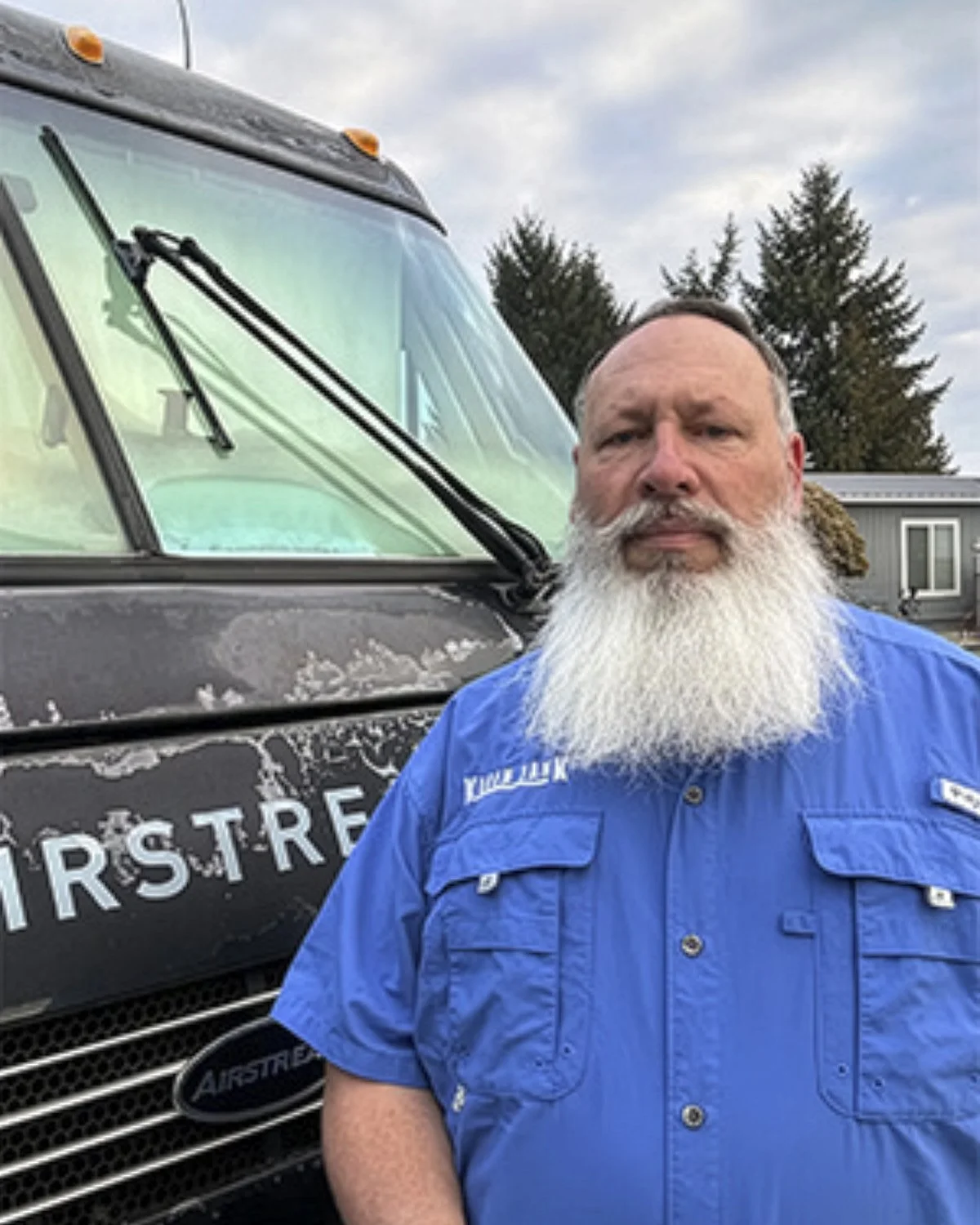
Mark Johnson of Kleen Tanks from SW Washington
RV black tank problems, grey tank odors, and dump station mistakes are all part of RV life, but they do not have to ruin your camping experience. In this episode of RV Out West, Mark from Kleen Tanks joins the show to talk about one of the most important parts of RV maintenance and ownership, caring for your grey and black tanks properly.
Mark shares years of experience working on RV waste systems and explains the simple habits that can help prevent clogs, odors, sensor issues, and expensive repairs. We talk about common mistakes RV owners make, the myths surrounding tank chemicals and treatments, and what really works when it comes to keeping your RV tanks clean and functioning correctly.
This conversation also includes some unbelievable stories from the dirty side of RVing. From major tank disasters to avoidable dump station mishaps, these stories are entertaining, educational, and a reminder that proper tank maintenance matters more than most RVers realize.
If you own a travel trailer, fifth wheel, motorhome, or camper van, this episode is packed with practical RV maintenance tips that can save you money, reduce frustration, and help you avoid nasty situations on the road. You will walk away with a better understanding of RV holding tank care, proper dumping techniques, and the best ways to maintain a cleaner and healthier RV waste system.
This is an episode every RVer needs to hear before their next camping trip.
SHOW NOTES
Episode Description
In this episode of RV Out West, Brooks sits down with Mark from Kleen Tanks to talk about one of the most important parts of RV ownership: grey and black tank maintenance.
From dump station horror stories to practical tank care tips, this episode covers the habits every RVer should build into their routine to avoid odors, clogs, sensor issues, and expensive repairs. Mark shares years of experience working with RV holding tanks and explains why water is the most important tool for keeping your tanks healthy.
The conversation also dives into common RV tank myths, why leaving your black tank valve open can create major problems, and how proper flushing techniques can help extend the life of your RV plumbing system.
Brooks also shares how Camper Alerts helped his family land a last-minute oceanfront camping reservation for Memorial Day weekend on the Washington Coast.
In This Episode
RV black tank maintenance tips
Grey tank cleaning and care
Proper RV dump station habits
Why water matters in RV holding tanks
The truth about RV tank additives
How often to flush your tanks
Common RV plumbing mistakes
RV life in the Pacific Northwest
Olympic Peninsula camping memories
Airstream and pop-up trailer stories
Links Mentioned
Camper Alerts: Camper Alerts
Kleen Tanks: Kleen Tanks
Olympic Game Farm: Olympic Game Farm
Silverwood Theme Park & RV Park: Silverwood Theme Park
Listen to EP125 a conversation with Matt from Matt’s Liquified about his tank care methods
Listen & Subscribe to RV Out West
Don’t forget to subscribe to RV Out West for more episodes about RV travel, hiking destinations, and outdoor adventure across the western United States.
👉 Sign up via the link in this episode description or visithttps://rvoutwest.com/newsletter
Follow the Journey on Social Media:
Podcast Episode Transcript:
The Dirty Truth About RV Tanks
00:00:00 Brooks, Host: Okay, it's going to get dirty. And we've got a lot to talk about. Welcome to RV Out West. I'm Brooks, based in the Pacific Northwest. My family of four hits the road to explore the best of RV life out west, from hidden gems and epic destinations to helpful tips and real road stories. So grab your coffee and join the journey! This is episode one ninety seven, which means we are officially just three episodes away from a huge milestone two hundred episodes of the podcast, and I would like to thank everyone who's jumped in the comments on social media with ideas on how I should celebrate this moment. Reading all of your suggestions has been incredible, and honestly, it made me even more excited for what's ahead. And yes, the appointment at the tattoo shop has been confirmed, so I will be permanently marking this milestone in ink. That's how much this journey with all of you building this community and this show means so much to me. From sharing our beginnings in a pop up tent trailer to exploring incredible Pacific Northwest RV destinations, to conversations with our state parks and so many amazing guests who generously shared their stories, knowledge, and time. This journey has become so much bigger than I ever imagined, and I'd like to thank you for being a part of this ride. Now check this out. I didn't get around to booking a Memorial Day camping trip in time. Life has been a little chaotic lately, and planning that far ahead just hasn't been in the cards for us this year. So I turned to Camper Alerts, a longtime sponsor of the show, hoping to find a new state park spot for my family. And sure enough, I got a text alert while I was actually in a position to stop what I was doing and book it. And now we've got an oceanfront camping spot on the Washington coast for Memorial Weekend. All thanks to camper alerts dot com. Seriously, you should take a five dollars bet on them. It's cheaper than a cup of coffee these days, and see if they can help you land a spot for the Fourth of July or another summer weekend. Give them a try and tell them Brooks sent you. Now let's get rolling with episode one hundred ninety seven of RV Out West. We're going to be talking about the least glamorous but absolutely essential parts of RV life. Gray and black tank maintenance Mark from Clean Tanks joins us to talk about all things tanks, from the dirty side of RVing to the simple things every Avia should know to avoid a pretty nasty situation. We hear some unbelievable stories from the road, bust a few myths and share practical tips that can save you time, money and a whole lot of headaches at the dump station. This is something we all need to hear. Mark, thank you so much for coming on the show and talking with us here on RV out West. I'm looking forward to this time also. So before we dive in to kind of this technical side of RV life, the tanks and the maintenance and all of that stuff, let's start off with what is it that originally pulled you into the RV lifestyle in the first place? Well, I've pretty much been associated with RVs my entire life. My earliest memory is back when I was in single digits, went camping in an RV. I believe it was a trailer with my mom and dad and my little sister, and they've had RVs ever since then. I've owned some. You know, after I left their house between the then and now. And currently I have a thirty foot Airstream motorhome that I use and travel with some. You're my hero. Why is that? Because I because I got an Airstream, too. I want a Airstream that is on my to do list. But I still have kiddos in the house, so we have a bunk bunk house for right now, but. Ah, yeah. Well, that's really exciting that. What kind of do you have like a first fond memory that you remember as a child from those early days of going RVing with your parents? I just, I love that so much. That's what I love about RVing. It's just such a cool family thing to do. It's awesome, I do. We were at the time living in the Denver area, so we were up in the mountains and it was out in the woods. And I wouldn't call it a fond memory, but that was the first memory I have of drinking powdered milk. And it was, to say the least. Nasty. I've been a milk snob my whole life. It's got to be ice cold and full fat. Yeah. So when did you. I guess you kind of always knew then, to some degree, that Irving was always going to be a part of your life in some way, shape or form. Did anything change for you when you, you know, started getting your own rigs and trailers and, you know, doing that? Um, I didn't get out on the road as much as I would like to because we had six kids ourself. We had bought a tent trailer, ten hard sided tent trailer, but it was still cramped and we weren't out a few times in that. So with kids, six kids, it was not as easy to go out as it is now. Doubling up on two kids on one bunk, doubling up two kids on the dinette, and then you and your wife on the other bunk in that, you know, sticks out here. Yeah. yeah. But you know what? I tent trailers have a very fond spot in my heart. I think they're what got us going in the RV life when our kids were six and four and we had just a canvas pop up tent trailer. And so, you know, it was my first time ever really towing anything. So there was a lot of firsts that God had in that tent trailer. And so right. Trailers are, they're pretty special. Yes they are. They're definitely an entry level. Yeah. And they're great. Get you hooked, anything. Yeah. And get you hooked. Exactly. Well, it's interesting how those first trips ended up shaping, you know, everything that's kind of come after for you. Once RV really started to take a hold for you, and the road really opened up in a different way. When you think about RVing in the Pacific Northwest, what locations or routes immediately come to mind for you? Oh boy. Um, I enjoy the Olympic Peninsula a lot. Okay. Um, what is it about the peninsula that keeps calling you back? Its remoteness. I like the hot springs around that area all the way up north in Sequim. I always enjoy going to Olympic Game Farm. That place is Brad. Everybody loves getting slobbered by the Buffaloes. Yes, that and you know it. My first memory of going there, they had, uh, grizzly bear. He was the star on Grizzly Adams. Oh, cool. I didn't know that. That's cool. Yeah. It was, it was a good time. Okay, so the Olympic Peninsula. Are there any other routes or locations that are top of mind for you as far as northwest destinations? The coast is always a good place. Westport is good going down there for, uh, pirate days. Coming up soon. Okay. And looking forward to that. Well, are there places in Washington, Oregon or Idaho that have really shaped your experience in RV travel now campground at um, not wild waves, the one over in northern Idaho. And it's a really nice. Yeah. Silverwood that's the one. Yeah, that's a really nice RV park as well as having, you know, the, the amusement park right there across the street. So you can, you got to go through a tunnel to get across the street. But you know, it's, it's a nice RV park. Yeah. Okay. How does RV in this region compare to other places you've been RVing. It's cooler for sure. I remember boondocking one time over in, uh, eastern Washington, central Washington, at a, uh, SCA event, which is society for Creative Anachronism camping at the fairgrounds down in near Prosser. And it was a weekend that was hot. So I ran the generator all weekend long, ran through almost a full tank of gas on the motorhome just so I could keep the AC running and keep it livable. Yeah, yeah, it's going to get really hot. You know, Western Washington has the trees, so that definitely helps. Yeah, yeah. And you can use the the fan, the automatic fans in the in the ceiling to draw the heat out and cool it off during the day and keep it cooler during the day. So there's a part of our RVing that people love to imagine the freedom and the destinations, but the longer you do it, you start realizing there's a whole other side to the RV life that nobody really talks about. When did you first start noticing that RVing comes with a learning curve that most people aren't prepared for? I have all. I mean, since I got my own motorhome, there was a learning curve that I had. Even though I had been RVing before. There was a learning curve with that experience and that outcome. And then when I joined Clean Tank as a dealer, it's become even more obvious that there's a big learning curve that a lot of people are not familiar with as far as waste tanks go on their units. And we're going to get into that for sure in just a little bit. What are some of the most common misunderstandings that you think people have about how their RV works, and especially with regards to the holding tanks? Some of the misconceptions that I find have been you have to conserve water, and that really does affect especially your black holding tank. You know, if you're out boondocking, you want to conserve that water and, you know, and so you get a little stingy on, on using it. But that has its problems down the road. I would assume, too, when you do use it and you want more of that water to go into the black tank than into the gray grey tank. So just you do makes that flush easier. So yep. The key to black tanks and RV holding tanks is water. Water, water. Yep. Was there ever a moment where either you personally ran into a problem that made you think, okay, this is something most RVers struggle with? Yeah, probably leveling is an issue. Even though I've got automatic levelers, if I'm on a grassy surface, that weight tends to sink in to the the ground. And another thing I've noticed that valves. The tank valves. Oh. Tell me about that. You know, if they're leaking by, that's going to create a problem, especially in the black tank. And I've had this issue with with my own unit. If you run out of water in the holding tank, you're left with a mess. And it's hard to to flush everything out. I changed, ended up changing the the tank valves on mine myself, and I don't think I'd do that again in the whole scheme of things. I went ahead and I bought the whatever it is for thirty dollars. The I can't remember what's called the Voltaire, that extra valve that, you know, you just kind of screw on to the, the end of your sewer outlet. So you have an extra gate for just in case happens, you have a second gate, which seems appropriate. How many times have you come across either in your own rigs or when you're working on other people's rigs where you have come across, you know, a faulty valve? Because I've always heard it's kind of it's not an if, it's a when. So I would say it's a win. Um, mine, just that one time as far as others, I've come across broken handles, seized up plungers, you know, the, the rods have either been tight or immovable. Not that long ago I came across one that the handle was off and the valve was open. On a grey tank and he said it froze up and could not move. I was able to to free that up a bit with some oil and and lubricant. Okay. But I wasn't able to put the handle back on because I didn't have the bolt for the handle. Right. But, um, it's kind of hard to maintain your, your holding tanks properly with backflushing if you can't isolate all the tanks individually. So, but I was able to get that one to close and do a good backflush on all the tanks. Well, it sounds like some of these reoccurring issues that you've experienced, both in your own personal rigs as well as, you know, as you've been on other people's rigs. You know, we all kind of get to a point where whether it's in our home and our sticks and bricks or in our RV, something happens and you're like, oh, it's a pain in the butt, but I'm not gonna fix it. I'll just deal with it because whatever, we just live like that sometimes? Sometimes, yes. But you have made becoming a tech expert both grey and black there with clean tank. How did your experiences lead you into kind of this RV service world, especially with, you know, and or eventually leaning to clean tank? My experience has been a career wise facilities maintenance. So I've taken care of all kinds of, of different buildings. Along with all that comes a lot of drain issues, you know, people plugging up toilets and drains themselves. And so I, I've got some experience as far as drain cleaning and, and dealing with that before plumbing issues, you know, all of it. I spent a lot of time on in my career and as I've gotten older, I wanted to get back into the management side of it, rather than the turning the wrenches part of it and be my own boss, and was just cruising through YouTube and came across a video and it talked about clean tanks, and it was about an hour long presentation of showing the the process, you know, without too much detail and getting some education as far as holding tanks go and everything. And a lot of it I had already known and been aware of, but there was some new interesting points that were beneficial. They mentioned in there that they were looking for more dealers. So I started looking into Clean Tank as something that I could do on my own, either as supplemental while I'm working for somebody else or just full time on my own, took about a year to get through the process and get things situated, but I ended up joining Clean Tank as a dealer this January. Okay. And went through training with them. Um, it's one of the Or it is the longest and most informative training in the industry, which is not to be unexpected from being the oldest and largest RV holding tank cleaning company in the country. It was a good it was it's a good fit because we, uh, look at clean tank, all the dealers as a family, which is cool. So let me ask you this then. What kind of things do you think most rovers are missing when it comes to education, specifically with regards to tank care? Well, some of the biggest issues that I have come across are people leaving their. tank valves open when especially when they're at a spot for a long term because they don't want to keep going out and pulling the valve and draining the valve. So they just leave them open. With the grey tanks, you can get away with that. You still let the water, the liquid flow out and leave behind some solids, and that allows moulds to grow in your grey tanks, which a lot of times the grey tanks that I've seen are worse because of that mould build up. Interesting. The black tanks are a lot of people, you know, know that you got to take care of the black tanks, but forget about the grey tanks. Right. I think guilty as charged, right? Because I'm doing full hookups and I know I'm going to be there a long time. I leave my grey gate open. And then when I'm about two days away from departure day. I closed the grey tank valve right. So the tank can fill. So I can do a good proper flush of the black. You know, when I go to dump the black. But. Right. Guilty as charged. Yeah, it happens, but a lot of times too, a lot of people leave the black tank open the valve open. So, you know, you've got all the solids that go down the toilet and they just build up into either a poop pyramid or. Yeah. The famous poo pyramid. Yeah. I've run across some people that they have filled that black tank up with solids because they've left the valve open and it got so full that they were either using a broom to push more in and level that pyramid out, or one person was using a metal fish tape that you use for pulling wire. Yeah. And breaking it up that way so that he could get more in. Instead of thinking to add more water. More water will help, but it's too late to really fix the problem. Well, now that we've heard about what can go wrong and what that can look like after the break, we are jumping right into what steps you can easily do to make sure you're taking care of your own tanks. But first, a word from our longtime sponsor, Camper Alerts. And I swear, if you haven't tried them yet, you are absolutely missing out. Seriously, go take that five dollars bet on yourself. It's summertime and the great outdoors are calling. But did you forget to book a campsite? Nine months ago? Well don't worry. Say goodbye to sold out campgrounds with camper alerts. With camper alerts. You can choose your campground, select your site type and set a personalized alert. And when a site becomes available, they will notify you. It's that simple. Visit camper alerts dot com today and start setting your alerts. Welcome back to RV Out West. It's time for us to all find out what the simple and effective methods are to take care of our tanks. Let's talk about proper tank management for an everyday arvier. Especially a weekender. What is kind of your recommendations? Your professional recommendations for proper tank maintenance, not maintenance. I don't want usage care. What should one do when they are going out on a trip? Specifically as a weekender? What can they do to just be mindful and take care of their tanks? Start your trip with a couple of gallons of water in each tank, and don't use any of these products that claim to break down the solids in your tank. None of those additives. They do work, but they're. And they do have a place. It's just your RV holding tanks is not that place because you're holding tanks on your RV are just that holding tanks, not septic tanks. Right. So you want to be able to hold that waste in there and flush it all out. But if you use these products that break it down, it does what it's supposed to do and breaks it down and becomes a thick sludge peanut butter type film on the bottom of the tank that doesn't flush out when you dump the tanks. Even if you leave the valves closed, it's going to have that layer on the bottom, and it's going to keep building up in the tank. So even, you know, um, I'm a fan and use, I don't want to call it any other particular brand, but, uh, it's orange liquid and it goes in, you know, and I'll put the ounce or two ounces, depending on, you know, down into my black tank. And you're suggesting that you really, you don't even need that. Just use water. Just use water. Ah, we have a solution that we recommend and we give everybody a bottle at the end of a clean. Okay. Which is Calgon, bath, pearls, Pine-Sol and water. Okay. That formula and recipe is available to anybody on the Clean Tank website. It won't solve your problems if you already have a problem, but we're talking about being in front of it before you have a problem. Just general. Yeah, right. And the Calgon bath pearls loosens up the molecular bond on that water and makes everything slick so it flows out better. The Pine-Sol does some deodorizing and controls the smells, right. And water is just the vehicle. Yeah. Okay. So before I get into the clean tank process, how often should an average Arvier weekender who goes, you know, out for, let's say a weekend, a month, and then, you know, sure, they'll do the one or two week trip in the summer. Mhm. How often should people be doing, you know, spending that extra time to do that flush? I would recommend that you hook up the end tank flush every time you dump it, because that adds more water volume to the tank. It adds a little bit of turbulence inside that tank and allows it to, to flow out. But those jets on that spray head are fixed, probably not aimed at your tank sensors, so they're not going to keep them clear. But it does allow more liquid in the tank for it to flush out better. And then as far as the back flush hooking up that Camco or something similar to that, that has a backflow ability. Yep. I would say once every month or two if you're a weekender to do that back flush. Okay. And the key to that is having a water meter on your hose so that you know how much water to put back into the tank because you don't want to overfill your tank. You want to fill it up with about eighty to ninety percent at the most of your tank capacity. I like to go to eighty percent because, you know, there still may be some residual solids. So you have a little bit of wiggle room, right, at least on the first flush. And do that on both the black and the gray. When somebody first gets to a campground and they've got full hookups and they're setting up, they've leveled the rig, they're going through their whole process, and now it's time to kind of prep the toilet or prep the tank, actually. Okay. What percentage is there a percentage of kind of how much water you should initially put into that toilet before you kind of start using it depends on the size two to two to five gallons would be good if you got a smaller tank, I would lean more towards the two. But if your tanks are like fifty gallons, you know, go towards the five because you've got bigger area and a bigger surface area on the bottom, you want to be able to get those waste products that are going down into the tank underwater, because that will help reduce any smell coming up through. And on top of that, in your toilet, you want to keep some water in the bowl because you that also eliminates any odors from or helps eliminate any odors from coming up from that black tank as well, and also helps keep that seal from from drying out. Drying out. Yeah. Well, let's talk about clean tank now. I mean, we've talked a few a couple of times about it, but let's talk about the process. I don't need your magic process, but like what makes Clean Tank different than others who do something similar and kind of what makes clean tank, clean tank. I would say the biggest thing that differentiates us from our competitors is the size of the company the number of dealers we have because we are all the way across the country and in fact are an international company because we have one dealer in Canada. Love it. Just like I'm sure your podcast is international too. Right? Absolutely. I exactly two downloads in Japan, I don't know. That's amazing. There you go. There you go. Um, but on top of that, the biggest thing that differentiates us is education. We like to educate our customers as to the best way, the best practices of your RV, holding tanks and educating that customer. That's, I think, separates us the most from our competitors. That and we don't push any product, right? And sell a product. Let me ask you this. What is your service area, Mark? My company is primarily Southwestern Washington. So from about the Kingston line down to Vancouver. Okay. And over to the Cascades. Okay. Is there somebody who handles King Snohomish North right now? I am the only dealer in the northwest. We've got a dealer in, uh, Boise area. Our dealer down in Salem is currently down south for the winter. Okay. So I've been covering some of his calls that he's gotten. I've gone as far as Salem. I've gone as far north as Marysville. Okay. How long does your process take? So, like, if you come out and meet me in a campground and you're gonna clean my tanks, how long does it take? And how often do you think somebody should have Clean tank come out to do a good, thorough cleaning? Just the cleaning without any clogs. It takes about an hour and a half to two hours to clean the tanks. Okay. And if you're full timing it, that should be done. I would say every six months. And then I would assume annual if you're a weekender annual, if you're a weekender, some of our competition recommends monthly. I recommend the annual for a weekend when you go to winterize it. That way, you're not getting any of that sitting build up of odor in the over the winter. Yeah, that totally makes sense. You know, at the end of the day, RV life is really all about the freedom for us all to explore the road. And, you know, taking care of your tanks is just part of what makes that freedom possible. So when you build those simple habits into your routine, everything runs smoother and the experience is that we all have on the road and in the campgrounds and doing RV travel, we can stay focused on why we're all doing this in the first place. So when you think about everything we've talked about from your own RV experiences to helping many rovers with their own tanks, what's the one mindset shift that makes the biggest difference in how people enjoy their RV life? One mindset that I think would help tremendously is of how much water you add to the black tanks and the gray tanks, because a lot of mindset is less is is fine, but water is, is the best thing to put in your tanks and you can never have too much water. So I and that helps down the road to, to maintain your tanks and to help you enjoy your RV on the road for many years and, you know, helping to maintain the value of your investment in that RV. Well, Mark, where can people learn more about you clean tanks as well as follow along online on all of your adventures? I have a Clean tank website. You can get to that from the clean tank dot com website, because all of our dealers are listed on their Facebook page as well. And I'll make sure to have a link in the show notes directly for that to you. For the listeners. Well, Mark, thank you so much for coming on RV Out West. I really appreciated your time and having this conversation with you. I have appreciated being here. It's been a good time, I thank you. All right, my friends, this conversation doesn't have to end here. If anything we talked about sparked your curiosity, head over to RV outwest dot com and take a moment to check out the show notes. We've got links to everything we mentioned so you can dive deeper and explore more. If you enjoyed this episode, please go share it with a friend or family member. I sure would appreciate it. Next week on RV Out West, we're talking all about RV camp kitchens. The gear I use the most, what's earned a permanent spot in the RV and what I've completely removed over the years. I'll share how our setup has evolved, the tools that actually make camp cooking easier, and how you can save on weight without sacrificing a great outdoor kitchen experience. If you've ever wondered what's worth bringing and what's just taking up space, you're not going to want to miss this one. Thanks for listening to RV Out West. Be sure to follow the show so you never miss an episode. And if you enjoyed the show, tell a friend and please leave a rating or review. It would mean a lot. Special thanks to Scott. Home music for our intro song. We are one. Follow us on Instagram and Facebook to join in on the conversation. Now get out there, explore and go see what's beyond the horizon.