The PNW Bike Trails Worth Your Time
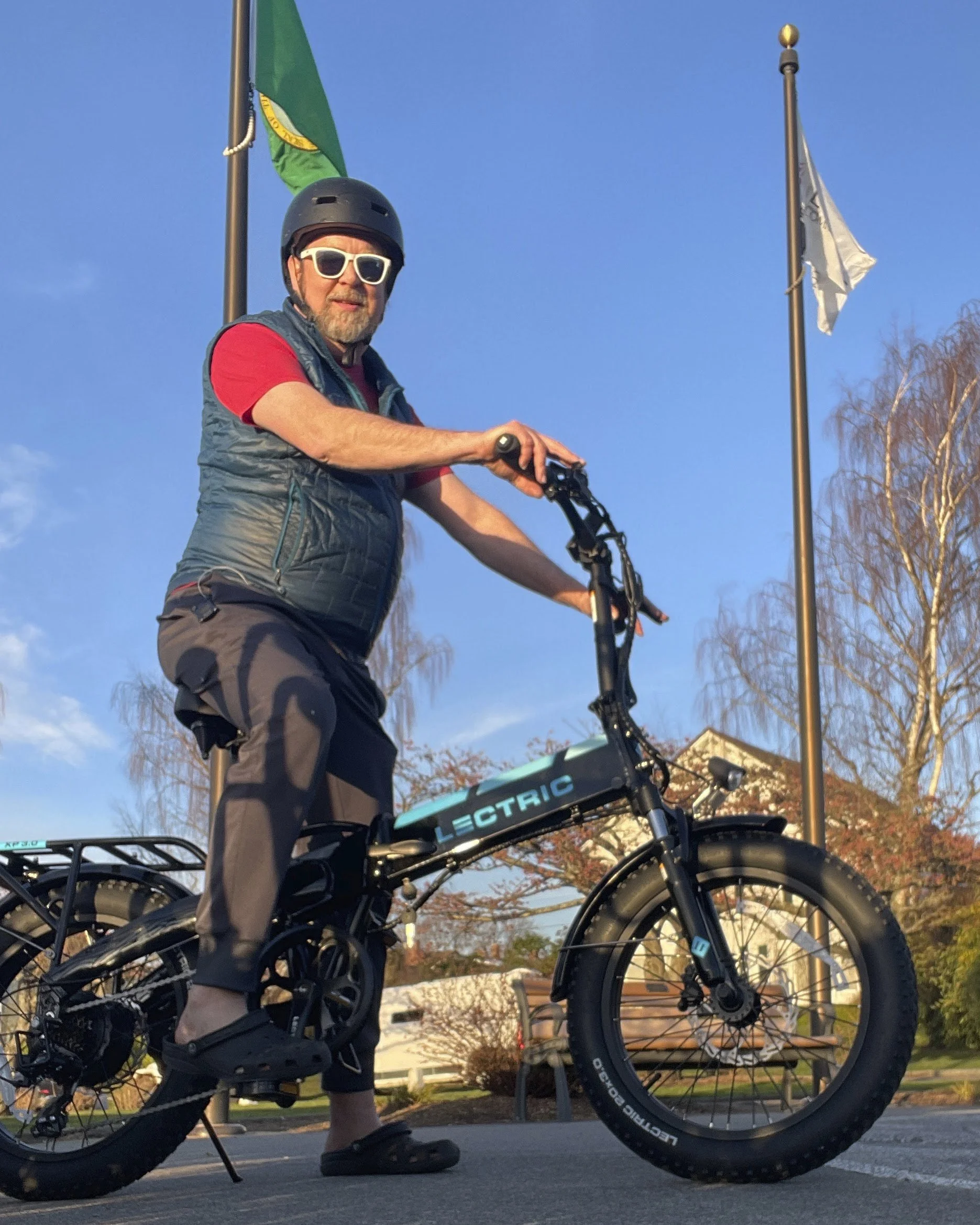
Celebrate National Bike Month with this episode focused on exploring the Pacific Northwest by bike while RVing. After recent time spent paddling and hiking, we shift into cycling and highlight some of the best bike trails and multi-use paths across Washington, Oregon, and Idaho. From scenic rail trails and river paths to long-distance routes, we share standout places to ride and how bikes can expand your travel experience at every stop.
This episode also includes a full, honest review of our Lectric eBikes after two years of real-world use. We cover what we like, where we have had challenges, and how these e-bikes have fit into our everyday rides and camping trips. In addition, we share practical tips for riding and caring for an eBike, including battery habits, basic maintenance, and things to keep in mind when planning your rides.
National Bike Month, led by the League of American Bicyclists, encourages more people to get out and ride while supporting safer streets and better infrastructure. If you are looking for inspiration, trail ideas, and real-life insight into using bikes on the road, this episode is a great place to start planning your next ride.
SHOW NOTES
What Is National Bike Month?
Every May, National Bike Month—led by the League of American Bicyclists—celebrates cycling as a fun, healthy, and sustainable way to get around.
Learn more: https://bikeleague.org/bikemonth/
For RVers, it’s the perfect excuse to:
Ride more
Explore beyond the campground
Turn everyday stops into unforgettable adventures
Why Bring Bikes RVing?
Bikes—especially e-bikes—completely change how you experience a destination:
Cruise campground loops and nearby towns
Connect directly to trail systems
Explore farther without moving your rig
Turn short stops into full-day adventures
Best Bike Trails in Washington State
Washington’s cycling culture is deeply rooted in its landscapes. Here are some must-ride trails:
Olympic Discovery Trail
A stunning multi-section route across the Olympic Peninsula with waterfront views and forested paths. https://olympicdiscoverytrail.org/
Spruce Railroad Trail (Lake Crescent)
A short but spectacular ride with tunnels, lake views, and access to Devil’s Punchbowl.https://www.nps.gov/olym/planyourvisit/spruce-railroad-trail.htm
Palouse to Cascades State Park Trail
A 250+ mile cross-state rail trail featuring the famous Snoqualmie Tunnel.https://parks.wa.gov/find-parks/state-parks/palouse-cascades-state-park-trail
Snoqualmie Valley Trail
A peaceful ride through farmland and forest with views of Mount Si. https://kingcounty.gov/en/dept/dnrp/nature-recreation/parks-trails/regional-trails/popular-trails/snoqualmie-valley-trail
Spokane River Centennial Trail
A paved, scenic ride along the Spokane River through urban and natural landscapes.https://spokanecentennialtrail.org/
Burke-Gilman Trail
Seattle’s most iconic urban trail with waterfront views and vibrant neighborhoods.https://www.seattle.gov/transportation/projects-and-programs/programs/bike-program/protected-bike-lanes/burke-gilman-trail
Top Bike Trails in Oregon
Oregon takes cycling seriously—it was the first state to create a Scenic Bikeway program.
Explore all routes: https://traveloregon.com/things-to-do/outdoor-recreation/bicycling/scenic-bikeways/
Banks–Vernonia State Trail
A paved rail-trail through lush forest and historic trestles.https://stateparks.oregon.gov/index.cfm?do=park.profile&parkId=104
Willamette Valley Scenic Bikeway
A 134-mile ride through vineyards, farmland, and charming towns. https://traveloregon.com/things-to-do/outdoor-recreation/bicycling/willamette-valley-scenic-bikeway/
McKenzie Pass Scenic Bikeway
A bucket-list climb through lava fields and alpine landscapes.https://traveloregon.com/things-to-do/outdoor-recreation/bicycling/mckenzie-pass-scenic-bikeway/
Springwater Corridor (Portland)
A versatile urban trail connecting neighborhoods and nature.https://www.portland.gov/transportation/walking-biking-transit-safety/springwater-corridor
Deschutes River Trail (Bend)
A scenic mix of paved and dirt paths along the river.https://bendparksandrec.org/trail/deschutes-river-trail/
Bucket List Ride: Ride the Rim at Crater Lake
One of the most unforgettable cycling experiences in the country:
🚫 Cars banned for the event
🚴 25 miles of uninterrupted riding
🌊 Views of the deepest lake in the U.S.
Plan your ride: https://www.nps.gov/crla/planyourvisit/ride-the-rim.htm
Best Bike Trails in Idaho
Idaho offers wide-open riding, fewer crowds, and incredible scenery.
Route of the Hiawatha
A legendary rail-trail with tunnels and trestle bridges.https://www.ridethehiawatha.com/
Trail of the Coeur d’Alenes
A 73-mile paved trail through mountains and wetlands.https://parksandrecreation.idaho.gov/parks/trail-coeur-d-alenes/
Boise River Greenbelt
A 25-mile urban pathway connecting parks and city life.https://www.cityofboise.org/departments/parks-and-recreation/parks/boise-greenbelt/
Harriman State Park Trails
A peaceful ride through wildlife-rich landscapes near Yellowstone.https://parksandrecreation.idaho.gov/parks/harriman/
E-Bike Review: Lectric XP 3.0 (2-Year Ownership)
We’ve spent the last couple of years riding the Lectric XP 3.0, and here’s the honest breakdown:
What We Love
Comfortable and easy to adjust
Great for errands, campground cruising, and casual rides
Folding design = easy RV storage
Affordable compared to many e-bikes
Responsive customer service
Trade-Offs
Heavy and harder to load
Battery issue early on (replaced under warranty)
Occasional performance inconsistencies
Check it out: Lectric Bikes
E-Bike Tips for RV Travelers
If you’re bringing an e-bike on the road, keep these in mind:
Battery Care
Avoid draining to 0% regularly
Store partially charged
Keep batteries warm in colder temps
Ride Smarter
Use lower assist levels to extend range
Expect longer braking distances
Plan for extra weight and momentum
Maintenance Basics
Check tire pressure often
Clean after wet or dusty rides
Lubricate chain regularly
E-Bike Laws & Trail Rules
E-bike regulations are evolving quickly across the U.S.
Before you ride:
Check local trail rules
Understand Class 1–3 distinctions
Watch for restrictions on multi-use paths
A good starting point: https://peopleforbikes.org/our-work/electric-bikes/
Related Episode
Planning a ride through Idaho?
Listen to our Coeur d’Alene destination guide (Episode 139):https://www.rvoutwest.com/destinations/coeur-dalene-idaho
Visit our FREE Destination Travel Guide for Coeur d’Alene:
https://www.rvoutwest.com/episodes/destination-coeur-dalene-idaho
Listen & Subscribe to RV Out West
Don’t forget to subscribe to RV Out West for more episodes about RV travel, hiking destinations, and outdoor adventure across the western United States.
👉 Sign up via the link in this episode description or visithttps://rvoutwest.com/newsletter
Follow the Journey on Social Media:
Podcast Episode Transcript:
The PNW Bike Trails Worth Your Time
TEASER
You’ve been driving past the best rides in the Pacific Northwest without even knowing it—until now.
OPENING
After spending our last couple of episodes out on the water paddling and then stretching our legs on some incredible hiking trails, we are shifting gears in a very literal way. Next up, we are rolling straight into National Bike Month, and it feels like the perfect time to talk about what it means to explore the world on two wheels. There is something undeniably fun about that transition from hiking boots and paddles to handlebars and open road, especially when you are traveling by RV and every stop becomes a potential ride waiting to happen.
This week, we are diving into the world of RVing with bicycles, from the classic simplicity of pedal power to the rapidly growing popularity of e-bikes. We will talk about how to carry bikes on your rig, what setups work best depending on your travel style, and how riders are finding new freedom in places they might have otherwise driven right past. Whether it is cruising campground loops, exploring small towns, or connecting trail systems right from your campsite, bikes add a whole new layer to the RV lifestyle.
Every May, National Bike Month, led by the League of American Bicyclists, celebrates cycling as a fun, healthy, and sustainable way to get around as it is all about getting more people on two wheels while building awareness around bike safety and better infrastructure in communities across the country. And honestly, it is the perfect excuse to ride more, explore more, and rethink what is possible on a bike.
That is where this all comes together. National Bike Month sets the stage for something bigger, especially for RVers looking to expand how they experience the places they visit. Bicycles and E-bikes are opening the door to longer rides, easier climbs, and new kinds of adventures that used to feel out of reach. If you have been thinking about bringing a bike along on your travels or finally putting one back into rotation, consider this your nudge. This is your moment to build momentum, embrace movement, and rediscover just how good it feels to roll into adventure.
There is a moment most of us remember, even if it has softened with time. The wobble, the focus, the sudden realization that no one is holding on anymore. Then it clicks. You are moving under your own power, the wind picking up, the street stretching farther than it ever has before. What used to be the edge of your world becomes just the beginning. A few blocks turn into a loop around the neighborhood, then a ride to the park, then maybe all the way across town. It is freedom in its simplest form, a quiet kind of independence where every turn is yours to choose and every mile feels like something you earned.
That feeling never really goes away. It just gets tucked somewhere in the background, waiting for the next time you swing a leg over a bike and push off. And here in the Pacific Northwest, there may be no better place to rediscover it. From coastal paths to forested rail trails and cool urban routes, this region is packed with rides that invite you to slow down, explore, and see the landscape in a whole new way. So let’s get into it and highlight some of the incredible bike trails that make this corner of the country such a special place to ride.
Rolling into Washington on two wheels feels less like a workout and more like a rite of passage. Here, cycling isn’t just a pastime—it’s woven into the culture. With a deep network of trails, bike-friendly communities, and a shared appreciation for the outdoors, Washington just seems to invite you to experience the area one pedal stroke at a time.
With so much ground to cover, the best way to experience it all is to follow the trails. From waterfront paths to forested rail-trails and epic mountain routes, these rides offer a front-row seat to the landscapes that make this region unforgettable—so let’s roll into a few of the standouts worth adding to your list.
The Olympic Discovery Trail stretches across Washington’s Olympic Peninsula, ultimately spanning more than 130 miles from Port Townsend to La Push, with many completed and rideable sections along the way. You will experience an incredible variety of terrain, from paved waterfront paths hugging the Strait of Juan de Fuca to quiet rural roads and forested stretches near Olympic National Park. One of the most iconic features is the sweeping curve of the Port Angeles Waterfront Trail, offering panoramic water views and frequent wildlife sightings. The trail is largely non-motorized and family-friendly, though some segments include gentle elevation changes and mixed surfaces that add a bit of adventure. With its blend of coastal scenery, small-town charm, and access to wild landscapes, it’s one of the Pacific Northwest’s most memorable long-distance rides.
The Spruce Railroad Trail is a beautifully restored lakeside ride along the northern shore of Lake Crescent, offering a smooth, wide gravel surface that’s ideal for bikes of all kinds. Stretching roughly 4 miles each way, the trail follows the historic route of an old logging railroad, complete with dramatic rock cuts and two newly reopened tunnels that add a bit of adventure to the ride. The highlight is the vibrant turquoise waters of Devils Punchbowl, a popular swimming and cliff-jumping spot accessed via a short spur off the main trail. Along the way, riders are treated to crystal-clear lake views, dense evergreen forest, and occasional glimpses of the surrounding Olympic Mountains. With minimal elevation gain and stunning scenery start to finish, it’s one of the most accessible and rewarding rides in the region.
The Palouse to Cascades State Park Trail is a cross-state adventure that stretches more than 250 miles, following a former rail corridor from the western slopes of the Cascades out to the rolling wheat fields of eastern Washington. Known for its gentle grades and wide gravel surface, it’s a favorite for bikepackers and long-distance riders looking for a steady, car-free journey. One of the most iconic sections includes the Snoqualmie Tunnel, a 2.3-mile-long passage through the mountains that stays cool and dark year-round—bringing a headlamp is a must. Farther east, the trail crosses the dramatic Columbia River corridor and winds through expansive farmland with big sky views. With its mix of remote stretches, historic trestles, and ever-changing landscapes, it’s one of Washington’s most ambitious and unforgettable rides.
The Snoqualmie Valley Trail winds for more than 30 miles through the scenic Snoqualmie Valley, following a former rail line between Duvall, Carnation, and North Bend. Its compact gravel surface and gentle grade make it approachable for riders of all skill levels, with plenty of access points for shorter out-and-back rides. Along the way, cyclists pass open farmland, dense forest, and sweeping views of the Cascades, with the iconic Mount Si often rising in the distance. A standout feature is the historic Tokul Creek Trestle, offering a unique elevated perspective over the valley below. With its peaceful rural setting and ever-changing scenery, it’s a relaxing ride that captures the quieter side of Washington’s outdoor culture.
The Spokane River Centennial Trail stretches roughly 40 miles from the Idaho state line through Spokane and out to Nine Mile Falls, offering a mostly paved, multi-use path that’s perfect for road bikes and casual riders alike. Following the Spokane River for much of its route, the trail delivers constant water views, shaded sections, and a mix of urban and natural scenery. One of the highlights is riding through Riverfront Park, where you’ll pass near the roaring Spokane Falls and iconic downtown landmarks. The trail is well-marked and accessible, with plenty of trailheads, rest areas, and connections to neighborhoods and parks along the way. With its smooth surface and diverse surroundings, it’s one of the most user-friendly and scenic rides in eastern Washington.
The Burke-Gilman Trail is one of the most popular and well-loved bike paths in the Seattle area, stretching about 27 miles from Seattle through lakeside neighborhoods to Bothell and beyond. This mostly paved, multi-use trail follows a former railroad corridor, offering a smooth and accessible ride for cyclists of all levels. Along the way, riders are treated to scenic views of Lake Washington and Lake Union, along with lively stretches near parks, breweries, and waterfront hangouts. The trail also passes through the vibrant University District, making it a great option for people-watching and quick stops. With its mix of urban energy and natural beauty, it’s a quintessential Seattle ride that showcases the region’s strong cycling culture.
Leaving Washington behind, the rhythm of the ride shifts as you roll into Oregon—where cycling culture feels just as strong, but with its own distinct vibe. Here, it’s less about weaving through bustling corridors and more about wide-open coastal highways, quiet vineyard roads, and high-desert routes that stretch for miles under big skies. Bike touring runs deep in Oregon’s DNA, supported by welcoming small towns, scenic byways, and a long-standing commitment to riders of all kinds. Whether you’re hugging the rugged Pacific coastline or pedaling through pine forests and volcanic landscapes, the experience feels immersive and unhurried.
Oregon might be one of the best states in the country for cycling, as It was actually the first state to create an official Scenic Bikeway program, with curated routes designed to showcase the very best landscapes and communities across the state.
So with that in mind, let’s talk about trails in this area.
The Banks–Vernonia State Trail is a 21-mile, paved rail-trail in northwest Oregon that follows a former railroad corridor through the Coast Range between the towns of Banks and Vernonia. It begins just outside the Portland metro area in Banks, about a 40–50 minute drive from Portland, then climbs gradually through forested hills, rural farmland, and deep evergreen canopy before ending in the historic logging community of Vernonia. The route is fully non-motorized and designed for cyclists, walkers, and equestrians, with a smooth asphalt surface and gentle railroad-grade slopes that make it accessible for most riders. Along the way, it crosses eleven trestle bridges and passes through quiet, heavily wooded stretches that feel surprisingly remote given its proximity to a major city.
The Willamette Valley Scenic Bikeway is a designated 134-mile cycling route that runs through the heart of northwest Oregon, connecting Oregon City to Eugene while tracing the fertile Willamette Valley. Unlike a single dedicated trail, it follows a mix of low-traffic country roads that weave through farmland, vineyards, and small historic towns. Riders experience a steady rhythm of rolling terrain with sweeping views of the Willamette River corridor and the Cascade Mountains rising in the distance. The route passes through agricultural hubs and wine country, offering frequent opportunities to stop in welcoming communities like Salem and Corvallis. As one of Oregon’s premier long-distance rides, it blends scenic beauty with cultural stops, making it a favorite for both touring cyclists and weekend explorers.
The McKenzie Pass Scenic Bikeway is a legendary high-elevation cycling route in central Oregon that climbs over 3,000 feet through the Cascade Mountains between the towns of Sisters and McKenzie Bridge. The route follows the dramatic McKenzie Pass, where riders ascend through dense forest before breaking out onto a surreal volcanic landscape of black lava fields and jagged rock formations. One of the most iconic features is the historic Dee Wright Observatory, built from lava rock and offering panoramic views of the surrounding peaks. The road is typically closed to cars for much of the cycling season, giving riders a rare sense of solitude and immersion in the high desert-to-alpine transition zone. With its steep climbs, thin air, and otherworldly scenery, it’s widely considered one of the most unforgettable bike rides in the Pacific Northwest.
The Springwater Corridor is a 21-mile paved rail-trail that runs through the southeast side of Portland, connecting the city’s urban core with outlying communities like Gresham and Boring. Built along a former railroad line, it offers a mostly flat, car-free route that’s ideal for commuting, casual rides, and longer recreational outings. Riders travel through a diverse mix of environments, from industrial edges and city parks to quiet wetlands and stretches of open green space along Johnson Creek. The trail also connects directly to other major bike routes in the Portland network, making it a key spine in the region’s cycling system. With easy access, smooth pavement, and a blend of urban and natural scenery, it’s one of the most heavily used and versatile bike paths in the area.
The Deschutes River Trail is a scenic multi-use path that follows the winding Deschutes River through the high desert landscape of central Oregon, with popular sections running through Bend. The trail is a mix of paved and natural surface segments, offering riders a varied experience that shifts between smooth riverfront cruising and more rugged, dirt-path riding. Along the way, cyclists are treated to constant views of volcanic rock formations, pine forests, and the clear, fast-moving waters of the Deschutes River. Wildlife is common here, with frequent sightings of birds of prey, deer, and even river otters depending on the season. With its close proximity to downtown Bend and its immersive natural setting, it’s one of the most accessible and rewarding rides in Central Oregon.
If there’s one ride in Oregon that feels almost unreal, it’s Ride the Rim at Crater Lake National Park.
This is not your typical bike ride. For a couple of days each September, the park closes a 25-mile stretch of Rim Drive to vehicle traffic, handing it over entirely to cyclists and pedestrians. What you get is pure, uninterrupted riding along the edge of the deepest lake in the United States, with nonstop views of that impossibly blue water, sheer volcanic cliffs, and peaks rising in the distance. It is quiet in a way that is hard to describe, no engines, no rush, just the sound of tires on pavement and the occasional call of a bird echoing across the caldera.
The ride itself is no joke. High elevation, thin air, and plenty of climbing make it a challenge, but that is part of what makes it memorable. You earn every overlook, every sweeping vista, every moment where you stop and just take it all in. And yet, because it is a shared celebration of cycling, it feels welcoming whether you are pushing your limits or just taking it slow.
For RVers especially, this is the kind of experience you build a trip around. Time it right, plan your stay nearby, and you are not just going for a ride, you are stepping into one of the most iconic cycling events in the Pacific Northwest.
From the lush forests and vineyard-lined valleys of Oregon, the landscape gradually shifts as you head east into a different kind of riding terrain in Idaho. Here, the scenery opens up into wide river valleys, rolling foothills, and rugged mountain backdrops where the roads feel quieter and the horizons stretch farther. Cycling in Idaho carries a strong sense of space and simplicity—less crowded, more expansive, and often deeply connected to rivers like the Snake and Salmon that carve through the state. It’s a place where riders can log serious miles with minimal traffic and maximum views, whether along greenbelt paths or remote backroads. With that in mind, let’s shift into some of the standout trails and routes that define riding in this part of the Northwest.
The Route of the Hiawatha is a 15-mile rail-to-trail ride located in the Bitterroot Mountains of northern Idaho, near the Montana border. It follows a historic railroad grade through the former Milwaukee Road line, making it a gentle downhill ride when starting from the east entrance near the Idaho–Montana state line. One of its most famous features is the 1.66-mile St. Paul Pass Tunnel, a dark, cool passage that requires a light and adds a dramatic element to the ride. Along the route, cyclists cross high trestle bridges that overlook deep forested valleys and navigate a series of scenic switchbacks carved into the mountainsides. With shuttle access, stunning alpine scenery, and a well-maintained gravel surface, it’s widely considered one of the most iconic rail-trail experiences in the United States.
The Trail of the Coeur d’Alenes is a 73-mile paved rail-trail in northern Idaho that stretches from Mullan in the Silver Valley to Plummer near the Washington border. It follows a former railroad corridor through a diverse landscape of mountains, wetlands, and open prairie, offering a smooth, mostly flat ride ideal for all skill levels. A defining feature of the trail is its close connection to the Coeur d’Alene River, where riders often pass reflective water views, marshlands, and abundant birdlife. The route is fully paved and vehicle-free, with multiple access points that make it easy to explore in shorter sections or as a full multi-day journey. With its combination of natural beauty, accessibility, and long-distance continuity, it’s one of Idaho’s premier cycling experiences.
If Coeur d’Alene is on your list—not just for biking, but also as an RV stop—make sure you go back and check out our destination episode number 139 where we break down everything you need to know before you roll in. We cover the best places to stay, what to see, and how to make the most of your time both on and off the bike so you can plan your trip with confidence. I’ll be sure to have a link to that episode in the show notes for this episode over on our website at rv out west dot com.
The Boise River Greenbelt is a 25-mile paved multi-use pathway that follows the winding Boise River through the heart of Boise and its surrounding parks and neighborhoods. The trail is largely flat and shaded in many sections, making it an easy and accessible ride for cyclists of all ages and skill levels. Along the route, riders pass through a mix of urban green space, riparian habitat, and tree-lined corridors where wildlife such as deer, geese, and hawks are commonly seen. The Greenbelt also connects directly to several city landmarks, including downtown Boise, parks, and cultural districts, making it both a recreational and commuter route. With its seamless blend of nature and city access, it’s the backbone of Boise’s outdoor and cycling lifestyle.
The Harriman State Park Trails are located within Harriman State Park in eastern Idaho, about an hour north of Idaho Falls in the Greater Yellowstone region. The trail network consists of several interconnected loops that wind through open meadows, wetlands, and dense stands of lodgepole pine and fir. Riders often share the paths with abundant wildlife, including elk, sandhill cranes, and moose, making it as much a nature experience as a cycling route. While not a high-speed riding destination, the terrain is relatively gentle, with gravel and dirt surfaces suited for relaxed exploration rather than technical riding. With sweeping views of the surrounding Teton and Yellowstone ecosystems, it offers a quiet, immersive escape into one of Idaho’s most pristine landscapes.
We’ve been cruising some of the best bike trails in the PNW, and after the break we’re diving into e-bikes with our full review of the Lectric XP 3.0—so stay tuned.
Welcome back—let’s shift gears and dive into the world of e-bikes.
All of these rides sound incredible on paper, but the real question is how you actually experience them once you get there. Long distances, steady climbs, and full days in the saddle can change the equation pretty quickly. That is where the right setup makes all the difference. For us, that has meant a couple of seasons riding with Lectric eBikes, putting them to the test on everything from paved rail-trails to hilly backroads. So before we wrap up, we want to share an honest look at how they have held up, what we have loved, and where they fall short after a few years of real-world riding.
After two years with the Lectric XP 3.0, we’ve used them mostly for around-town rides, errands, and a few camping trips—and they’ve settled into that “reliable, grab-and-go” category of gear that gets used more than expected. The ride experience is genuinely comfortable, with easy fitment adjustments that make it simple for different riders to hop on without much tweaking, and the assist kicks in in a way that feels quick and fun rather than sluggish. Speed-wise, they’ve got plenty of zip for bike paths and neighborhood cruising, and the folding design is a standout feature—being able to toss them in a truck bed and slide them under a tonneau cover has made travel days with them much easier. On top of that, the price point is still one of the biggest reasons they made sense for us, especially compared to higher-end e-bikes, and customer service has been responsive when issues come up.
That said, there are a few trade-offs that come with the package. We had one battery fail within the first six months, though it was replaced at no cost, which softened the frustration but still wasn’t ideal. More recently, one bike hasn’t been consistently reaching its top assisted speed, and while customer support has been helpful, the troubleshooting process has been a bit more involved than expected. The weight is also very noticeable—these are not light bikes, and carrying or loading them takes effort even with the folding frame. Overall, we’re still pleased with the purchase, especially considering we bought them using credit card points, and they’ve proven to be a solid, functional option for the kind of riding we do most often.
Having spent time on the road—and off it—with e-bikes like the Lectric XP 3.0, a few patterns start to show up beyond just the specs and first impressions. The real learning comes from day-to-day use: how they handle hills, how battery life shifts with terrain, and what it’s like to load, store, and actually live with them on trips or quick rides around town. Whether you’re new to e-bikes or just looking to get more out of your setup, a few practical habits can make a big difference in comfort, range, and overall ride experience.
E-bikes like the Lectric XP 3.0 are pretty low-maintenance compared to a car, but they do benefit from a bit of regular attention if you want them to stay reliable and fun to ride. The biggest habit that pays off is battery care—try not to consistently drain it to zero, and avoid storing it fully depleted for long periods. Keeping the battery at a moderate charge level when not in use (especially during colder months) helps extend its lifespan. It’s also worth checking tire pressure more often than you would on a standard bike, since proper inflation makes a noticeable difference in range and ride comfort. A quick wipe-down after wet or dusty rides, plus occasional chain lubrication, goes a long way in keeping the drivetrain smooth and quiet.
On the riding side, e-bikes reward a slightly different approach than traditional bikes. Because the motor does a lot of the work, it’s easy to rely too heavily on higher assist levels, but mixing in lower assist or pedal-only riding can improve battery range and give you more control over how the bike handles terrain. Riders should also be aware that e-bikes are heavier and carry more momentum, so braking distances are longer and cornering requires a bit more planning, especially on descents or loose surfaces. If you’re traveling with them, double-check rack or truck-bed securement since the extra weight can shift more than expected. Once you get into a rhythm, though, they open up a very relaxed way to explore—less strain on climbs, more range for longer rides, and the ability to turn a casual outing into a much bigger adventure without much extra effort.
Across a growing number of towns and cities, e-bikes are starting to land in a regulatory gray zone that’s changing quickly. While most traditional Class 1–3 e-bikes still do not require registration in the majority of U.S. states, some municipalities are introducing stricter local rules that limit where they can be ridden or how they are classified—especially on shared trails and multi-use paths . a few more aggressive cases, cities and states are even exploring requirements for registration, licensing, or insurance, treating higher-powered e-bikes more like mopeds or motor vehicles rather than bicycles . These changes are often driven by safety concerns, rising e-bike speeds, and confusion between standard pedal-assist bikes and modified high-power electric motorcycles.
Because of this patchwork of evolving rules, it’s more important than ever to assume regulations can change from one community to the next. What’s allowed on a regional trail system or in one city park may be restricted just a few miles away. Before heading out for a ride—especially in unfamiliar areas or when crossing city or county lines—it’s worth quickly checking local e-bike and trail rules so you don’t run into surprises or restricted access.
There’s something about an e-bike ride that feels like you’ve quietly hacked the system. You still feel the wind, the scent of pine drifting off a shaded trail, the rhythm of your own legs turning over—but now the hills don’t argue with you quite as much. A climb that once had you staring at your handlebars in negotiation suddenly becomes part of the fun, a steady glide instead of a grind. Out on trails like the Burke-Gilman, the Deschutes River path, or even a long rural stretch in the Willamette Valley, you start noticing things you usually miss: the way light hits the water, a heron lifting off a riverbank, small towns you might’ve otherwise driven straight past. It turns exploration into something more spacious—less about getting somewhere, more about staying with the moment you’re in.
That’s really the magic of it. On forested routes like the Banks–Vernonia, river corridors in Idaho’s greenbelts, or long scenic stretches across the Pacific Northwest, an e-bike stretches the day just enough to feel like you’ve gotten away with something good. You ride farther without thinking about it, stop more often without feeling like you’re losing momentum, and the whole experience shifts toward attention instead of effort. When you finally coast to a stop—dust on your shoes, a bit of battery left, and a map full of places you didn’t plan to see—you remember why these trails matter. Not just as lines on a map, but as invitations to slow down, look closer, and let the ride do its work: turning distance into experience.
There’s a lot waiting just beyond the edge of your campsite, and the simplest way to find it is to get on a bike and start rolling. It doesn’t matter if it’s a traditional pedal bike or an e-bike giving you a little extra boost—the point is the same: movement turns into discovery once you’re out there. Trails, quiet roads, river paths, and forest corridors all have a way of slowing life down just enough for you to notice what’s around you instead of what’s on your screen. You don’t need a perfect plan or a long destination; just a direction and a willingness to see what’s around the next bend. So pump up the tires, charge the battery if you’ve got one, and get out there—because the ride itself is the part worth showing up for.
CLOSING
Alright my friends, if you enjoyed this episode please share it with a friend or family member. Also, the conversation doesn’t have to end here. If anything we talked about sparked your curiosity, head over to RV Out West dot com and check out the show notes. We’ve got links to everything we mentioned so you can dive deeper, explore more, and maybe even start planning your own next adventure.
And while you’re there, make sure you sign up for our free monthly newsletter. That’s where we share things first like behind-the-scenes updates, new destinations, travel guides, and a few extras we don’t always talk about on the show. It’s the best way to stay connected with us and be part of the community we are all building. Appreciate you being here, thanks so much.
Next week on the show we’re diving into a topic every RVer deals with but nobody really wants to think about: black tanks, grey tanks, and everything you wish you knew about keeping them clean, happy, and problem-free. We’re bringing in an expert to break it all down—no jargon, no awkward mystery, just real-world tips that can save you from messy mistakes down the road. It might not sound like the most glamorous episode in the lineup, but trust us… this is one of those conversations that can seriously improve your RV life. You’ll want to tune in for this one.