The Forest’s Hidden Feast: A Pacific Northwest Mushroom Hunt
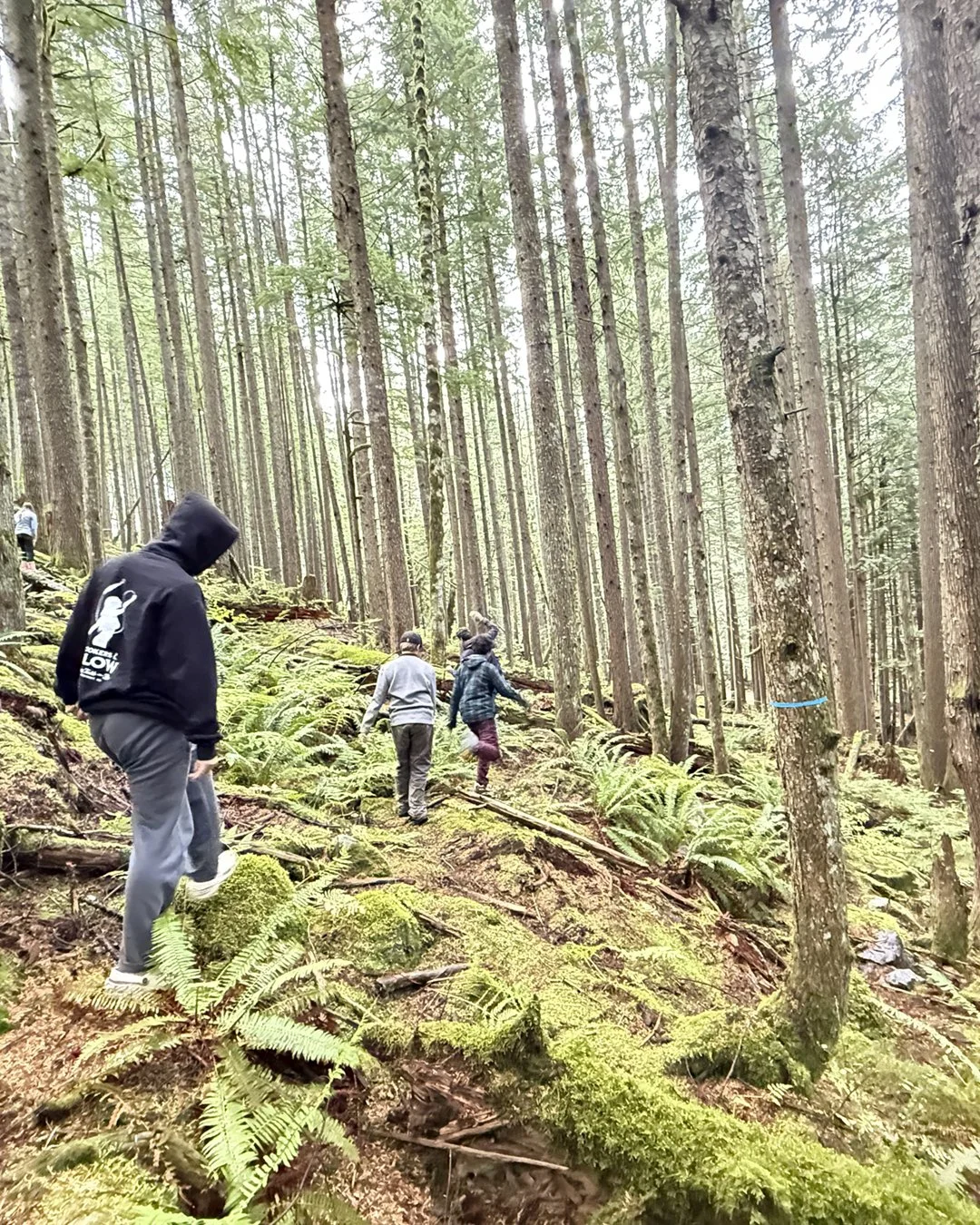
The Pacific Northwest forest is full of secrets, and some of its most fascinating treasures are growing right beneath our feet. In this immersive audio story, we head into the woods with mushroom foragers and our good friends, Jeff and Laurel, to discover the wild world of mushroom hunting, edible fungi, and the incredible ecosystem hidden beneath the forest floor.
Come along for an audio journey through the damp forests of the Pacific Northwest as we search for wild mushrooms, listen to the sounds of the forest, and learn how experienced foragers read the landscape. From recognizing promising growing spots to understanding how rainfall, temperature, and seasonal conditions influence mushroom growth, Jeff and Laurel share their knowledge and reveal what makes mushroom foraging such a rewarding outdoor adventure.
But there’s more to mushrooms than what we see above ground. We also explore the remarkable underground fungal networks that connect with trees and help sustain forest ecosystems. And just when our search seems to be winding down, an unexpected discovery gives us a reason to keep looking.
For RVers, mushroom foraging offers another way to experience the Pacific Northwest beyond the campground. Imagine spending a day exploring the forest, returning to your camp with a harvest and preparing a meal with ingredients gathered along the way. It’s an outdoor adventure that combines curiosity, learning, and a deeper appreciation for the natural world. Always positively identify wild mushrooms before eating them and check local harvesting regulations before collecting.
The forest is hiding a wild feast, and we’re hunting for the ultimate prize. What will Jeff and Laurel uncover before the day is over? Grab your coffee, press play and join us in the woods to find out.
SHOW NOTES
The Pacific Northwest forest is hiding a wild feast. Join Brooks Smothers of RV Out West for an immersive audio journey into the Cascade Mountain foothills to discover the fascinating world of wild mushroom foraging in the Pacific Northwest.
Accompanied by good friends and experienced mushroom hunters Jeff and Laurel, Brooks heads into the woods with a field recorder to capture the sights, sounds, and discoveries of an autumn mushroom hunt. Learn how experienced foragers read the forest, identify promising mushroom habitats, and consider rainfall, temperature, elevation, and seasonal conditions when searching for edible wild mushrooms.
Along the way, discover the remarkable underground fungal networks that support forest ecosystems, learn why the surrounding trees and terrain matter, and hear how a family’s passion for mushroom hunting developed over the years. As the afternoon unfolds, the search leads to a prized discovery that makes the adventure even more memorable.
For RVers and outdoor enthusiasts, mushroom foraging offers another way to explore the Pacific Northwest beyond the campground. Park your RV, venture into the forest, and discover a deeper connection to the land before returning to camp to prepare a meal inspired by the day’s adventure.
Grab your coffee, tune in, and step into the woods with us. The forest is full of surprises, and the ultimate find may be closer than you think.
In This Episode
Mushroom foraging in the Pacific Northwest and the best time of year to start looking.
How rainfall, temperature, elevation, and seasonal changes influence mushroom growth.
What experienced foragers look for when evaluating forest habitat.
The relationship between mushrooms, trees, and underground fungal networks.
Learning to observe the forest floor and recognize clues that lead to potential finds.
A family’s passion for wild mushroom hunting and the thrill of discovering prized edible fungi.
How to add mushroom foraging to your next Pacific Northwest RV camping adventure.
Mushroom Foraging Books Mentioned
Looking to learn more about wild mushrooms and fungi? These two field guides by David Arora are featured in the episode.
All That the Rain Promises and More: A Hip Pocket Guide to Western Mushrooms by David Arora
A portable field guide covering more than 200 Western mushrooms, including edible and poisonous species.Mushrooms Demystified by David Arora
A comprehensive reference covering mushroom identification, habitats, classification, and more.
Pacific Northwest Mushroom Resources
Interested in learning more about mushroom identification, local fungi, and guided educational opportunities? These organizations are good places to start.
Puget Sound Mycological Society — Mushroom education, identification resources, classes, and field trips in the Puget Sound region.
Northwest Mushroomers Association — Fungal exploration, educational activities, and mushroom resources in northwest Washington.
Southwest Washington Mycological Society — Mushroom identification, educational programs, and community forays.
Oregon Mycological Society — Resources and educational opportunities for mushroom enthusiasts in Oregon.
Pacific Northwest Mycological Society Directory — Find additional mushroom clubs and organizations throughout Washington, Oregon, and Idaho.
Wild Mushroom Safety
Wild mushroom identification takes knowledge and care. Never eat a wild mushroom based on appearance alone or rely solely on a photograph or app for identification. Have your finds confirmed by a qualified mushroom expert, and check local harvesting regulations before collecting.
For more information, visit the Oregon Health Authority's Mushroom Safety Guide.
More Foraging Tips from Seattle Author Langdon Cook
Want to take your Pacific Northwest foraging knowledge even further? Head back to Episode 99, Eat Wild on the Road: Foraging Tips from Langdon Cook, where we chat with Seattle author and foraging expert Langdon Cook about finding wild foods and bringing the flavors of the outdoors to your next adventure. It’s a great companion episode for anyone interested in wild mushroom hunting, edible plants, and connecting with the natural world through foraging.
Explore More with RV Out West
RV Out West is all about RVing in the Pacific Northwest, from memorable road trips and camping destinations to outdoor adventures that help you experience the region in new ways.
Please subscribe on your favorite podcast platform and leave a review to help more RV travelers and Pacific Northwest adventurers discover the show. Please consider supporting the show to help keep it rolling. Support the Show
RV Out West is built by a community of explorers, storytellers, and weekend wanderers like you. For just $5 a month, you can help keep the show rolling, support the time and resources that go into creating the show. Please consider making a monthly contribution.
Join our Newsletter
👉 Sign up via the link in this episode description or visit https://rvoutwest.com/newsletter
Follow the Journey on Social Media:
Follow RV Out West for more stories about RV travel, camping, boondocking, road trips, live music destinations, and exploring the American West.
Enjoyed this immersive audio story? Share the episode with a friend who loves the outdoors, follow RV Out West in your favorite podcast app, and let Brooks know what you thought about this new approach to storytelling. Your feedback helps shape future episodes.
Bar Run Golf and RV Resort Sponsor
Looking for a relaxing RV getaway in Southern Oregon? Bar Run Golf and RV Resort in Roseburg offers full-hookup RV sites, a championship golf course, river views, and resort amenities.
RV Out West listeners can use promo code OUTWEST for 10% off stays from October 2026 through March 2027, subject to the offer's terms and availability.
Visit Bar Run Golf and RV Resort
Purchase Your Park Passes
Another way to support the show is If you're planning to explore our incredible public lands this year, you'll likely need a park pass anyway. Purchasing your pass through our REI affiliate links is one of the easiest ways to support RV Out West. It doesn't cost you anything extra, but it helps fund future episodes, travel guides, and resources for the RV community.
Every purchase makes a difference, and your support truly means the world to me. Thank you for helping keep RV Out West rolling down the road.
The America the Beautiful Pass is an annual pass that provides access to more than 2,000 federal recreation sites across the country, making it a must-have for exploring many national parks, forests, and public lands in the Pacific Northwest while saving money on entrance fees. Buy pass from REI
The Discover Pass is Washington State’s annual recreation pass that provides access to millions of acres of state-managed lands, including forests, trails, and waterways, helping you explore some of the best outdoor adventures Washington has to offer while covering the cost of maintaining these public spaces. Buy pass from REI
The Northwest Forest Pass is an annual pass that provides access to many recreation sites on National Forest lands in Washington and Oregon, covering day-use fees at popular trailheads, picnic areas, and outdoor destinations so you can spend more time exploring the Pacific Northwest’s forests, mountains, and wilderness areas. Buy pass from REI
Podcast Episode Transcript (EP219):
The Forest’s Hidden Feast: A Pacific Northwest Mushroom Hunt
Brooks, Host The forest is hiding a wild feast. And we're going hunting for the ultimate prize. Welcome to RV Out West. I'm your host, Brooks. My family of four is. Base camp is located in the beautiful Pacific Northwest, and our RV adventures radiate out from there. Please grab a mug of coffee and join us as we discuss RVing around the American West. From sweet camping spots, gear and equipment to tips and tricks, we've got you covered. We are RV out West. Welcome to the show and I am so thrilled that you're here and joining us. This episode today is going to be a little bit different than any episodes I may have produced in the past. My goal is to take you on an audio journey. Perhaps I'm looking to emulate a story you might hear on NPR. So what I did is take my field recorder into the woods to capture this story, and I'm pretty excited to share it with you. If you liked this episode, or even if you don't, please reach out on either way. Send me a DM on socials, comment on our socials, or shoot me a text and let me know. You can text me via the link in the podcast episode description right there in your podcast app. While you're there and in the podcast episode description, if you would like to further support the creative work and production of this show, please consider supporting the show for as little as seventy five cents an episode. You can support RV out West with a small contribution that would help offset the costs of keeping this show rolling down the road, and I sure would appreciate it. Now on to the show. The air is cool and damp beneath the canopy. Water clings to the moss. Fallen fir needles soften the ground beneath our boots, and the smell of wet earth fills the air. Somewhere in this forest, tucked beneath leaves and decaying wood, mushrooms are pushing their way into the world. But my good friends Jeff and Laurel, who are with me, are looking down, scanning the forest floor for signs of life that others might ever notice. In the Pacific Northwest, finding wild mushrooms takes more than luck. It means learning to read the forest, understanding how rain and temperature shapes what grows, and knowing the difference between a mushroom worth bringing home and one best left untouched. Today, I'm heading into the woods with Jeff and Laurel as they share their knowledge with us. As we search for wild edibles and reveal the remarkable world growing beneath our feet. And by the end of the day, we just might discover something worth bringing back to camp. One of the things I love about RVing is having a home base to come back to after a day of exploring. So why not try something different on your next trip? Park the rig, grab a basket, and head into the woods to see what wild foods you can discover. With a little guidance from someone who knows what they're looking for. Foraging can open up a whole new way to experience the Pacific Northwest and imagine returning to camp with fresh ingredients. You've gathered yourself. Firing up the stove and cooking a meal that connects you to the place you're visiting. Just be sure you can positively identify anything you plan to eat and check local harvesting rules before you head out. So with the forest around us and Jeff and Laurel leading the way, it's time to see what we find. Keep your ears open as we make our way through the woods. Discovering the wild mushrooms growing right there. Let's head out on the hunt.
Jeff, Mushroom Hunter So this is an ideal habitat forest, huh? Second growth.
Jeff, Mushroom Hunter A lot of times you'll go into places that look good and they'll just be too many, too many, uh, ferns for you to even see. But like these, these like second growth that are getting on, getting up there in age, like forty, fifty years old that, that have blocked out enough sunlight. You see, like over here, this is terrible. Like it's, it's.
Jeff, Mushroom Hunter Too much light.
Jeff, Mushroom Hunter Too much light. There's so much, so much undergrowth. It's impossible to see. Even if there were mushrooms, which they're probably, I don't really know. We don't go there because it's hard to see through all the undergrowth. The second growth forests where they start to knock out the sun. Uh, it makes it a lot easier to walk. Makes it a lot easier to look on the ground. It's like a lot darker. Like, look at this over here. Like this is this is a dispersed campsite, But dispersed campsites are actually great because they're. They're kind of like they. They kind of clear the forest a little bit around. Like, look over here, it's very easy. And there's going to be mushrooms all over the place in there.
Maya, Mushroom Hunter I feel like it would be.
Jeff, Mushroom Hunter It's just easier to see stuff.
Maya, Mushroom Hunter For me too.
Jeff, Mushroom Hunter Guys, guys, there's like mushrooms on the side of the road. There's a good Lord. Guys, can we just like, can we just like, look really quick?
Maya, Mushroom Hunter I'll go out with you on the back seat. Comfortable for a minute. What's going on? There is a really good mushroom spot.
Jeff, Mushroom Hunter And I just saw, I just saw, I saw like like a half dozen mushrooms just growing on the side of the road.
Maya, Mushroom Hunter We're just gonna like quick peek out here.
Jeff, Mushroom Hunter We just gotta, we can't.
Brooks, Host It's Saturday afternoon and it's been a weird autumn here in the western side of the Pacific Northwest. By this time of year, we really should be socked in by rain. The dampness creating those late fall colors, the leaves and burnt oranges and light browns instead. It's been unseasonably warm mid sixties with lots of sunshine. Today, though, I find myself in the foothills of the Cascade Mountains. Off a dirt road with an ominous sky above indicating rain. Though it has occasional bursts of sunshine. From what little I've learned from my good friends Jeff and Laurel. This time of year is often the best time to head into the woods to go foraging for wild mushrooms. I've known Jeff and Laurel for well over a decade now. Jeff is a tall guy, wavy brown hair and an infectious laugh and a thirst for curiosity that I honestly don't think he will ever satiate in his lifetime. Laurel, his wife of twenty years, has her own intrinsic quest for knowledge. She is naturally inquisitive, smart, and witty. Her shoulder length brunette hair is tucked in a green camo trucker cap that is bright yellow letters that says Billy Strings is a friend of mine. She is sporting a huge smile and has an energy about her that shows just how equally excited she is about today's hunt in the woods. The trunk of their minivan is filled with an assortment of woven baskets, various pocket knives, and rain boots. It's obvious that this is a family activity for them that they do often. Two field guides are tossed on the center console in the van. All the rain promises and more. A hip pocket guide to Western mushrooms and the Bible that every mushroom forager has on their bookshelves. Mushrooms demystified. Both of these books are by the prominent mushroom author David Arora. Here we step out into the forest, off the trail and the focus changes. So let me ask you this. When you are taking a walk in the woods. What do you think you're looking for or looking at that might be different than somebody who's not out in the woods foraging.
Maya, Mushroom Hunter So if I'm.
Laurel, Mushroom Hunter On a hike just to be on a hike, I'm staying on the trail and I'm headed towards the end of the trail like the peak of the mountain or whatever. Whereas if we're foraging, I'm off the trail, venturing into the woods and thinking about what do the woods look like around me? And it's not so much about going anywhere. It's about sort of like wandering through the woods. So I like that you're not necessarily going anywhere. I guess when we're mushroom hunting, I like that aspect of it. But yeah, things were looking out for. You're kind of making a judgment about the the local environment that you're in. But we just found a very big old rustler. What does the train look like? Like it has to be terrain you can get to. It has to be flat enough that you can walk on it. It has to be bare enough that you can see the ground. But they'd also be thinking about, um, how warm is it? How much water has there been? So like, are you a north facing slope? A south facing slope? Are you headed towards a creek? And what has the weather been like over the last couple of weeks? Because you have to have had the right amount of rain, and it has to have been long enough that these these mushrooms could have fruited and made the actual bit that we want. So I guess I like that it makes you think about sort of the whole picture of the forest.
Speaker 6 You see this look, look at this.
Laurel, Mushroom Hunter Look at this.
Jeff, Mushroom Hunter Awesome example.
Speaker 6 Of a shrub over here. Oh man, I just found one. It's like, this is a excellent trunk. What is that? I mean, look at this.
Jeff, Mushroom Hunter You see that?
Speaker 7 Yeah. It's like a mushroom.
Jeff, Mushroom Hunter That's the same one you found. But the thing is, is it's growing. All these mushrooms have to get through the get through all this duff. Right. And so a lot of times people will look for mushrooms and the matsutake actually look like this a lot too. But that's a shrub. And it's like, you can you just look through the forest and you're like, oh, it looks like something's grown under there. And. Well, yeah, something is another perfect, perfect wrestler. That's perfect. That's like almost edible. That that is edible. I found this. You found another one? Yeah. Look at that. You found another shrimp over here. These are all. These are all russulas. Look at that one. That's, like, the most perfect specimen. They're very common. Very, very common. But if you see them, that means you're out at the right time of year for sure. Because these things are all over the place when you find all the other mushrooms. Right?
Brooks, Host So, Jeff, what got you into foraging for wild foods? What's the story there?
Jeff, Mushroom Hunter My dad was really into finding morels in Illinois and he joined the Illinois Mycological Association. I am a. Okay. He ended up being treasurer for a number of years, and he would go around, like most of what they would find to eat were morels, but they'd also find chicken of the woods and oh, what's that other one? Um, uh, maitake maitake was like a really good find if you would find maitake. So those, those are the ones that I remember him finding.
Brooks, Host So how old were you when you would first go into the woods with your dad to go foraging?
Jeff, Mushroom Hunter Yeah, just just high school. He would he would just go out. There were woods like within, within like a five or ten minute drive of our house that we'd be able to find these mushrooms and usually we'd go out in the spring because morels are a springtime thing. Find yellow morels. Up here you find yellow morels, but the ones you really go for are in the springtime are black morels.
Brooks, Host Which are the fire morels, right?
Jeff, Mushroom Hunter Yeah, yeah. So what you want to do is you want to, you can go on like, uh, websites to see where the fires were burning last year and the year before. And generally, forests that had been burned in the past year or two have the best chance of, of black morels. And if you find them, you don't find one. You find like a thousand. Those those are the locations where the commercial mushroom pickers are going to go. Is the the burns from a year or two ago. I want to say that saying any of this publicly is divulging a lot of information, potentially knowing, knowing the timing, knowing, Knowing about the burn areas. That's a. That's something you have to. You have to work to learn. It feels like.
Brooks, Host Yeah, you got to do your research and put your time in.
Jeff, Mushroom Hunter There are so many wrestlers here. Ooh. That's edible.
Brooks, Host Those yellow ones there.
Jeff, Mushroom Hunter Yeah. Orange orange peel fungus. I've never eaten them, but they're edible. They're kind of. It's kind of cool. They don't look like mushrooms. They're more they are mushrooms. They just don't really look like them.
Brooks, Host Yeah. That's cool.
Speaker 8 Most of us move through the forest looking at the big picture. The trail ahead, the trees overhead, the view waiting for us around the next bend. As we continued our walk through the woods. Jeff and Laurel are two people who know that finding mushrooms takes more than just knowing where to hike. Not only have they done their research in advance, but on this trip, it means paying attention to the conditions around you the trees, the ground, the moisture in the air, the smells, and even the elevation. These are the subtle signs that something is growing just out of sight.
Laurel, Mushroom Hunter This is good information that we're finding down here where we're pretty low. We're finding kind of old mushrooms. So see, that's information that if we go somewhere else we want to go higher altitude, higher elevation because the mushrooms will be a little younger and fresher out there.
Jeff, Mushroom Hunter Yes.
Laurel, Mushroom Hunter You're right. If everything else was the same. Yes. Yeah. So that's one of the things you notice. Like we're finding these big kind of like gross old mushrooms.
Jeff, Mushroom Hunter I think we should get back on the trail and walk. Walk a ways. There's just like they're all over the place. Like there's mushrooms everywhere. I don't see I don't see any of like, super, super interesting looking ones, but they're everywhere. We got a two.
Laurel, Mushroom Hunter Okay.
Jeff, Mushroom Hunter So that's like they found something.
Laurel, Mushroom Hunter They found something.
Brooks, Host Let's go. What is that?
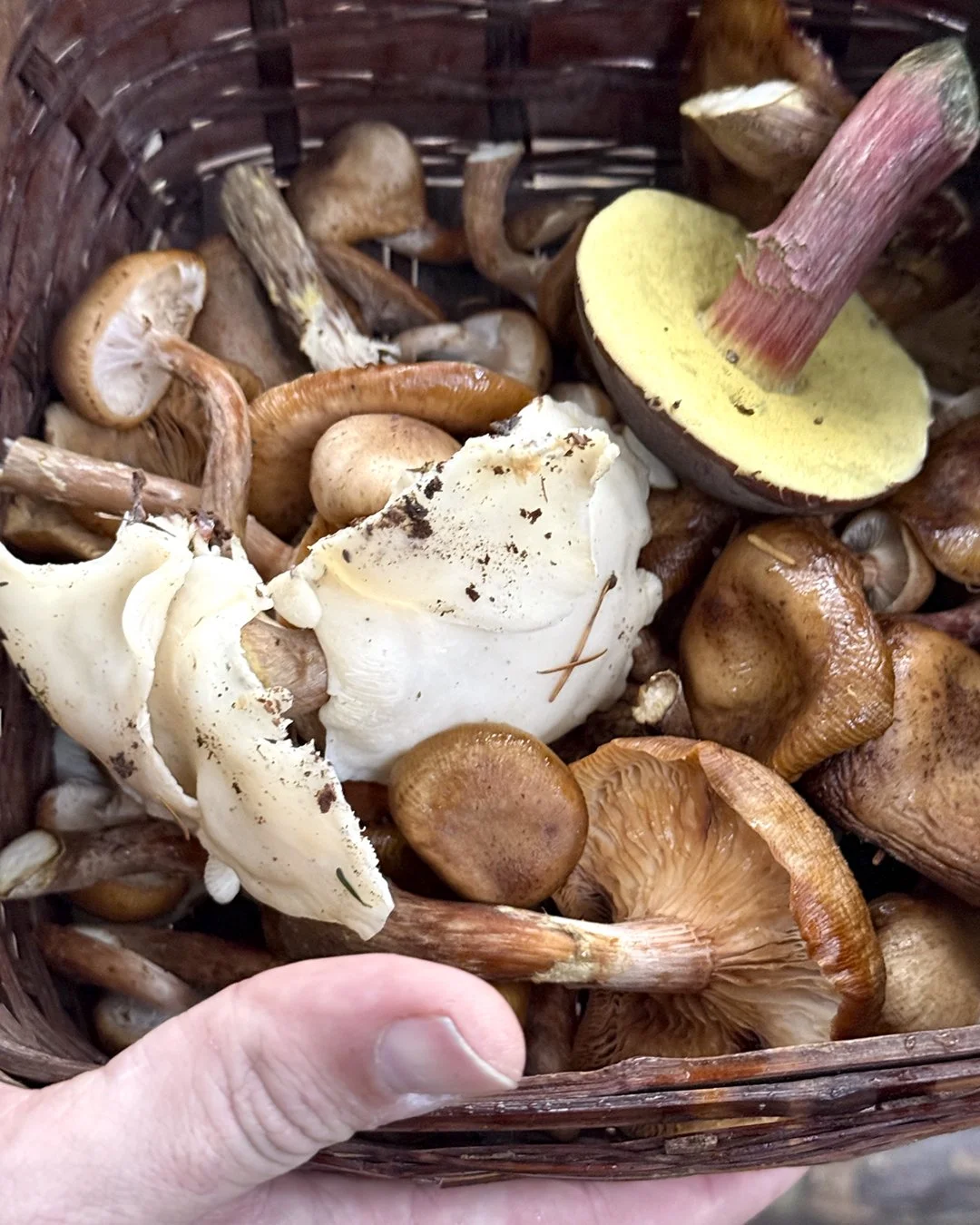
Jeff, Mushroom Hunter This is supposed to be a cracked cap bolete. Okay, I don't think I've seen a whole lot of red capped boletes before.
Laurel, Mushroom Hunter I wanted to show you. You see how these are, like, discolored? Yeah. Those are places where the flesh has gotten bruised. Mhm. And they call that bluing. That's like the quality some mushrooms have. Where if you were to do this, it oxidizes like the air does a chemical store at the top. That kind of looks like the mushrooms from the store at the top. Right. It's totally different, though. Those have gills, right? Right. That's a challenging thing about mushrooms, is there's like thousands and thousands of them, but like, they all kind of look the same. I have found many of them. That's why you have to learn all the tricks like it turns blue.
Brooks, Host Before you go out on a foraging trip. What kind of research are you doing at home to help you dial in?
Jeff, Mushroom Hunter Where to.
Brooks, Host Go? Where to go? Like, what kind of things are you looking for? How does weather, climate, time of year. Seasonality. How does that all play a a piece in your decisions and how you figure things out.
Jeff, Mushroom Hunter Two weeks after the rain starts, uh, in like September. Like starting in September, two weeks after the rain starts, it's usually the right temperature and the right amount of moisture for them to start coming up. So that's sort of the timing to start. And then.
Brooks, Host And are you looking at elevations of forests and being like.
Jeff, Mushroom Hunter Yeah, so we're looking at stuff here and things are things are looking kind of older. Yeah. Right.
Brooks, Host Which was to Laurel's.
Jeff, Mushroom Hunter Point.
Brooks, Host Just a minute ago.
Jeff, Mushroom Hunter We saw the boletes that were kind of like upturned and buggy and looked old. And we're seeing some some old mushrooms that are kind of falling apart. But we're also seeing, seeing some that are just just pushing up and some pop out earlier and some pop out later. And so like in November, you'll find different mushrooms than you'll find in early September. Okay.
Laurel, Mushroom Hunter This thing is so rotted. Don't step on it.
Brooks, Host Describe it to me. What does it look like?
Speaker 9 It kind of looks like blood on the top, like darker and and on the bottom. It's like really cool. Its gills have also kind of a sponge pattern in some of them.
Laurel, Mushroom Hunter Do you want to keep it? We'll try to identify it with our book. Sure. Do you remember where you found it?
Speaker 9 Yeah. There's one more back that way.
Laurel, Mushroom Hunter So it's important to know. Was it growing in the dirt?
Speaker 9 It was growing.
Laurel, Mushroom Hunter Growing? It was growing in the dirt. Um, it would be smart to use your knife and dig up the base of it, because sometimes whatever's under the earth is a clue. And it would be smart to look at the other trees you see growing around, because sometimes the trees and the mushrooms grow together. And so sometimes they'll say, this mushroom is very commonly found with this kind of tree. So you'd like to know that kind of thing. So go, go dig up the other one and we'll try to ID it.
Speaker 8 The more time we spend out here, the more you realize that what we see on the forest floor is only a small part of the story. Beneath our boots, an entire world is at work. A vast network of fungal threads weaving through the soil, connecting trees and helping move nutrients through the forest. But that underground world depends on something. We can't control the weather. The right combination of rain, temperature and moisture can bring mushrooms to life. While a shift in the season can change when they appear, how many grow and where we find them. To understand the mushrooms we're finding out here, we have to look beyond the forest floor and into the conditions that make this whole world possible. In just up ahead, Jeff and Laurel are on the lookout for a mushroom they especially love to find right out here in the forest.
Laurel, Mushroom Hunter The analogy is like mushrooms to the network. Underneath the soil is akin to apples on a tree. Like mushrooms are the fruit that grows off the actual organism, which is the underground microsauria. So like the mushrooms, always there, like the microsauria is always there doing its thing. It's just whether or not it's worth putting on mushrooms. Yeah. Like where we were at before. We felt like the mushrooms were a little young. And up here, some of them were like pretty old.
Brooks, Host Yeah. So just that little bit of the difference in elevation from our first spot to this second spot.
Laurel, Mushroom Hunter And then it can also be like with the rains, like if you have a rain and a dry spell and then another rain, like I see that in my yard, we'll see mushrooms cropping up in my backyard depending on when the rain happens.
Brooks, Host And these are what kind of mushrooms?
Jeff, Mushroom Hunter Amarilla. Honey. Mushrooms.
Brooks, Host Oh, Jeff, look at that. You found a bounty now, dude.
Jeff, Mushroom Hunter Here, can you hold it underneath?
Brooks, Host Yeah. Of course.
Jeff, Mushroom Hunter Just like.
Brooks, Host And how do you like to prepare these? How do you like to cook these garlic butter?
Jeff, Mushroom Hunter Wild that they're actually growing out this way. Uncommon. We were finding a ton of these, but none of them were this like this up here is let's see one up there I want though.
Brooks, Host You got it.
Jeff, Mushroom Hunter Yeah. It's starting to rain now. It's getting real. There's a reason why this place looks as lush as it does. And that's because there's a lot of rain to make it. Oh that's awesome man. What a.
Brooks, Host There you go. The bounty. You just never know what you're gonna find when you're out in the woods. So, Jeff, this area that we're in right now, you've been out here before two weeks ago.
Jeff, Mushroom Hunter And, uh, we also, we've also been nearby like years past, uh, we found like a pound of mushrooms, like a whole lot of variety in this area two or two weeks ago.
Brooks, Host Nice.
Speaker 8 As the afternoon begins to fade and the forest grows quieter, it feels like our search is winding down. We've spent hours following the forest floor, learning to look closer and discover that there's far more happening beneath our feet than we ever imagined. And just when it seems that they might end without one last discovery, Jeff and Laurel's daughter stumbles upon what every mushroom hunter hopes to find the Holy Grail.
Brooks, Host You find.
Speaker 10 My dad was making a big deal of stand still.
Laurel, Mushroom Hunter And look around before you walk.
Brooks, Host That is really cool looking. And when is this.
Speaker 10 Porcini king bolete?
Brooks, Host Nice. I am.
Jeff, Mushroom Hunter Natural habitat. Oh, we picked one right next to it, but we left one.
Speaker 10 She found the king porcini.
Jeff, Mushroom Hunter King boletus edulis. Yes, ma'am.
Laurel, Mushroom Hunter Oh, that's a beauty.
Jeff, Mushroom Hunter It's gorgeous.
Laurel, Mushroom Hunter Wow.
Jeff, Mushroom Hunter These are the ones that people pay, like, twenty bucks a pound for.
Brooks, Host Nice.
Jeff, Mushroom Hunter Oh my gosh. I work on that.
Speaker 10 That Stipe do I just like.
Jeff, Mushroom Hunter Yep. Yep. Perfect. No bugs.
Brooks, Host That is so cool.
Jeff, Mushroom Hunter All right, Maya. Well you win.
Speaker 10 Thanks.
Speaker 8 And with that, the rain begins to fall, capping off a great day out in the foothills of the Cascades. Adventures like this are a reminder that some of the best experiences happened beyond the campground. Spending a day in the woods learning to identify wild mushrooms and discovering the hidden world beneath the forest floor gives you a whole new appreciation for the land around you. And there's something special about returning to camp with your harvest, firing up a cast iron skillet over an open fire, and cooking a meal with ingredients gathered just hours earlier. It's a way to connect with the Pacific Northwest that goes beyond the places you visit. Bringing a little piece of the forest right to your campsite table. Well, I hope you made it this far and enjoyed this episode. Please. I am seriously looking for feedback here. If you enjoyed this type of episode or not. Let me know. Send me a DM on socials, comment on my social media, or like I said earlier, you can shoot me a text via the link in the podcast description right there in your podcast app. I also encourage you to share this episode with two family or friend members who you think would enjoy this episode or even this show. Every supporter, every share, every rating, and every new listener helps this community grow. The conversation doesn't have to end here. If anything we talked about makes you crave more information. Head over to RV out west dot com and take a moment to check out our show notes. We've got links to everything we mentioned, including the two books and local mycological societies, so you can dive deeper and keep planning your own trip. I'm incredibly grateful to have you along for the journey. Thank you for being here. Next week we're hitting the road for one of my favorite fall drives in the Pacific Northwest. Think winding roads. Autumn color and the kind of views that make you want to pull over every few miles. So hitch up, grab your coffee, and come along for a fall road trip you won't want to miss. In the meantime, smash that follow button in your podcast app so you never miss an episode. And be sure to join us next Monday! Thanks so much for listening to RV Out West. Join us again next week. Please like and subscribe to our podcast on Apple Podcasts or wherever you choose to get your podcasts so you never miss an episode. I sure would appreciate it if you left a rating or a review of the show. Special thanks to Scott Holmes Music for providing us the intro song. We are one RV Out West can be found on Instagram and Facebook, where you can interact with us and follow along on our RV adventures around the Pacific Northwest. So get out there, explore and go see what's beyond the horizon.